Achieving Equal Wellness Benefits Across Tier-1, Tier-2, And Tier-3 Enterprise Offices In India
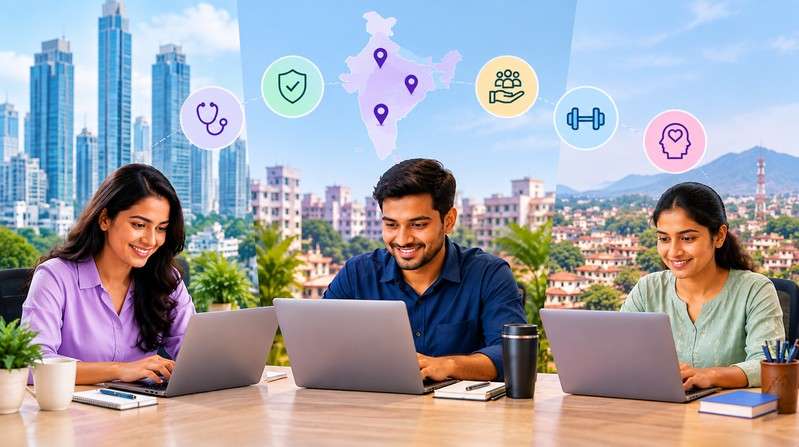
The Indian corporate landscape is undergoing a massive structural shift. As tech giants, BFSI institutions, MNCs, and manufacturing conglomerates expand beyond traditional Tier-1 hubs like Bengaluru, Gurugram, and Mumbai, a significant portion of India’s enterprise workforce now operates out of Tier-2 and Tier-3 cities, including Jaipur, Kochi, Indore, Coimbatore, Chandigarh, and Bhubaneswar.
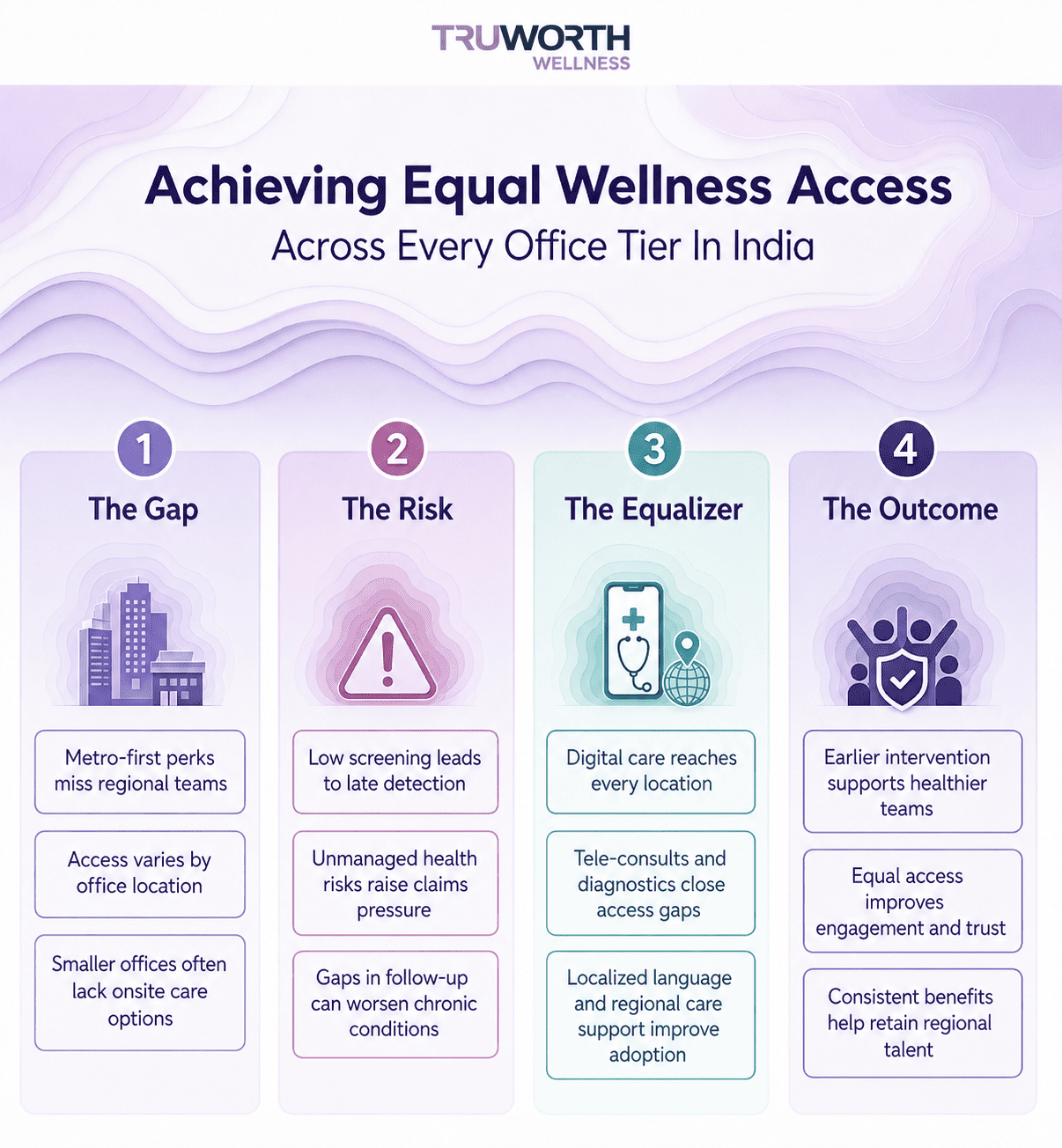
However, while talent acquisition and operational footprints have decentralized, corporate health benefits have largely remained centralized in metro headquarters.
An employee sitting in a flagship office in Cyber City or Whitefield often enjoys access to state-of-the-art onsite medical centers, ergonomic setups, organic cafeterias, and high-touch mental health counseling. Meanwhile, a peer working from a satellite office in a Tier-2 city or operating in a permanent remote arrangement is frequently left with nothing more than a basic group mediclaim policy.
This disparity creates a dangerous divide: Benefit Exclusion. Achieving true workplace health equity across all geographic tiers is no longer just an empathetic human resource objective, it is a critical business imperative for workforce retention, risk mitigation, and sustainable productivity in India.
The Growing Disparity in Indian Corporate Wellness
For decades, corporate wellness in India was designed around the physical office building. Onsite flu vaccination drives, yoga workshops in corporate conference rooms, and subsidized cafeteria meals were the gold standard. While these perks looked impressive on employer branding collateral, they inherently favored headquarters over regional units.
The Corporate Wellness Gap
|
Feature |
Metro Headquarters (Tier-1) |
Satellite Offices (Tier-2/3) |
|
Clinical Access |
Onsite Medical Clinics & Doctors |
Basic Group Health Insurance Only |
|
Preventive Care |
Onsite Diagnostic Camps & Screenings |
Out-of-pocket Screening Costs |
|
Lifestyle Support |
Onsite Fitness & Nutritious Cafeterias |
Limited or No Local Wellness Perks |
|
Mental Health |
Direct Access to EAP Counselors |
High Stigma & Lack of EAP Access |
When enterprise organizations expand into Tier-2 and Tier-3 regions, satellite teams are often relegated to transactional, insurance-only coverage. This "one-size-fits-all-metros" approach leads to severe operational friction:
- Alienation of Regional Talent: Employees in satellite locations feel like second-class corporate citizens when wellness programs, health challenges, and preventive initiatives are tailored exclusively for metro offices.
- Unmanaged Health Risk Pools: While metro employees benefit from proactive preventive care, non-metro employees often remain unaware of lurking metabolic disorders until an acute medical event occurs, driving up corporate claim-to-premium ratios (CPR).
- Loss of Productivity: Unaddressed physical and mental health issues lead to higher presenteeism and absenteeism in regional offices, directly impacting delivery timelines and client SLAs.
Key Takeaway for Leaders: True employee health benefits in India cannot stop at the boundary lines of Tier-1 cities. If your corporate wellness policy does not offer equal clinical accessibility, preventive screening, and digital engagement to an employee in Vadodara or Guwahati as it does to one in Bengaluru, your organization is exposed to hidden healthcare liabilities.
Why Tier-2 and Tier-3 Employees Face Unique Health Challenges?
It is a common misconception that non-metro employees live lower-stress, healthier lives than their metro counterparts. While traffic congestion might differ, non-metro corporate workers face distinct socio-demographic and healthcare infrastructure challenges that exacerbate health risks.
Non-Metro Workforce Challenges:
1) Health Infrastructure Hurdles
- Diagnostic fragmentation and inconsistent testing quality
- Shortage of specialized tertiary care facilities
- Pronounced stigma surrounding EAP and mental health care
2) Lifestyle & Environmental Pressures
- Rapid shift toward processed, high-glycemic diets
- Uncontrolled suburban urbanization and long commutes
- High rates of unscreened metabolic risks (diabetes, hypertension)
1. Accelerating Prevalence of Early-Onset Non-Communicable Diseases (NCDs)
According to the ICMR-INDIAB study, metabolic diseases are surging in Tier-2 and Tier-3 urban and semi-urban populations across India. Rapid industrialization and changing dietary patterns have caused a shift toward processed, high-glycemic foods. Coupled with sedentary desk work, employees in regional centers are showing high rates of early-onset Type 2 diabetes, dyslipidemia, and hypertension, often remaining undiagnosed due to a lack of routine corporate health screenings.
2. Fragmented Diagnostic and Tertiary Healthcare Infrastructure
While Tier-1 cities are saturated with multi-specialty hospital chains and standardized diagnostic labs, Tier-2 and Tier-3 locations frequently suffer from fragmented quality. Employees often hesitate to utilize preventive check-up allowances because booking tests requires navigating local, unaccredited facilities with inconsistent reporting standards.
3. Mental Health Stigma and Limited Care Access
Workplace burnout, role ambiguity, and operational stress affect regional teams just as severely as metro staff. However, in Tier-2 and Tier-3 cities, the social stigma surrounding mental healthcare is significantly higher, and localized, certified clinical psychologists are scarce. Without a confidential, digital-first Employee Assistance Program (EAP), regional employees rarely seek help for anxiety, depression, or burnout.
4. Urbanization Stressors in Emerging Metros
Rapidly expanding cities like Lucknow, Pune, Surat, and Visakhapatnam are experiencing sudden spikes in commute times, industrial pollution, and changing lifestyle patterns. The lack of structured public infrastructure in these fast-growing hubs creates localized stressors that manifest as chronic fatigue, sleep deprivation, and poor cardiovascular health among desk workers.
Strategies for Centralizing Wellness Benefits for a Pan-India Workforce
To dismantle regional health disparities, forward-thinking HR and Benefits leaders are moving away from decentralized, location-bound initiatives. Instead, they are implementing uniform, central framework strategies that govern employee wellbeing nationwide.
Pan-India Wellness Equalization Framework
|
Core Uniform Policy |
Human-Centric Delivery |
|
Standardized Biometric HRAs |
24/7 Digital Tele-Consults |
|
Equal Out-Patient Allowances |
Pan-India Diagnostic Drives |
|
Universal EAP Access |
Gamified Mobile Challenges |
1. Establish a Non-Negotiable Core Wellness Policy
Every employee, regardless of whether they operate out of a flagship HQ, a Tier-3 regional hub, or a remote hybrid setup, must have access to an identical base tier of preventive benefits. This includes:
- Standardized Biometric Health Risk Assessments (HRA)
- Annual Preventive Health Screenings
- 24/7 Virtual Primary Care & Tele-consultations
- Confidential Professional Mental Health Counseling (EAP)
2. Shift from Location-Centric to Human-Centric Benefits
Instead of spending corporate wellness budgets on fixed physical infrastructure (like building an expensive gym inside a single metro office), reallocate funds toward digital-first, decentralized solutions. A human-centric benefit travels with the employee, ensuring that a field sales manager in Tier-3 Bihar receives the same level of preventive support as an engineer in a Tier-1 tech park.
3. Deploy AI-Driven Personalization for Diverse Demographics
India is not a homogenous market. Nutritional habits, language preferences, and cultural nuances vary drastically across regional hubs. A standardized benefit framework must be powered by intelligent technology that tailors health journeys, providing regional dietary recommendations, multilingual app interfaces, and risk-stratified health nudges.
Leveraging Digital-First Health Portals for Geographical Inclusivity
Digital technology serves as the great equalizer in healthcare distribution. By deploying an enterprise-grade digital health ecosystem, corporations can deliver high-touch medical support to every corner of the country.
Digital Health Portal Ecosystem
- Centralized Enterprise App / Web Portal: Single access point for all employees nationwide
- 24/7 Tele-Consultations: Direct access to GPs, Gynecologists, Dermatologists, and Nutritionists
- Pan-India Diagnostic Booking: Seamless home and onsite check-up scheduling
- Confidential EAP Counseling: Multilingual mental health support
- Gamified Movement Challenges: Wearable sync for company-wide step challenges
Key Pillars of Digital Equity in Corporate Wellness
- 24/7 Tele-Consultations across Specialties: Employees in remote locations can consult top-tier General Physicians, Gynecologists, Dermatologists, and Nutritionists via video or audio directly through a mobile app, bypassing the lack of local specialist availability.
- Multilingual Digital Interfaces: Bridging the literacy and engagement gap by providing wellness content, health assessment questionnaires, and consultation support in regional Indian languages.
- Gamified Nationwide Health Challenges: Unify a geographically dispersed workforce through step challenges, fitness leaderboards, and habit-building streaks that connect employees in Tier-1, Tier-2, and Tier-3 offices on a single digital platform.
- Integrated Health Data Repositories: Enable employees to maintain secure, digital health records (compatible with ABDM/ABHA frameworks) that allow seamless medical tracking regardless of geographic relocation or travel.
Standardizing Preventive Screenings: HbA1c and BP Monitoring Beyond Metros
In India's corporate sector, non-communicable metabolic diseases represent a silent epidemic. The thin-fat Indian phenotype, characterized by higher abdominal adiposity and lower muscle mass at lower BMIs, makes Indian professionals unusually susceptible to Type 2 Diabetes and Hypertension at a younger age.
Critical Preventive Screening Parameters
|
Biomarker |
Normal / Target Metric |
Elevated / Risk Metric |
Clinical Significance |
|
HbA1c (Glycated Hb) |
< 5.7% |
≥ 6.5% |
Early indicator of Type 2 Diabetes & Pre-diabetes |
|
Blood Pressure |
< 120/80 mmHg |
≥ 140/90 mmHg |
Primary indicator for Hypertension & Cardiac Risk |
|
Lipid Profile |
LDL < 100 mg/dL |
High VLDL / Triglycerides |
Predictor of Atherosclerosis & Vascular Health |
The Power of Nationwide HbA1c and BP Screening
Early detection of elevated HbA1c and blood pressure levels can prevent irreversible end-organ damage, cardiac events, and renal complications. However, executing standardized screening programs across 50+ regional offices or remote employee clusters requires seamless logistics.
Operational Blueprint for Pan-India Screening Execution
- Phlebotomy Network Integration: Partner with a wellness provider that manages a unified network of NABL-accredited diagnostic labs to guarantee identical testing standards in metros and Tier-3 towns alike.
- Hybrid Screening Models:
- Onsite Health Camps: Deploy mobile phlebotomy teams to satellite offices, manufacturing units, and regional branches for single-day screening drives.
- Home Diagnostic Pickups: Offer home sample collection options for remote, hybrid, or field-force workers using integrated digital scheduling.
- Automated Risk Stratification: Raw lab reports must automatically convert into intuitive, easy-to-understand digital Health Risk Assessments (HRA). Employees identified as pre-diabetic (HbA1c 5.7%–6.4%) or hypertensive should be instantly routed to personalized lifestyle modification programs and physician tele-consultations.
The Role of Truworth Wellness in Driving Nationwide Benefit Equity
As India’s pioneer in enterprise health and corporate wellbeing, Truworth Wellness empowers organizations to bridge the geographical healthcare gap, transforming fragmented wellness initiatives into a unified, high-impact ecosystem.
Truworth Wellness Equalization Engine
- Pan-India Diagnostic Reach: Network covering over 10,000+ pin codes across Tier-1, Tier-2, Tier-3 cities, and industrial belts.
- The Wellness Corner App: Centralized digital health portal for physical checkups, tele-medicine, nutrition coaching, and fitness tracking.
- Clinical EAP & Tele-Med: 24/7 access to licensed, multilingual clinical psychologists and medical specialists across India.
- Data-Driven HR Dashboards: Real-time, anonymized population health analytics to monitor health risk trends across regional branches.
Build one consistent wellness experience for every employee, across every office tier. Truworth Wellness helps enterprises deliver preventive screenings, digital consultations, localized support, and actionable health insights through a unified, scalable platform.
Bridge the Wellness Gap in Your Organization Today! Your employees deserve equal access to quality healthcare, whether they work from a skyscraper in Mumbai or a regional office in Indore. Partner with Truworth Wellness to deploy scalable, equitable, and science-backed employee health solutions that drive engagement, productivity, and care across every tier of your enterprise.
FAQs: Benefit Equity Across India’s Enterprise Workforce
1. What does benefit equity mean in corporate wellness?
Benefit equity means every employee receives comparable access to essential health and wellbeing support, regardless of whether they work from a metro headquarters, regional branch, factory location, field role, or remote setup.
2. Why do Tier-2 and Tier-3 employees need focused wellness support?
Regional employees may face fewer local specialist options, fragmented diagnostics, limited mental health access, and lower participation in preventive programs. A digital-first model helps reduce these access gaps.
3. Is group health insurance enough for distributed teams?
Insurance is important, but it is mostly reactive. Distributed teams also need preventive screenings, tele-consultations, mental health support, health coaching, and simple digital access to everyday care.
4. How can employers make wellness benefits pan-India?
Employers can standardize core benefits, use one digital health platform, offer home and onsite diagnostics, provide multilingual support, and track anonymized population health trends across locations.
5. What should HR leaders measure to know if benefit equity is working?
Useful indicators include screening participation, tele-consult usage, EAP uptake, high-risk case follow-ups, location-wise engagement, employee satisfaction, absenteeism trends, and claims movement over time.