Mitigating Virtual Classroom Trauma: Designing Specialized EAP Workflows For Indian EdTech Talent

The Indian Educational Technology (EdTech) sector has experienced exponential growth, transforming tech corridors into global centers for digital learning innovation. However, beneath this rapid scale lies a human cost that corporate India can no longer afford to overlook.
While online tutors, academic counselors, and technical support staff deliver seamless educational experiences to millions of students, they simultaneously navigate an intense landscape marked by live virtual classroom harassment, high-pressure performance metrics, and 12-to-14-hour work shifts.
Unlike traditional corporate environments, live virtual classrooms expose educators to real-time public scrutiny, unpredictable student or parent hostility, and tech-induced anxiety: a phenomenon now recognized as Virtual Classroom Trauma. Standard, off-the-shelf Employee Assistance Programs (EAPs) are ill-equipped to address these acute, hyper-specific stressors.
To safeguard workforce mental health, prevent turnover, and improve organizational resilience, Indian HR leaders must transition from reactive wellness policies to specialized, trauma-informed EAP workflows.
Table of Contents / Article Index
|
Section # |
Topic / Headline |
Key Takeaway / Focus |
|
01 |
The Crisis Behind the Screen |
Analyzing the psychological and physical strain on
Indian EdTech talent across major tech hubs. |
|
01.1 |
Trigger Points |
Deconstructing top drivers of acute distress: sales
targets, cyberbullying & desk hours. |
|
02 |
Why Standard Generic EAPs Fail EdTech |
Identifying structural flaws in legacy EAPs that keep
utilization rates under 3%. |
|
03 |
4-Step Framework for Specialized EAPs |
An actionable step-by-step model combining PFA, AI
risk screening, and care integration. |
|
03.1 |
Step 1: Real-Time Incident Response |
Deploying rapid Psychological First Aid (PFA)
de-escalation protocols for live classroom crises. |
|
03.2 |
Step 2: Proactive Health Screenings |
Leveraging predictive technology for early mental and
metabolic risk detection. |
|
03.3 |
Step 3: Multilingual Tele-Counseling |
Overcoming cultural stigma with 24/7 care in 6
regional Indian languages. |
|
03.4 |
Step 4: Integrated Physical-Mental Care |
Unifying mental health support with preventive
cardiometabolic diagnostic care. |
|
04 |
Role of HR Leaders |
Empowering managers with trauma-informed leadership
and data privacy tools. |
|
05 |
Partnering with Truworth Wellness |
Transforming enterprise workforce wellbeing with
Truworth's 360° health ecosystem. |
|
06 |
Frequently Asked Questions (FAQ) |
Clear answers and JSON-LD schema for HR
decision-makers. |
01. The Crisis Behind the Screen: Understanding Virtual Classroom Trauma in Indian EdTech
In India's primary tech corridors: Bengaluru, Gurgaon, Pune, and Hyderabad, EdTech professionals operate under pressure comparable to emergency response centers, but without equivalent psychological support structures.
According to studies by the Indian Council of Medical Research (ICMR) and ASSOCHAM, over 42% of corporate employees in Indian private sectors suffer from generalized anxiety or depression, with tech-enabled remote workers showing heightened vulnerability.
|
Psychological Stressors |
Physical Health Impacts |
|
Live classroom abuse & public streaming
disruptions |
Early-onset hypertension |
|
Unrealistic sales conversion targets |
HbA1c spikes & prediabetes risks |
|
Chronic "always-on" digital fatigue |
Shift-work sleep disorders |
Virtual classroom trauma is defined as the cumulative psychological injury caused by severe live stream anxiety, public humiliation, aggressive performance evaluations, and isolated digital workspaces. Educators routinely manage live streams with hundreds: or even thousands: of students. When disruptions occur, the educator absorbs the stress publicly, without immediate co-located peer support.
Furthermore, the physiological consequences of this digital friction are measurable. The shift from interactive in-person teaching to sedentary, screen-bound instruction creates a dangerous intersection of mental distress and physical ill-health.
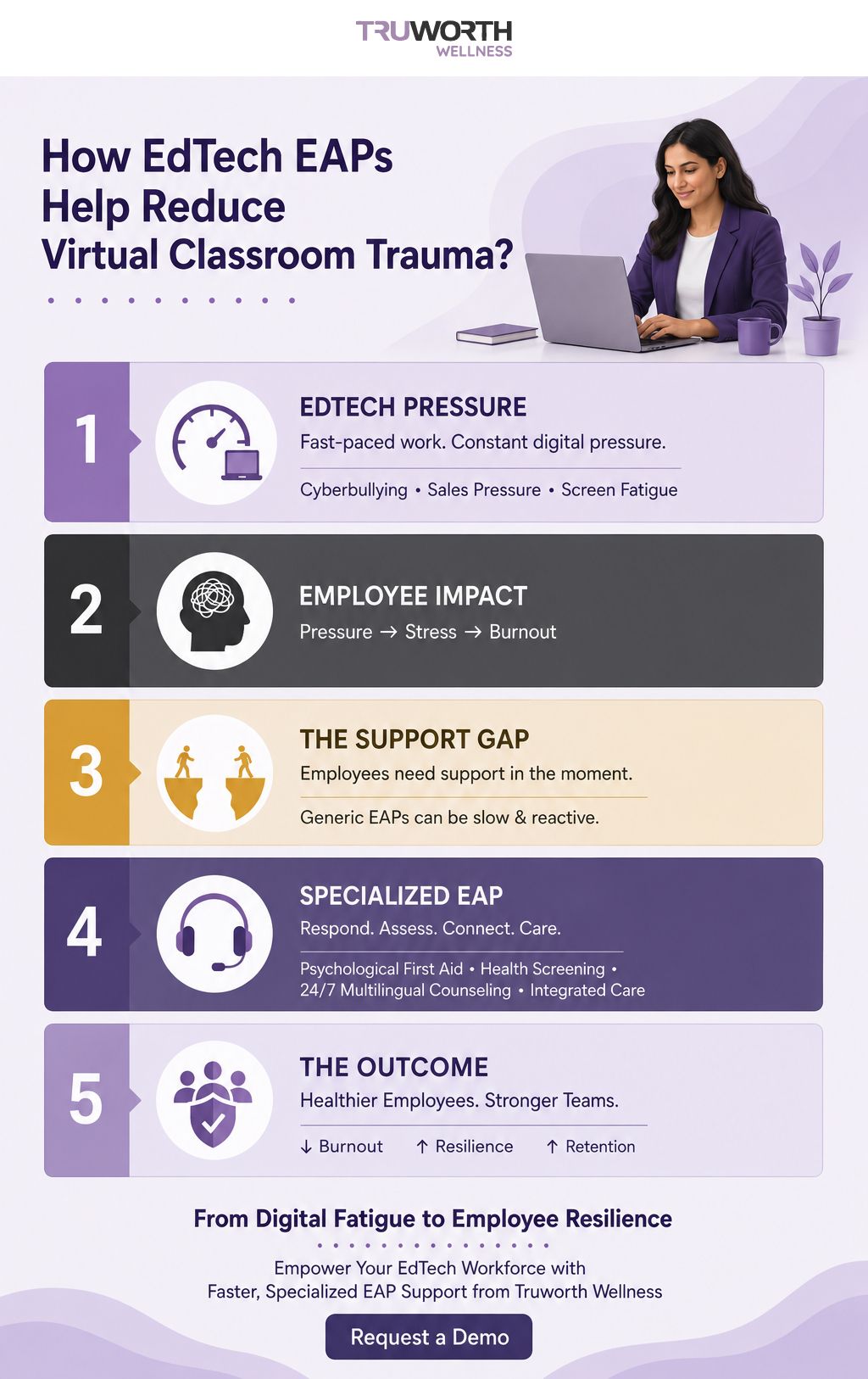
Extended 12-to-14-hour work shifts disrupted by shift-work sleep disorder lead to heightened cortisol levels, directly driving early-onset hypertension, dyslipidemia, and elevated HbA1c levels among professionals aged 22 to 32.
Without proactive interventions, these early metabolic shifts increase long-term health risks, making integrated corporate diabetes prevention strategies an essential companion to workplace mental health interventions.
01.1. Trigger Points: Aggressive Sales Targets, Live Cyberbullying, and Extended Desk Hours
To design effective EAP workflows, HR managers must understand the three primary operational triggers unique to the EdTech sector:
EDTECH TRAUMA & BURNOUT TRIGGERS
- Trigger 1: Live Stream Harassment & Cyberbullying
Online educators frequently face "Zoom-bombing," inappropriate comments in open chat feeds, and aggressive confrontations from dissatisfied parents. Unlike an offline school where a principal or supervisor can step in, online tutors must de-escalate abusive situations live while maintaining professional delivery.
- Trigger 2: Aggressive Conversion Pressure
Academic counselors and sales agents work under intense month-end pressure to meet conversion metrics. This creates continuous performance anxiety, blurred work-life boundaries, and constant operational friction.
- Trigger 3: Prolonged Sedentary Screen Hours
Spending 10 to 14 hours continuously seated in front of blue-light-emitting monitors induces chronic physical fatigue, visual strain, and musculoskeletal disorders. Practicing a tailored workplace ergonomics and desk posture guide can help alleviate daily physical discomfort, though underlying structural stressors require systemic intervention.
Key Takeaway for Leaders:Virtual classroom trauma is a structural issue caused by high-pressure digital environments, not an individual weakness. Workplace health programs must combine real-time crisis response with physical wellness initiatives.
02. Why Standard Generic EAPs Fail the Fast-Paced Indian EdTech Sector
For decades, enterprise EAP models in India functioned as passive, legacy benefits: a toll-free telephone number buried inside an employee handbook. When applied to high-velocity EdTech organizations, these traditional models fail for several key reasons:
- Reactive vs. Proactive Design: Traditional EAPs rely entirely on self-referral. An educator experiencing an acute panic attack after a hostile live session rarely has the time or emotional energy to navigate a multi-step call-center menu.
- Lack of Contextual and Crisis Protocols: Generic EAP call centers are trained for general stress counseling. They lack specialized clinical workflows for de-escalating live digital abuse, public streaming humiliation, or sales-target burnout.
- Low Engagement and Cultural Stigma: In many Indian workplaces, significant social stigma surrounds mental health support. Combined with fear of confidentiality breaches, generic EAP utilization rates in Indian corporate environments regularly hover below 3%.
- Siloed Care Delivery: Standard EAPs operate independently from physical health benefits, ignoring the clinical link between chronic workplace stress, elevated blood pressure, and metabolic imbalances.
To address these gaps, organizations require structured employee mental health and workplace counseling frameworks designed for the real-time demands of digital-first operations.
Comparison: Generic EAP vs. Truworth Specialized EdTech EAP
|
Feature |
Generic Traditional EAP |
Truworth Specialized EdTech EAP |
|
Response Time |
24–48 Hours (Scheduled) |
Immediate / Real-Time Psychological First Aid (PFA) |
|
Delivery Context |
General / Non-Specific |
Specialized EdTech Workflows |
|
Language Support |
English & Hindi Only |
6 Regional Languages (24/7) |
|
Physical-Mental Integration |
None (Isolated Service) |
Unified (EAP + HbA1c/Biometric Diagnostics) |
|
Utilization Rate |
< 3% Average |
15% – 28% Active Engagement |
03. 4-Step Framework: Designing Tailored EAP Workflows for EdTech Educators and Operations
To replace outdated, passive EAP models, Truworth Wellness has established an actionable four-step framework. This model helps Indian enterprise HR teams deliver targeted psychological and physical support directly to EdTech workforces.
TRUWORTH 4-STEP EDTECH EAP INTEGRATION MODEL
- Step 1: Real-Time Incident Response & Psychological First Aid (PFA)
- Step 2: Proactive Health Screenings via Truworth AI Portals
- Step 3: Multilingual Tele-Counseling Tailored to Indian Contexts
- Step 4: Integrated Physical-Mental Care (Cardiometabolic & HbA1c Tracking)
Step 1: Real-Time Incident Response & Psychological First Aid (PFA)
When an online tutor experiences severe live harassment or technical collapse during a high-stakes classroom session, waiting days for a therapy appointment is ineffective. EdTech EAP workflows require an immediate intervention mechanism:
- The "SOS De-escalation Button": Integrating a discreet crisis button within the educator’s teaching dashboard connecting them directly to a trained Psychological First Aid (PFA) counselor.
- Mandatory Post-Incident Debriefs: Establishing automated protocols that grant educators an immediate 30-minute buffer window following severe classroom incidents, supported by an on-demand debrief with a behavioral specialist.
- Managerial PFA Training: Training shift leads and academic ops heads to recognize acute trauma responses (such as hyperventilation, emotional withdrawal, or cognitive paralysis) and initiate immediate support actions.
Step 2: Proactive Health Screenings via Truworth Wellness Portals
Rather than waiting for burnout to trigger absenteeism, forward-thinking enterprise HR teams use predictive health technology to identify early risks.
|
Input Data Matrix |
Predictive Outputs |
|
Stress Self-Assessments (HRA) |
Burnout Risk Scoring |
|
Engagement Metric Drops |
Targeted Care Recommendations |
|
Digital Platform Micro-Signals |
Early HR Intervention Alerts |
Using the Truworth AI-Inclusive Wellness Portal, EdTech companies can monitor real-time indicators of chronic stress across their workforce. Employees complete short, validated stress self-assessments and engagement surveys directly within the app.
By analyzing these risk scores alongside operational metrics (such as excessive overtime or declining portal activity), the AI platform detects early warning signs of exhaustion. It then automatically suggests personalized stress-relief exercises, micro-meditations, or confidential counseling sessions to at-risk employees: long before acute burnout occurs. Implementing periodic Health Risk Assessments (HRA) helps establish a reliable baseline for proactive workplace care.
Step 3: Multilingual Tele-Counseling Tailored to Indian Cultural Contexts
Culture and language play a central role in mental health counseling across India. An educator based in Tier-2 cities like Mysuru, Nagpur, or Vijayawada may struggle to express complex emotional distress in English during high-stress situations.
MULTILINGUAL CARE DELIVERY IN MULTI REGIONAL LANGUAGES
- Hindi
- English
- Tamil
- Telugu
- Kannada
- Marathi
- And more…
The Truworth Wellness EAP platform resolves this barrier by providing 24/7 confidential tele-counseling across major Indian languages. Counselors are trained to navigate regional social expectations, family dynamics, and workplace pressures unique to Indian professionals, making mental health support accessible and culturally resonant.
Step 4: Integrated Physical-Mental Care Addressing Early-Onset Cardiometabolic Risks
Chronic psychological stress triggers sustained cortisol production, accelerating physical health risks such as insulin resistance, abdominal obesity, and hypertension. An effective EAP cannot treat mental health in isolation from physical wellbeing.
THE CHRONIC STRESS-METABOLIC DISEASE CYCLE
Workplace Stress ➔ Elevated Cortisol ➔Insulin Resistance ➔ HbA1c Spikes ➔Hypertension / Dyslipidemia
Truworth Wellness combines psychological counseling with preventive medical diagnostic checks. When an employee engages with the EAP for prolonged stress or exhaustion, the portal offers integrated onsite biometric screenings and health checks, including:
- Fasting Blood Glucose & HbA1c Tests: Detecting prediabetes early.
- Lipid Profile Screenings: Monitoring cardiovascular risks.
- Digital Blood Pressure Monitoring: Tracking silent hypertension.
Connecting clinical diagnostics with behavioral therapy allows organizations to address the full spectrum of employee health. Reviewing comprehensive strategies for managing workplace stress and burnout provides valuable guidance on building integrated health management plans.
Key Takeaway for HRs/Leaders: True workforce wellbeing requires bridging the gap between psychological support and physical preventive medicine. A unified health framework protects both employee wellness and business performance.
04. Role of HR Leaders: Destigmatizing Mental Health in Indian Tech Hubs
HR leaders at major EdTech enterprises across Bengaluru, NCR, and other tech hubs hold significant influence in shifting corporate culture from implicit endurance to active psychological safety.
TRAUMA-INFORMED HR LEADERSHIP PILLARS
- Leadership Training: Empowering managers to spot trauma early and conduct supportive, non-punitive check-ins.
- Psychological Safety: Creating safe environments in sales and academic ops so employees can step back after acute incidents.
- Anonymized Analytics: Measuring ROI while fully protecting individual employee privacy.
Trauma-Informed Leadership Training:
Managers, shift leads, and team leads should undergo structured training to identify early signs of emotional strain, such as sudden drops in engagement, short tempers during team meetings, or erratic attendance. Teaching managers how to conduct supportive, non-punitive check-ins creates an environment where employees feel safe raising concerns early. Learn how to foster trust by building a psychologically safe workplace.
Creating Psychological Safety Nets:
In high-intensity sales and academic teams, fear of performance management often prevents employees from seeking help. HR leaders can establish clear operational policies that protect employees who step back temporarily following acute incidents, ensuring that accessing mental health support does not negatively impact performance reviews or career progression.
Measuring EAP ROI Without Compromising Employee Privacy:
A common challenge for CHROs is demonstrating the business value of EAP investments while maintaining strict confidentiality. Truworth Wellness solves this through advanced, anonymized dashboard analytics:
|
Executive Metric |
Business Impact Metric |
|
Stress Risk Index |
Absenteeism Reduction Trend |
|
Departmental Engagement Rates |
Retainable Talent Risk Level |
|
Common Burnout Drivers |
Group Medical Insurance ROI Improvement |
HR leaders receive aggregated workforce insights that highlight high-risk departments and common stress drivers across the organization: all while individual identity data remains fully protected.
05. Partnering with Truworth Wellness: Elevating EdTech Workforce Wellbeing
As India’s leading corporate health and employee wellness organization, Truworth Wellness partners with enterprises to build resilient, health-conscious workforces.
The Truworth Integrated Wellness Ecosystem
- 24/7 Multilingual EAP & Crisis Response
- AI-Powered Health Risk Assessments (HRA) & Analytics
- Onsite & Virtual Diagnostic Health Checkups
- Chronic Disease Management (Diabetes, Hypertension, Ergonomics)
- Mobile Wellness App with Gamified Health Challenges
By unifying mental health support, preventive health checkups, digital engagement platforms, and chronic disease management into a single ecosystem, Truworth Wellness helps organizations move beyond fragmented wellness offerings to achieve measurable long-term results.
Take Action for Your Workforce
Protect your educators, support staff, and operational teams from virtual classroom trauma with a specialized EAP strategy built for the pace of modern EdTech.
Contact the Truworth Wellness Team today to schedule a custom EAP demonstration.
06. Frequently Asked Questions (FAQ)
FAQ 1: What is "Virtual Classroom Trauma" and how does it affect EdTech employees?
Virtual Classroom Trauma refers to acute psychological stress and emotional exhaustion experienced by online educators and support staff. It is triggered by live online harassment, aggressive sales conversion targets, public technical failures, and extended, isolated desk hours. Left unaddressed, it leads to rapid burnout, high turnover, and physical health complications like early-onset hypertension and elevated blood sugar levels
FAQ 2: Why do standard corporate Employee Assistance Programs (EAPs) perform poorly in EdTech companies?
Traditional EAPs rely on passive, self-referral models with long waiting times for appointments. They lack specialized protocols for live classroom abuse and fail to offer immediate Psychological First Aid (PFA). Furthermore, language barriers and cultural stigma surrounding mental health keep utilization rates below 3% in most Indian workplaces.
FAQ 3: How does Truworth Wellness protect employee confidentiality while providing health insights to HR?
Confidentiality is central to the Truworth Wellness platform. All individual counseling sessions, diagnostic test results, and personal health assessment responses are strictly confidential and compliant with data protection standards. HR leaders receive aggregate, anonymized data dashboards that show risk trends across departments without exposing any personal health information.
FAQ 4: How does physical preventive care integrate with an EAP workflow?
Chronic workplace stress elevates cortisol levels, directly increasing the risk of insulin resistance, dyslipidemia, and high blood pressure. Truworth Wellness integrates mental health tele-counseling with preventive health screenings (such as HbA1c and lipid profiles), allowing organizations to treat the psychological and physical impacts of stress together.
FAQ 5: Can Truworth's EAP platform support regional workforces across India?
Yes. Truworth Wellness provides 24/7 confidential tele-counseling in major Indian languages: Hindi, English, Tamil, Telugu, Kannada, and Marathi etc. This ensures that employees across all Tier cities receive culturally relevant support in the language they feel most comfortable using.