Gen Z & Millennial Financial Worries Impacting Their Physical Health?

Money worries rarely stay outside the workplace. For Gen Z and Millennial employees managing rising living costs, debt, taxes and family responsibilities, financial uncertainty can become persistent mental and physical strain. Employee financial wellness programs in India can help organizations address that strain before it turns into distraction, disengagement or an avoidable decision to leave.
The strongest response is not another isolated money-management webinar. It is a connected model that combines practical financial guidance with confidential emotional support, giving employees both the knowledge to act and a safe place to manage the stress surrounding those decisions.
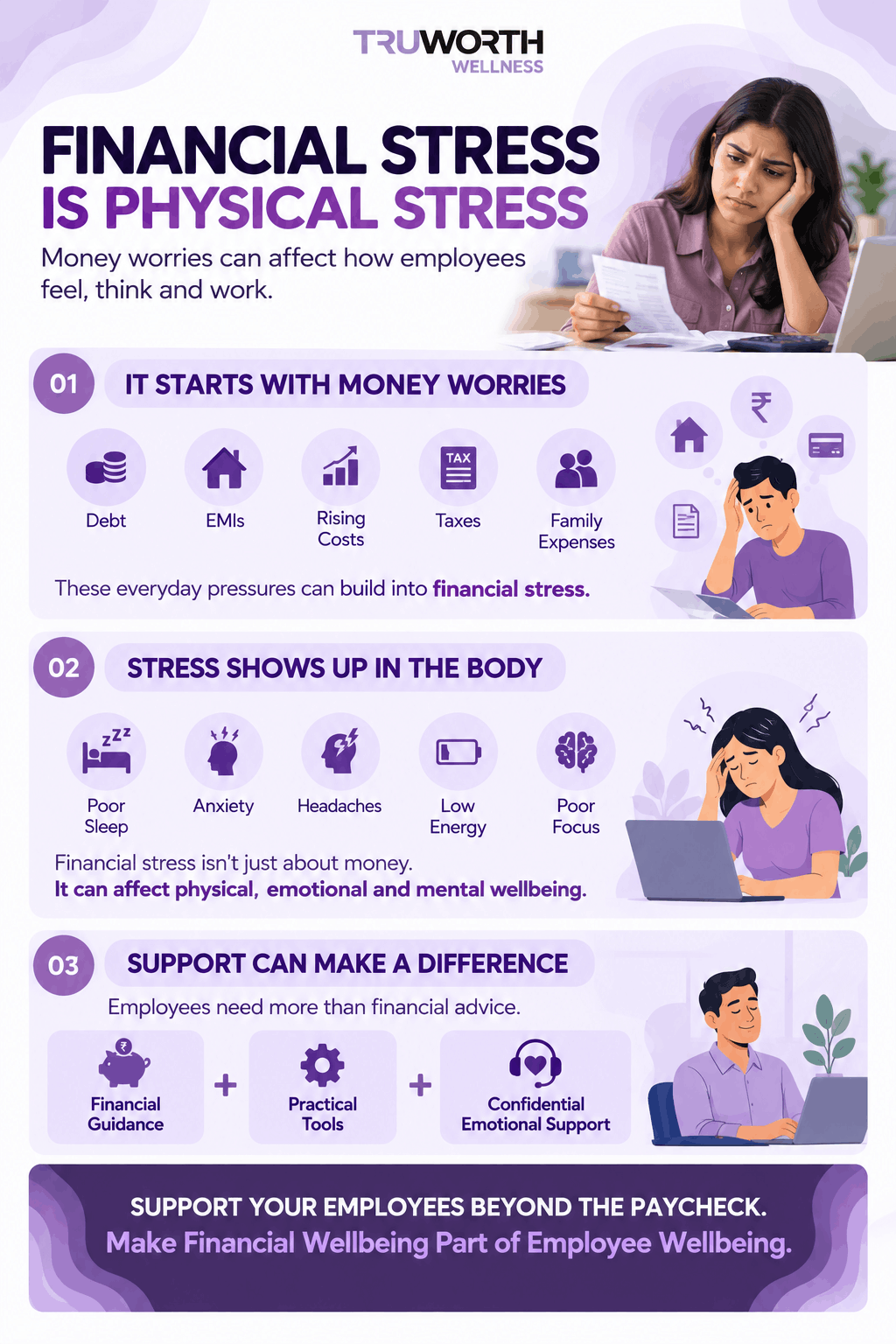
Why Financial Stress Becomes Physical Stress?
Financial anxiety in the workplace can keep the body in a prolonged state of alert. An upcoming EMI, an unexpected medical bill or uncertainty about taxes may lead to poor sleep, headaches, muscle tension, digestive discomfort and difficulty concentrating. The trigger may be financial, but the employee experiences it emotionally and physically.
This is why financial stress management belongs within a broader employee wellbeing strategy. Treating it only as a budgeting problem overlooks the anxiety, shame and decision fatigue that often accompany money concerns. Treating only the emotional symptoms leaves the practical source of stress unresolved.
Financial Stress and Productivity Are Closely Connected
Employees do not need to discuss their finances openly for money pressure to affect work. They may repeatedly check balances, postpone important decisions, struggle to focus during meetings or use work hours to resolve urgent financial issues. Over time, this can reduce energy, confidence and participation.
Understanding how financial stress affects employee performance requires looking beyond visible output. Common workplace signals may include:
- Reduced concentration and more frequent task switching
- Absenteeism or presenteeism linked to stress-related symptoms
- Reluctance to participate in social or team activities that involve spending
- Lower motivation when salary feels disconnected from financial security
- Interest in leaving for a marginal pay increase, even when the current role is otherwise suitable
None of these signs proves that an employee is under financial strain. Together, however, they explain why financial stress and productivity should be considered in workforce wellbeing and retention planning.
Why Younger Employees May Experience Money Pressure Differently?
Early-career employees are building financial habits while navigating rent, education loans, family expectations, insurance choices, digital credit and unfamiliar tax systems. Many have access to more financial information than previous generations, yet that information is often fragmented, promotional or difficult to apply.
Employee financial stress in India is also shaped by local realities, including different living costs across cities, family responsibilities and varying levels of familiarity with tax, insurance and long-term planning.
Gen Z Financial Wellness in the Workplace
Gen Z employees may be earning independently for the first time while making decisions about credit, savings and investments. Immediate access to digital lending and buy-now-pay-later products can simplify purchases but also make repayment obligations harder to track. Financial wellness for Gen Z employees should therefore focus on timely, judgement-free guidance rather than generic lectures about saving.
Millennial Financial Stress in the Workplace
Millennials may be balancing home loans, childcare, eldercare, lifestyle costs and long-term planning at the same time. Even employees with stable incomes can feel financially stretched when several responsibilities overlap. Support must recognize that financial wellbeing is not determined by salary alone; cash flow, debt, dependants and confidence all shape the experience.
What Effective Financial Wellness Programs for Employees Include?
Effective financial wellness programs for employees help people make informed decisions without collecting unnecessary personal financial information or telling them how to spend. They provide education, navigation and access to qualified support while preserving employee choice and confidentiality.
A practical program may include:
- Financial literacy programs for employees covering budgeting, credit, debt and emergency funds
- Plain-language tax education and access to tax-planning tools
- Sessions on insurance, retirement planning and responsible investing
- One-to-one guidance for employees who need personalized support
- A clearly governed salary advance for employees where the organization chooses to offer it
- Confidential counselling for anxiety, sleep concerns, relationship strain or emotional distress linked to money
These financial wellness benefits for employees work best when they are available throughout the year. A single annual session cannot anticipate the moments when an employee changes jobs, files taxes, faces an emergency or takes on a new family responsibility.
A Unified Model for Financial and Emotional Wellbeing
Financial education can explain what to do. An employee assistance program can help someone manage the fear, conflict or overwhelm that makes action difficult. Bringing both into a unified support journey closes the gap between information and behaviour.
For example, an employee concerned about debt may first use a self-guided budgeting resource, attend a confidential consultation and then speak with a counsellor if anxiety is disrupting sleep or work. The employee chooses the level of support, and each service has a clear scope. Financial educators should not provide therapy, and counsellors should not provide regulated financial advice.
This coordinated approach helps reduce stigma because employees can enter through a practical financial topic rather than needing to label their experience as a mental health concern. It also makes employee benefits easier to understand by connecting related services through one navigation experience.
How Corporate Wellness Programs in India Can Respond?
Corporate wellness programs in India should reflect the financial realities of a diverse workforce. Needs can vary by age, income, city, family structure, employment stage and financial confidence. The goal is not to create one definition of financial success, but to give employees credible options at relevant moments.
Organizations can build a more useful model in five steps:
1. Listen without intruding. Use anonymous pulse surveys and utilization trends to understand broad needs without asking employees to reveal personal balances or debts.
2. Segment by life stage. Offer relevant pathways for first salaries, tax filing, debt management, family protection and long-term planning.
3. Connect education with action. Pair learning sessions with calculators, checklists, consultation access and clear next steps.
4. Protect confidentiality. Explain what data is collected, who can access it and how individual counselling or consultation information is separated from employer reporting.
5. Communicate at the right moments. Use onboarding, appraisal cycles, tax season and benefit enrolment as timely opportunities for support.
Reducing Financial Stress Among Young Employees
Reducing financial stress among young employees requires more than adding content to a benefits portal. Employees must know where to start, trust that support is confidential and be able to act without navigating several disconnected vendors.
A useful communication plan avoids assumptions such as ‘young employees do not know how to budget.’ Instead, it acknowledges real pressures and offers specific help: understanding a payslip, planning taxes, comparing insurance options, managing credit or speaking privately with a counsellor. Managers should know how to direct employees to support without trying to become financial advisers themselves.
How to Measure Financial Wellness Without Invading Privacy?
Program measurement should focus on access, usefulness and workforce-level outcomes, not an employee’s private financial position. Appropriate measures may include:
- Awareness and registration rates
- Participation across education, tools and confidential consultations
- Employee-reported confidence in finding suitable support
- Repeat engagement and completion of recommended next steps
- Aggregated wellbeing, distraction and retention indicators
Reporting should remain aggregated and should never expose an individual’s financial questions or counselling details. Clear privacy boundaries are essential to participation and trust.
The Business Value of Financial Wellbeing
Well-designed employee financial wellness programs in India can strengthen the value of existing employee benefits rather than operating as a separate initiative. When employees can access reliable guidance and confidential support, they are better equipped to make decisions, manage stress and stay engaged at work.
For employers, the potential value includes less financial distraction, stronger benefit utilization, a more relevant proposition for early-career talent and better support for retention. These outcomes depend on consistent access, credible expertise and employee trust—not on a one-time campaign.
How Truworth Wellness Can Help?
Truworth Wellness helps organizations bring financial wellbeing education and confidential emotional support into a connected employee experience. Through structured awareness initiatives, practical resources, guided access and EAP support, employees can find the right help without navigating multiple disconnected touchpoints.
The result is a more accessible approach to financial stress management—one that supports everyday decisions while recognizing when money concerns are affecting mental or physical wellbeing.
Build a more relevant wellbeing experience for Gen Z and Millennial employees with Truworth Wellness.
Frequently Asked Questions
What are employee financial wellness programs?
Employee financial wellness programs provide education, tools and access to guidance that help employees manage everyday financial decisions. They may cover budgeting, debt, taxes, insurance, savings and retirement, alongside confidential emotional support where appropriate.
How does financial stress affect employee performance?
Financial stress can reduce concentration, disrupt sleep and increase the time employees spend handling money concerns during work. Persistent pressure may also contribute to absenteeism, presenteeism, disengagement and turnover intent.
How can employers address Millennial financial stress in the workplace?
Employers can offer support for overlapping responsibilities such as debt, housing, childcare, eldercare, insurance and long-term planning. Flexible education, one-to-one guidance and confidential counselling can make the support more relevant.
Is a salary advance for employees a complete financial wellness solution?
No. A responsibly governed salary advance may help with short-term cash flow, but it does not replace education, debt guidance, emergency planning or emotional support. Employees should also understand eligibility, repayment terms and possible limitations.
How can organizations reduce financial anxiety in the workplace?
Start with confidential listening, offer support for different life stages, connect financial education with actionable tools and provide counselling for stress-related concerns. Regular communication makes support easier to find when it is needed.