Leadership Guilt: How Caring For People While Making Hard Decisions Creates An Emotional Burden?

Leadership is often described in terms of authority, influence, and responsibility. What is spoken about far less is guilt. Quiet, persistent, and deeply personal, leadership guilt sits beneath many decisions leaders make every day.
It does not show up on performance dashboards or engagement surveys. Yet it shapes how leaders communicate, delegate, and even rest. In many organizations, especially high-pressure corporate environments, leadership guilt has become a silent norm.
Also Read: Subtle Leadership Responses That Build Trust And Respect In The Workplace
What Is Leadership Guilt?
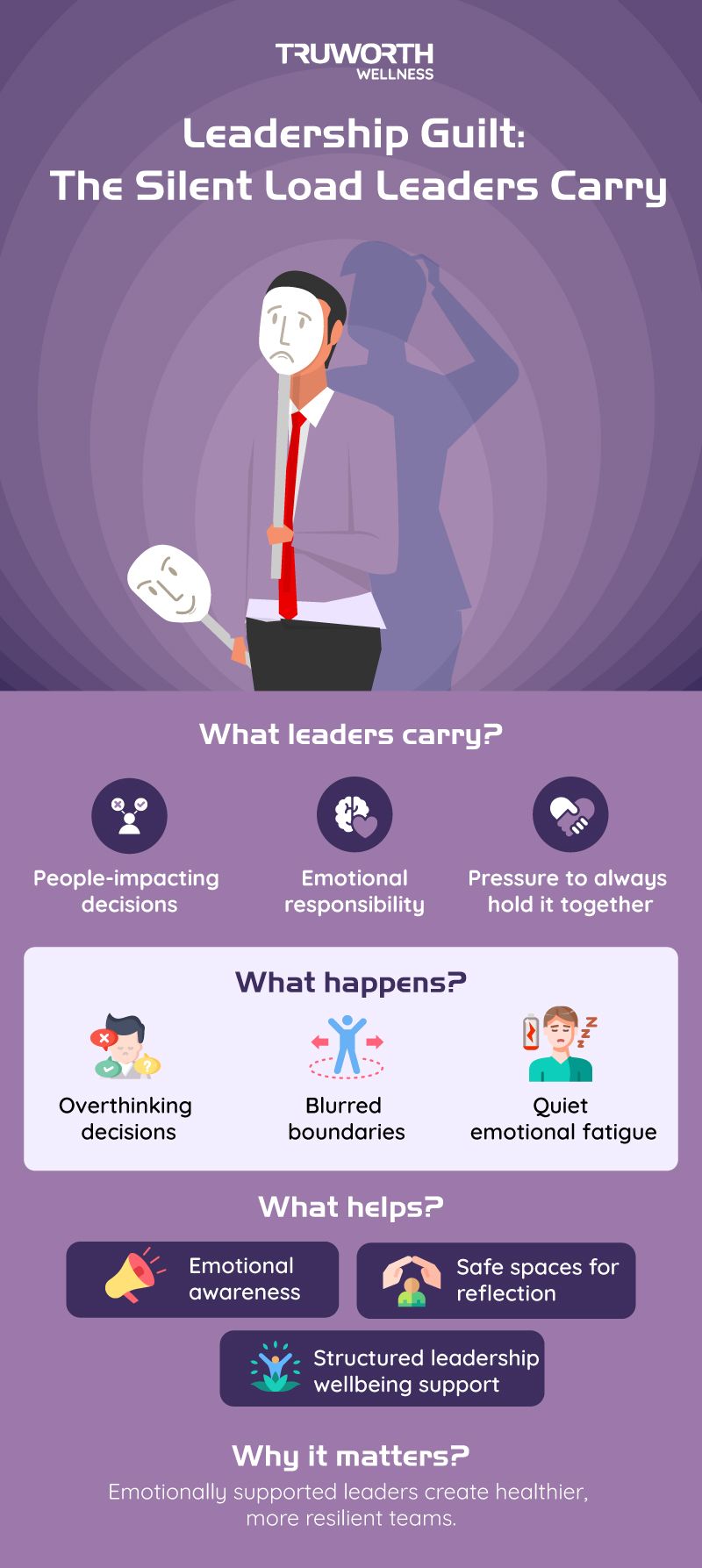
Leadership guilt is the emotional weight leaders carry when their decisions affect others. It can stem from letting someone go, denying a request, pushing teams during demanding phases, or simply not being available enough.
Unlike stress, which is often linked to workload, guilt is relational. It arises from caring deeply about people while being required to make choices that may disappoint, inconvenience, or hurt them.
Many leaders feel guilty for outcomes they do not fully control. Market shifts, budget constraints, organizational restructuring, and top-down directives often force decisions that conflict with personal values. Over time, this creates an internal conflict that is rarely acknowledged.
Why Leadership Guilt Is So Common Today?
Modern leadership has changed. Leaders are no longer expected to only deliver results. They are expected to be emotionally intelligent, empathetic, accessible, and human.
While this shift is positive, it also increases emotional load. Leaders are now deeply involved in their teams’ wellbeing, career growth, and morale. When something goes wrong, the emotional responsibility feels personal.
Remote and hybrid work has added another layer. Boundaries between work and personal time have blurred. Leaders often feel guilty for not responding quickly, not being visible enough, or not offering enough flexibility, even when they are already stretched thin.
In cultures where leaders are expected to be constantly available and supportive, guilt becomes a default emotional state.
Also Read: Setting Healthy Boundaries With Clients & Customers In Corporate Relationships
How Leadership Guilt Shows Up At Work?
Leadership guilt does not always look dramatic. More often, it shows up in subtle behaviors.
- Some leaders overextend themselves, taking on too much to compensate for perceived shortcomings.
- Others avoid difficult conversations to prevent discomfort, delaying decisions that actually need clarity.
Guilt can also lead to inconsistent boundaries. Leaders may say yes when they should say no, approve requests they cannot sustain, or stay silent when feedback is needed.
Over time, this erodes trust, not because leaders do not care, but because guilt-driven leadership often lacks clarity and consistency.
The Hidden Impact On Decision-Making
Guilt affects how leaders think. When emotional load is high, decision-making becomes reactive. Leaders may prioritize short-term harmony over long-term health.
This can result in:
- Unclear expectations
- Uneven accountability
- Emotional exhaustion on both sides.
Teams may feel confused or unsupported, even when leaders are deeply invested.
Ironically, the very guilt that comes from caring can reduce leadership effectiveness if left unaddressed.
Why Leaders Rarely Talk About It?
Leadership guilt is rarely discussed because it feels like a weakness. Many leaders believe they should be able to carry emotional responsibility without struggle.
There is also a lack of safe spaces for leaders to speak honestly. While organizations increasingly focus on employee wellbeing, leaders are often excluded from these conversations.
Admitting guilt can feel risky, especially in cultures that equate leadership with certainty and control.
As a result, many leaders carry emotional burden alone.
Reframing Guilt As A Signal, Not A Failure
Guilt is not a sign of poor leadership. In fact, it often indicates care, integrity, and a strong sense of responsibility.
The problem is not feeling guilt. The problem is letting guilt silently dictate behavior.
When acknowledged, guilt can become a signal. It can prompt reflection, clearer communication, and better decision-making. When ignored, it turns into chronic emotional strain.
Healthy leadership involves recognizing emotional responses without allowing them to override judgment.
What Organizations Can Do Better?
Leadership guilt is not just an individual issue. It is shaped by organizational systems and expectations.
- Organizations can start by acknowledging that leadership roles carry emotional labour. Creating forums where leaders can reflect, share experiences, and build emotional resilience is critical.
- Clear decision frameworks also help. When leaders understand boundaries, authority, and support structures, guilt reduces. They are less likely to internalize outcomes that are systemic rather than personal.
- Wellbeing initiatives should include leaders, not treat them only as providers of care. Emotional sustainability at the top directly influences team health.
A More Sustainable Way To Lead
Sustainable leadership does not mean becoming emotionally detached. It means holding empathy alongside clarity.
Leaders do not need to absorb every emotional outcome to be effective. They need support, reflection, and permission to lead with balance.
When organizations recognize leadership guilt as a real and shared experience, they create space for healthier decisions, stronger cultures, and more resilient leadership.
Because leadership is not just about carrying responsibility. It is about carrying it without losing oneself in the process.
At Truworth Wellness, we work with organizations to design wellbeing interventions that include leaders, not just employees. Because emotionally supported leadership is critical to healthy workplace culture.
Our approach focuses on helping leaders:
- Navigate emotional responsibility without burnout
- Build clarity while making difficult people decisions
- Manage cognitive and emotional load in high-pressure roles
- Strengthen emotional regulation and communication
- Lead with empathy while maintaining clear boundaries
These interventions are designed to integrate into real work environments, supporting leadership resilience, decision quality, and long-term organizational health.