The Growing Demand For Healing That Lasts, Not Just Feels Good

For years, wellness conversations were dominated by quick fixes.
Lose weight in 30 days.
Reduce stress with a weekend retreat.
Fix burnout with a yoga session.
While these approaches created momentary relief, they rarely addressed the deeper issues employees were carrying into work every day. Emotional fatigue. Chronic stress. Unresolved trauma. Repeated cycles of burnout.
Today, there is a visible shift. Organizations, HR leaders, and employees are asking a more honest question.
“Are we helping people heal, or are we only helping them cope?”
This shift is why long term healing is becoming a central pillar of modern wellness conversations.
The Problem With Short Term Wellness Solutions
Traditional wellness programs often focus on surface level outcomes.
- Step counts.
- Engagement rates.
- Participation in challenges.
- Attendance in workshops.
While these metrics look good on dashboards, they do not always reflect real change.
An employee may attend mindfulness sessions but still feel emotionally unsafe at work.
Someone may hit fitness goals while struggling with anxiety or sleep disorders. A team may appear productive while silently burning out.
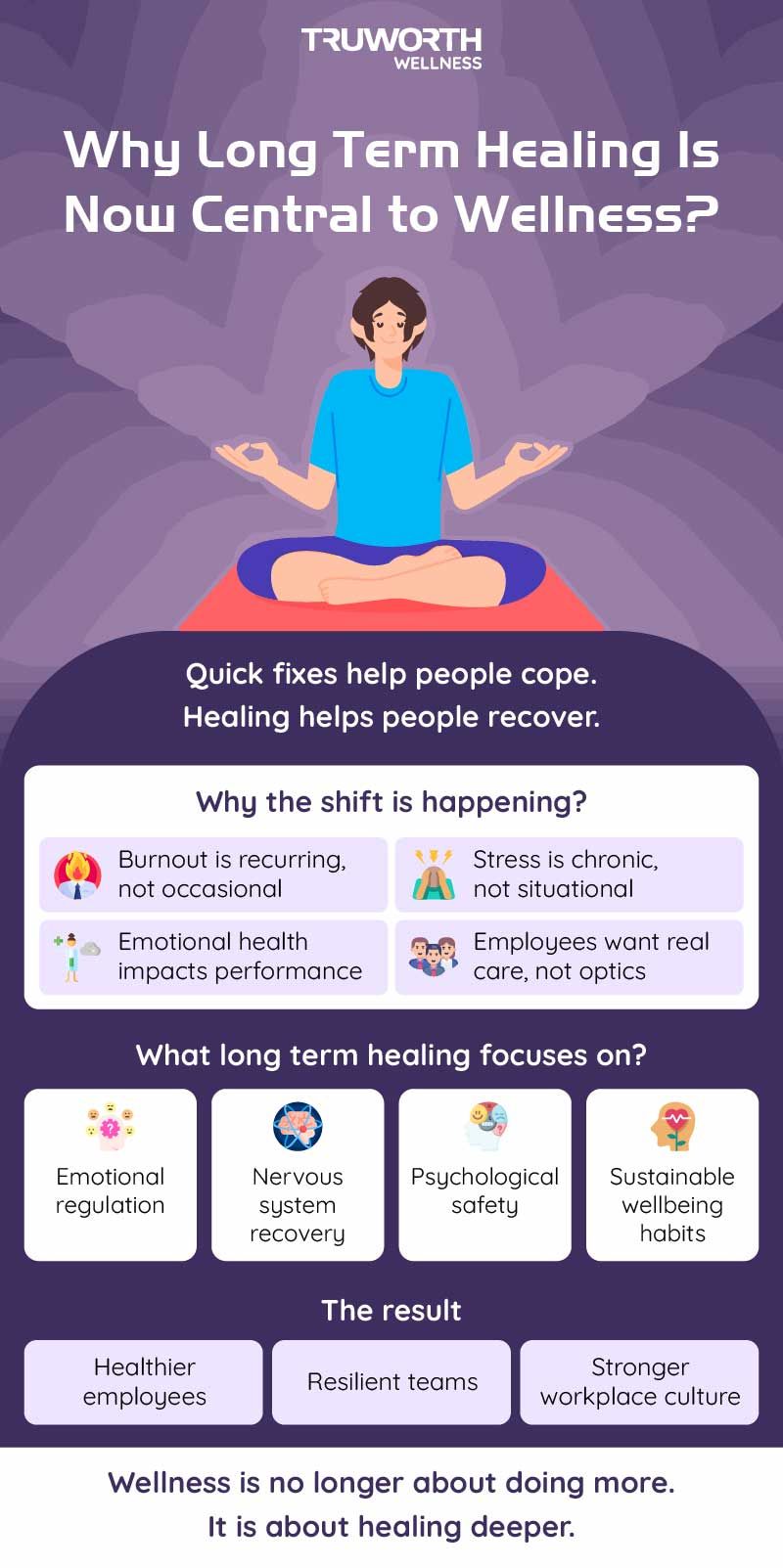
Short term wellness interventions help people function. Long term healing helps people recover.
And the modern workforce is no longer satisfied with just functioning.
Also Read: Ancient Secrets V/S Modern Science: Which Actually Calms Anxiety Faster?
What Long Term Healing Really Means?
Long term healing is not about constant positivity or fixing people.
It is about creating conditions where individuals can gradually restore physical, emotional, and mental balance over time.
This includes:
- Addressing chronic stress rather than episodic stress
- Supporting emotional regulation and resilience
- Acknowledging unresolved grief, trauma, or prolonged pressure
- Building sustainable habits instead of temporary motivation
- Creating psychological safety at work
Healing is not linear. It does not fit neatly into quarterly plans. But its impact is far more durable.
Why Employees Are Asking for Deeper Support?
Several workplace realities are pushing healing into the spotlight.
Burnout Has Become Cyclical
Employees are no longer experiencing burnout once in a career. They are cycling through it repeatedly.
A short break helps.
A wellness webinar helps.
But without deeper recovery, the cycle returns.
People are beginning to recognize that exhaustion is not a motivation problem.
It is a recovery problem.
Emotional Health Can No Longer Be Separated From Performance
Unprocessed stress affects:
- Decision making
- Interpersonal relationships
- Focus and creativity
- Immune health
- Absenteeism and attrition
Leaders are realizing that emotional wellbeing is not a personal issue employees must manage alone.
It is a workplace outcome shaped by culture, expectations, and support systems.
Also Read: The Neuroscience Of Focus: How Corporate Wellness Can Improve Attention Spans?
Employees Want Authentic Care, Not Optics
Modern employees can quickly tell the difference between wellness as a benefit and wellness as branding.
Token initiatives feel dismissive.
Healing focused initiatives feel supportive.
When organizations acknowledge long term healing, they signal maturity, empathy, and trust.
Also Read: How Psychological Assistance Brings Together Employees And Employers?
The Role Of Organizations In Supporting Healing
Organizations cannot and should not act as therapists.
But they do play a powerful role in either supporting healing or silently hindering it.
Supportive organizations focus on:
- Predictable workloads and boundaries
- Access to professional mental health support
- Non judgmental conversations around emotional health
- Manager training on empathy and psychological safety
- Wellness programs that go beyond one time events
Healing happens when employees feel seen as humans, not just resources.
From Wellness Activities To Wellness Ecosystems
One of the biggest shifts in corporate wellness is moving from isolated activities to integrated ecosystems.
Instead of asking, “What session should we run this month?”
The question becomes, “What environment are we creating year round?”
Healing focused wellness ecosystems include:
- Preventive mental health assessments
- Ongoing emotional fitness programs
- Confidential therapy or counseling access
- Nervous system regulation practices
- Culture audits that identify stress triggers
This approach acknowledges that wellbeing is influenced by systems, not just individual effort.
Why Long Term Healing Is Also A Business Imperative?
Healing is often viewed as soft or slow.
In reality, it is strategic.
Organizations that invest in long term healing experience:
- Reduced burnout related attrition
- Lower healthcare costs over time
- Improved engagement that is genuine, not forced
- Stronger leadership empathy
- More resilient teams during change
Healing does not slow performance. It stabilizes it.
What the Future of Wellness Looks Like?
The future of wellness is not louder.
It is deeper.
We will see:
- Less focus on hustle culture wellness
- More emphasis on emotional sustainability
- Greater integration of mental health into leadership development
- Wellness success measured by resilience, safety, and recovery
- Programs designed for long term impact rather than short term applause
Wellness is evolving from an activity into a philosophy.
Where Truworth Wellness Fits In?
At Truworth Wellness, we believe true workplace wellbeing begins with understanding the root causes of stress, burnout, and emotional fatigue.
Our programs are designed to move beyond quick fixes and support long term healing through:
- Preventive assessments
- Emotional fitness frameworks
- Evidence based mental wellbeing interventions
- Human centered program design for Indian workplaces
Because when organizations invest in healing, they are not just improving wellness metrics.
They are building healthier cultures, stronger teams, and more sustainable success.