How To Manage Chronic Conditions At A Lower Cost?

Chronic conditions such as diabetes, hypertension, asthma, thyroid disorders, and arthritis are no longer isolated health issues. They are long-term realities for millions of working professionals. The challenge is not just managing the condition, but doing so sustainably without financial strain.
Healthcare inflation continues to rise, especially in urban India. Regular consultations, diagnostic tests, medications, and potential complications can quietly become a significant economic burden.
The good news is that effective chronic care does not always require expensive interventions. With the right approach, it is possible to reduce costs while improving outcomes.
This blog breaks down how individuals and organizations can manage chronic conditions in a smarter, more cost-efficient way.
Shift From Treatment to Prevention First
The biggest cost driver in chronic conditions is not the condition itself. It is the complications that arise due to poor management.
For example:
Uncontrolled diabetes can lead to kidney disease, nerve damage, or vision loss
Poorly managed hypertension can result in stroke or heart disease
These complications are far more expensive than early-stage management.
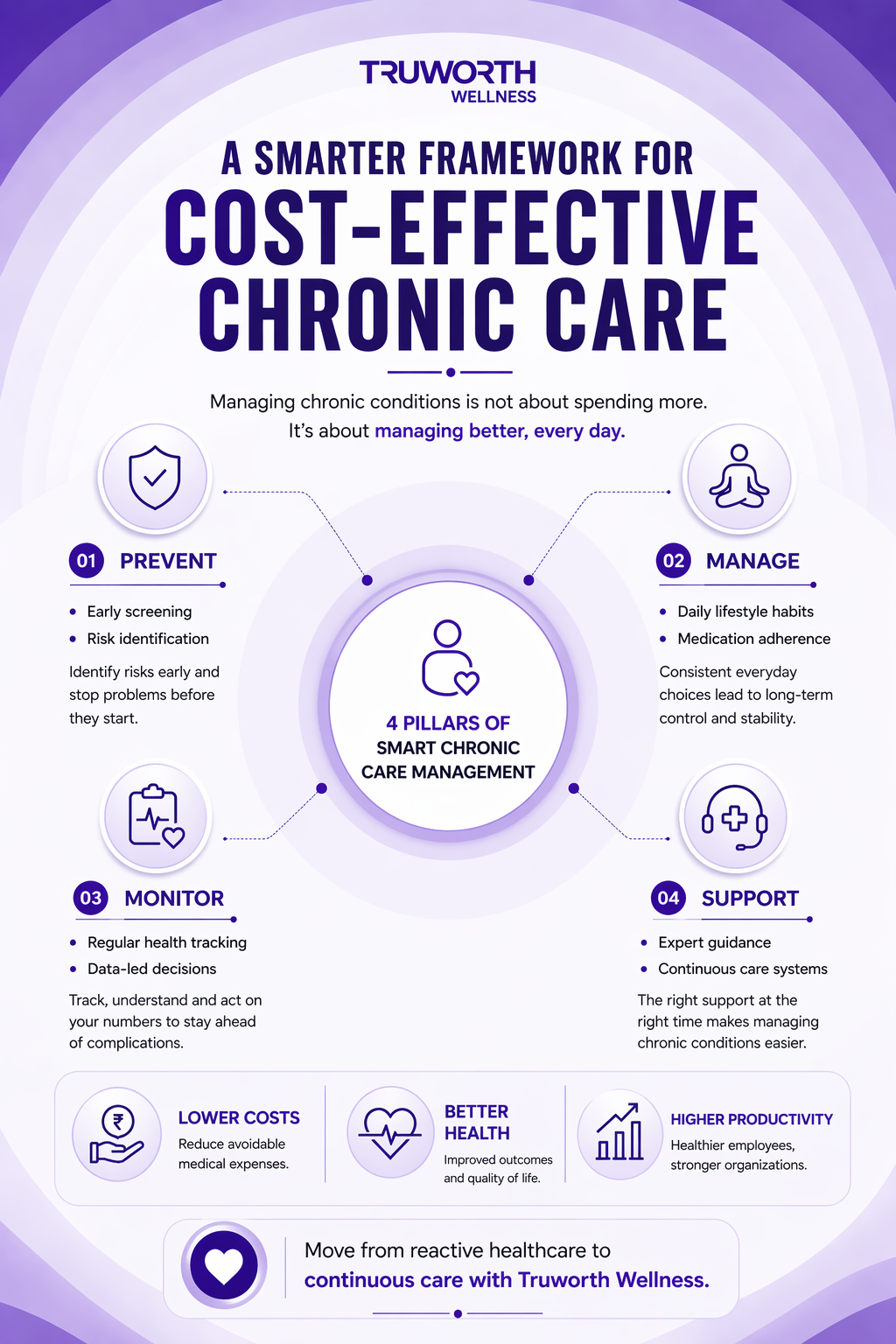
A prevention-first approach focuses on:
- Regular monitoring instead of reactive testing
- Lifestyle changes before medication escalation
- Early detection of warning signs
From a cost lens, prevention is not an added expense. It is a cost-saving strategy.
Build Daily Habits That Reduce Medical Dependency
Lifestyle plays a direct role in chronic condition management. Yet, it is often treated as optional rather than foundational.
Simple, consistent habits can reduce reliance on frequent doctor visits and medication adjustments:
- Balanced, home-cooked meals instead of frequent eating out
- Daily physical activity, even 30 minutes of walking
- Structured sleep routines
- Stress management through breathing, mindfulness, or light movement
These are low-cost interventions with high long-term returns. Over time, they stabilize health markers, reducing the need for expensive escalations.
Also Check: How New-Gen Workplace Wellness Programs Drive Preventive & Long-Term Health?
Use Preventive Health Checkups Strategically
Many people either over-test or avoid testing altogether. Both approaches increase costs.
A smarter strategy includes:
- Following condition-specific testing frequency
- Avoiding unnecessary repeat diagnostics
- Bundling tests through preventive packages when needed
For example:
A person with diabetes does not need random daily lab tests, but does benefit from periodic HbA1c tracking
Someone with hypertension benefits from home monitoring instead of repeated clinic visits
The goal is not more tests, but the right tests at the right time.
Opt for Generic Medicines When Appropriate
Medication costs can make up a large portion of chronic disease expenses.
Generic medicines often provide the same therapeutic benefit as branded ones, at a significantly lower cost. While not every medication has a suitable generic alternative, many commonly prescribed drugs do.
Key considerations:
- Always consult your doctor before switching
- Ensure medicines are sourced from reliable pharmacies
- Stay consistent with dosage and timing
Over a year, even small savings per prescription can add up substantially.
Leverage Digital Health Tools and Remote Care
Healthcare delivery is changing. Digital platforms now make it easier and cheaper to manage chronic conditions.
Benefits include:
- Teleconsultations instead of frequent hospital visits
- Remote monitoring devices for blood pressure, glucose, and oxygen levels
- Digital health records that reduce repeated testing
This approach saves both time and money, especially for working professionals balancing health with demanding schedules.
Strengthen Health Literacy
One of the most overlooked cost drivers is lack of awareness.
When individuals do not fully understand their condition, they are more likely to:
- Miss medications
- Ignore early symptoms
- Delay care until conditions worsen
Improving health literacy helps people make better decisions daily.
This includes:
- Understanding what triggers their condition
- Knowing when to seek medical help
- Being aware of lifestyle adjustments that work
Better-informed individuals tend to have fewer complications and lower long-term healthcare costs.
Use Employer-Supported Wellness Programs
For organizations, chronic conditions directly impact productivity, absenteeism, and insurance costs.
Forward-thinking companies are now investing in structured wellness programs that support employees beyond basic insurance.
These programs typically include:
- Condition management support for diabetes, hypertension, and obesity
- Access to nutritionists, fitness experts, and mental health professionals
- Regular health tracking and engagement tools
- Preventive screenings and risk assessments
For employees, this reduces out-of-pocket expenses. For employers, it reduces high-cost claims and improves workforce performance.
The key is to move from reimbursement-based care to continuous support systems.
Prioritize Mental and Emotional Health
Chronic conditions are not just physical. They are deeply connected to stress, emotional wellbeing, and behavioral patterns.
High stress levels can:
- Increase blood pressure
- Disrupt blood sugar levels
- Affect sleep and recovery
Ignoring this dimension often leads to worsening conditions and higher costs.
Low-cost strategies include:
- Mindfulness or meditation practices
- Talking to a counselor when needed
- Building social support systems
When emotional health improves, physical health often follows, reducing the need for intensive medical intervention.
Avoid Emergency-Driven Healthcare
Emergency care is one of the most expensive forms of healthcare.
Many hospitalizations linked to chronic conditions are preventable. They occur due to:
- Missed warning signs
- Poor adherence to treatment
- Delayed action
Creating a simple action plan can help:
- Know your early symptoms
- Have a doctor contact ready
- Keep essential medications accessible
Planned care is always more affordable than emergency care.
Track, Measure, and Adjust
What gets measured gets managed.
Tracking key health indicators helps individuals understand patterns and make timely adjustments.
Examples:
- Blood sugar logs for diabetes
- Blood pressure tracking for hypertension
- Weight and activity tracking for metabolic conditions
This data reduces guesswork and enables more precise, cost-effective interventions.
The Organizational Perspective: Why Cost-Effective Chronic Care Matters?
For companies, chronic conditions are not just a health issue. They are a business challenge.
- Higher insurance premiums
- Increased sick leaves
- Reduced productivity
- Presenteeism, where employees are at work but not fully functional
Investing in structured chronic care management is not an added cost. It is a strategic decision.
Organizations that proactively support employee health often see:
- Lower long-term healthcare expenses
- Better employee engagement
- Improved retention
The shift is clear. Reactive healthcare models are expensive. Preventive and continuous care models are sustainable.
Bringing It All Together
Managing chronic conditions at a lower cost is not about cutting corners. It is about making smarter choices consistently.
It requires:
- A shift from reactive to preventive care
- Daily habits that support long-term health
- Better use of available resources
- Stronger collaboration between individuals and organizations
The real opportunity lies in integrating health into everyday life, rather than treating it as a separate, occasional activity.
The Next Step Ahead
If you are an individual, start small. Track one health parameter, improve one habit, and build from there.
If you are an organization, evaluate whether your current wellness strategy supports ongoing care or only covers emergencies.
Structured programs, like those offered by Truworth Wellness, are designed to bridge this gap. By combining preventive care, expert guidance, and continuous engagement, they help reduce both health risks and healthcare costs over time.
Because in chronic care, consistency is not just a health strategy. It is a financial one too.