How Procurement Can Measure Wellness ROI Beyond Cost Savings?

The success of a wellness program isn't measured by how little it costs. It's measured by what it helps an organisation avoid.
Every procurement decision comes with one fundamental question: Is this investment delivering value?
When purchasing office equipment, software, or manufacturing machinery, that value is often easy to quantify. Costs can be compared, efficiency can be measured, and returns can be calculated over time.
Employee wellness, however, has traditionally been evaluated very differently.
Too often, procurement conversations revolve around pricing, package inclusions, and discounts. Vendors are compared based on the number of services offered, the cost per employee, or the price difference between competing proposals.
While these factors are important, they rarely answer the bigger question.
Is the program actually improving workforce health and business performance?
As organisations continue investing more in employee wellbeing, procurement teams are beginning to recognise that the lowest-priced wellness program isn't necessarily the one delivering the greatest value. The real return often appears in areas that aren't visible on an invoice but have a measurable impact on productivity, employee health, and long-term business outcomes.
Looking Beyond the Price Tag
Procurement has evolved significantly over the past decade.
Today's procurement teams are no longer expected to simply negotiate the lowest possible price. They are strategic partners who evaluate quality, supplier reliability, long-term value, and business impact before making purchasing decisions.
Employee wellness deserves the same approach.
Imagine two wellness providers.
One offers a lower-cost package that includes annual health checkups and a few awareness webinars. The other costs slightly more but combines preventive screenings with year-round healthcare access, digital engagement, health coaching, mental wellbeing support, and detailed reporting.
On paper, the first option appears more economical.
But if the second program helps reduce absenteeism, improves employee participation, encourages early treatment, and supports better management of chronic conditions, which one actually delivers greater value?
Sometimes the most expensive decision isn't paying more.
It's paying less for a program that doesn't create meaningful outcomes.
Related Read: Why Employee Well-Being RFPs (Request for Proposal) Need A Rethink?
Wellness ROI Isn't Just About Saving Money?
One of the biggest misconceptions about workplace wellness is that its success should only be measured by direct financial savings.
Healthcare costs certainly matter, but they represent only one part of the picture.
A stronger wellness program influences many areas that directly affect organisational performance, including:
- Employee attendance
- Workforce productivity
- Healthcare utilisation
- Employee engagement
- Retention and employer branding
- Workplace safety
- Manager productivity
These outcomes may not appear immediately on a procurement dashboard, but they create measurable business value over time.
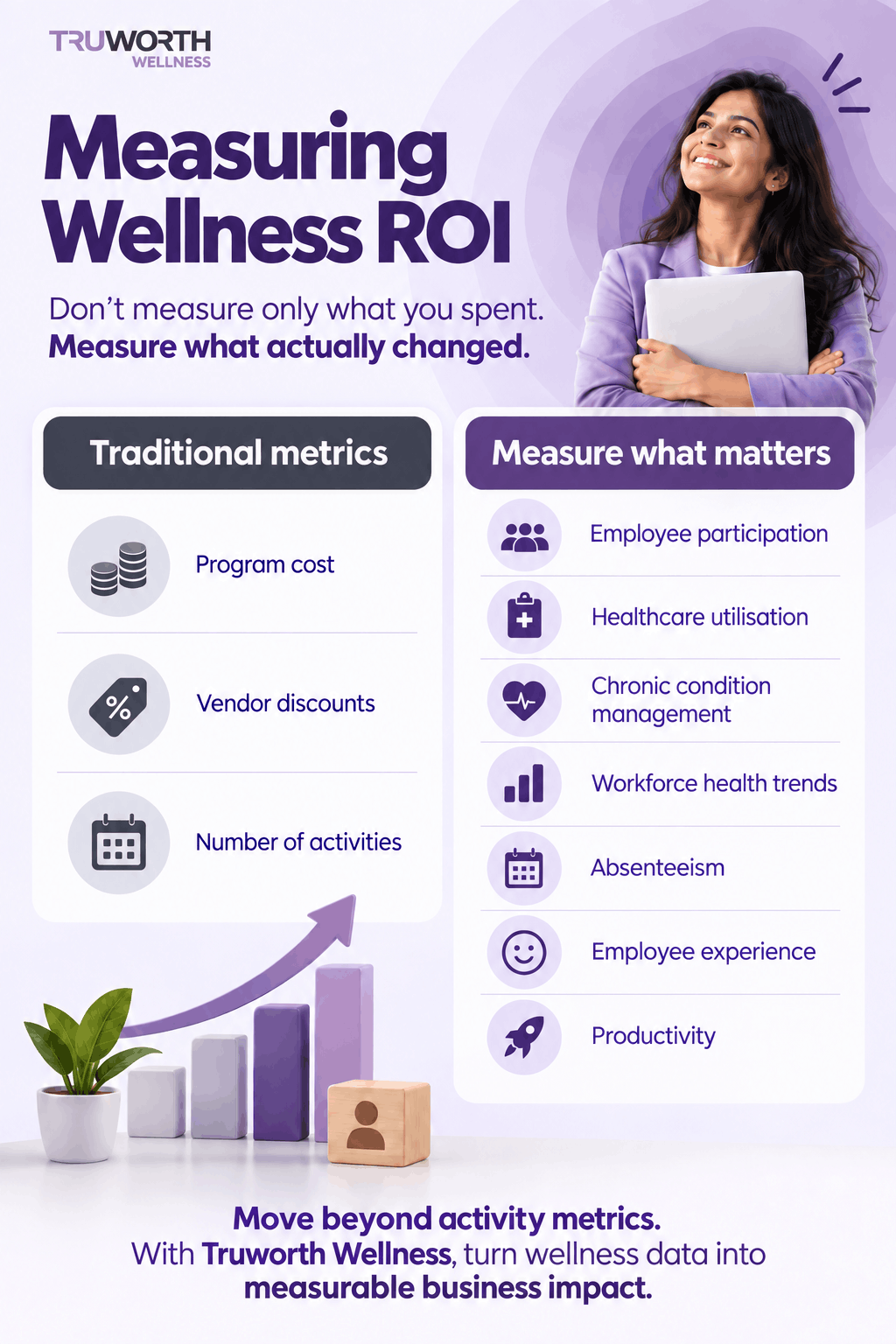
The challenge is shifting the conversation from "How much did we spend?" to "What changed because we invested?"
Some Benefits Are Easy to Measure. Others Matter Even More.
Not every return on investment appears as a line item in a finance report.
For example, reducing repeated sick leave may lower overtime costs, but it also creates greater operational stability. Employees experience less disruption, supervisors spend less time rearranging schedules, and teams work with greater consistency.
Similarly, improving access to healthcare may reduce emergency medical expenses, but it can also encourage employees to seek treatment earlier, preventing small health concerns from becoming longer absences.
Some of the most valuable outcomes of workplace wellness include:
- Earlier detection and management of chronic conditions
- Better employee participation in preventive care
- Reduced health-related disruptions
- Higher employee satisfaction
- Stronger trust in organisational wellbeing initiatives
- Greater workforce resilience during seasonal health challenges
These are benefits that extend well beyond simple cost reduction.
The Metrics Procurement Should Be Asking About
If cost is only one part of wellness ROI, what should procurement teams evaluate instead?
A more balanced approach looks at both financial and operational outcomes.
Some useful questions include:
1) Has employee participation improved?
A wellness program creates little value if employees don't engage with it. Participation rates provide an early indication of whether the program is relevant and accessible.
2) Are employees using healthcare earlier?
When employees seek medical advice before conditions worsen, organisations often see fewer avoidable absences and better long-term health outcomes.
3) What trends are emerging from workforce health data?
Health reports should reveal more than individual screening results. They should help organisations understand broader trends, such as increasing hypertension, rising diabetes risk, or common musculoskeletal concerns.
4) Are chronic conditions being managed effectively?
Identifying diabetes is only the first step. Supporting employees in managing it over time creates the real value.
5) Is the program improving the employee experience?
Employees are more likely to value wellness initiatives when services are easy to access, relevant to their needs, and available throughout the year rather than during isolated events.
These questions encourage procurement teams to evaluate impact instead of simply comparing price.
A Vendor Should Be More Than a Service Provider
Choosing a wellness partner isn't just about selecting a company that can organise health camps or deliver webinars.
The strongest partnerships are built around shared outcomes.
Procurement teams should look for providers that help organisations understand their workforce, identify emerging health trends, recommend meaningful interventions, and continuously improve program effectiveness.
A valuable wellness partner should be able to answer questions such as:
- Which health risks are increasing across the workforce?
- Which initiatives are driving the highest employee participation?
- What health concerns require greater attention next quarter?
- How can the program evolve based on workforce needs?
These conversations create far more value than comparing service lists alone.
Looking to move beyond activity-based wellness programs and measure real workforce impact? Truworth Wellness helps organisations build integrated employee wellbeing programs that combine preventive healthcare, digital engagement, actionable health insights, and ongoing support. Partner with Truworth Wellness to turn employee wellbeing into measurable business value.
Wellness Data Should Drive Better Decisions
Most wellness programs generate a significant amount of information.
Health screening results, consultation numbers, participation rates, engagement data, and employee feedback all offer valuable insights.
The question is whether those insights are being used.
Imagine discovering that musculoskeletal complaints have increased by 20% over the past year.
That information should influence future program planning by introducing ergonomic assessments, physiotherapy support, or workplace movement initiatives.
Similarly, if stress-related consultations are rising, organisations may benefit from strengthening mental wellbeing resources before absenteeism begins to increase.
Data becomes valuable when it shapes decisions, not when it remains within quarterly reports.
Procurement and HR Share the Same Goal
Although procurement and HR often evaluate wellness programs from different perspectives, their objectives are increasingly aligned.
HR wants healthier, more engaged employees.
Procurement wants investments that deliver measurable business value.
Both goals become achievable when wellness programs are evaluated through outcomes rather than activities.
Instead of asking:
- How many webinars were conducted?
- How many employees attended the health camp?
- Was this the lowest-priced proposal?
The more meaningful questions become:
- Did employee health improve?
- Are employees accessing healthcare when they need it?
- Has participation increased over time?
- Is workforce health data helping shape future decisions?
- Are we seeing measurable improvements in business outcomes?
These answers provide a much clearer picture of return on investment.
The Bottom Line
Wellness programs have matured far beyond annual health camps and awareness sessions. As organisations continue investing in employee well-being, procurement has an opportunity to influence not just what is purchased, but the long-term value those investments create.
Price will always matter, but it should never become the only measure of success.
The most effective wellness programs improve employee health, encourage preventive care, provide meaningful workforce insights, and support better business outcomes over time.
Increasingly, organisations are choosing integrated wellness partners that combine healthcare access, preventive initiatives, digital engagement, and actionable reporting into a connected strategy. This allows procurement teams to evaluate wellness not as a one-time expense, but as an investment that contributes to workforce resilience and organisational performance.
The real question isn't, "How much did this wellness program cost?" It's, "What changed because we chose it?"
The strongest wellness investments create value long after the purchase decision, helping organisations turn employee wellbeing into measurable business performance.
Frequently Asked Questions
1) How should procurement teams measure wellness ROI?
Procurement teams should measure wellness ROI by looking beyond program cost and evaluating outcomes such as employee participation, absenteeism trends, healthcare utilisation, chronic condition management, productivity, and workforce health insights.
2) Why is cost savings not enough to evaluate employee wellness programs?
Cost savings show only one part of the picture. A wellness program may create stronger value by improving employee health, reducing preventable disruptions, supporting early intervention, and helping organisations make better workforce planning decisions.
3) What wellness metrics matter most for business impact?
The most useful metrics include employee engagement, preventive healthcare usage, healthcare access patterns, absence rates, repeat health risks, employee feedback, chronic disease management, and improvements in productivity or workforce stability.
4) How can wellness data help procurement make better vendor decisions?
Wellness data helps procurement assess whether a provider is creating measurable outcomes, not just delivering activities. It can reveal health trends, participation gaps, service effectiveness, and opportunities to improve program design over time.
5) What should organisations look for in a wellness partner?
Organisations should look for a wellness partner that offers preventive care, healthcare access, employee engagement, mental wellbeing support, data-driven reporting, and the ability to align wellness initiatives with business outcomes.