Signs Your Employees Are Stuck In Survival Mode (And Why It Should Worry Every Organization)

Many employees look “fine” on the surface. Tasks are getting done. Meetings are attended. Targets are met, at least barely. But beneath this appearance of normalcy, a quieter problem is growing across workplaces: employees operating in survival mode.
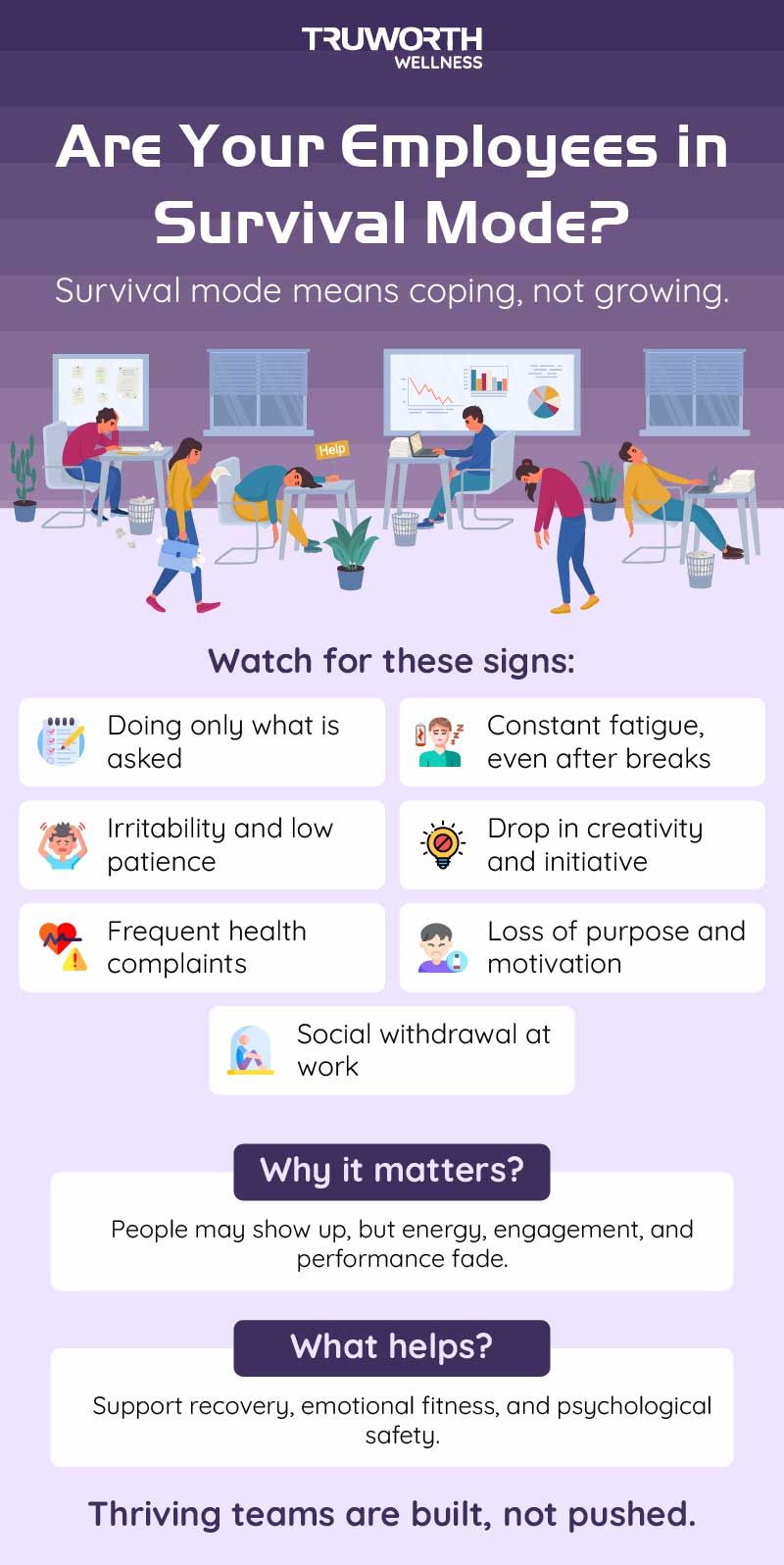
Survival mode is not burnout yet. It comes before that. It is the state where people are no longer growing, thinking creatively, or feeling connected to their work. They are simply trying to get through the day. When survival mode becomes the norm, productivity, innovation, and wellbeing slowly erode.
For organizations that care about long-term performance and people sustainability, recognizing the signs early is critical.
Also Read: Workplace Wellness Has Changed! What Employees Are Looking Forward To In 2026?
What Does Survival Mode At Work Really Mean?
Survival mode is a psychological and physiological response to prolonged stress. The brain shifts focus from growth and creativity to safety and threat avoidance. Employees stop asking “How can I do this better?” and start asking “How do I just get through this?”
In this state, work becomes reactive. Energy is spent on coping rather than contributing. Over time, this affects not only individual health but also team morale, leadership effectiveness, and organizational culture.
1) They Do Only What Is Asked, Nothing More
One of the clearest signs of survival mode is minimal engagement. Employees complete assigned tasks but show little initiative. They no longer suggest ideas, volunteer for projects, or think beyond their job description.
This is not laziness. It is self-protection. When mental energy is low, the brain conserves resources by sticking to the bare minimum. Over time, organizations may mistake this for a lack of ambition, when it is actually a lack of capacity.
2) Constant Fatigue, Even After Time Off
Employees in survival mode often report feeling tired all the time. Even after weekends, holidays, or short breaks, they return to work feeling drained.
This kind of fatigue is not solved by sleep alone. It is emotional and cognitive exhaustion. When work feels like constant pressure without recovery, the nervous system never fully resets. This leads to chronic tiredness, low motivation, and slower thinking.
Also Read: This World Chronic Fatigue Syndrome Awareness Day, Let's Fight Fatigue!!
3) Increased Irritability And Emotional Reactivity
Small issues start triggering big reactions. Employees may appear impatient, defensive, or unusually sensitive to feedback. Conflicts escalate faster, and tolerance levels drop.
In survival mode, the brain stays on high alert. This reduces emotional regulation and makes people more reactive. What looks like a personality issue is often a stress response that has gone unaddressed for too long.
4) Decline In Creativity And Problem-Solving
Innovation requires mental space. Employees need room to think, reflect, and experiment. In survival mode, that space disappears.
Teams may struggle to generate new ideas or solve problems proactively. Decisions become short-term and risk-averse. Over time, this stagnation affects business growth and adaptability, especially in dynamic markets.
Also Read: 10 Steps To Making Quick Great Decisions
5) More Sick Days And Health Complaints
Survival mode often shows up in the body before it shows up in performance reviews. Frequent headaches, digestive issues, sleep disturbances, and recurring minor illnesses become common.
Absenteeism may increase, or employees may be physically present but mentally checked out. This presenteeism is harder to measure but far more costly in the long run.
6) Disconnection From Purpose And Values
Employees in survival mode stop caring about the “why” behind their work. Purpose statements, vision decks, and culture initiatives start feeling irrelevant to them.
When people are overwhelmed, meaning takes a back seat. Work becomes transactional. This disconnect quietly increases attrition risk, especially among high performers who once felt deeply aligned with the organization.
Also Read: How To Not Feel Overwhelmed By New Responsibilities At Work?
7) Withdrawal From Social Interaction
You may notice employees avoiding conversations, skipping informal catch-ups, or staying silent in meetings. Collaboration becomes purely functional, stripped of warmth or enthusiasm.
Social withdrawal is a common coping mechanism under stress. Unfortunately, it further reduces psychological safety and team bonding, creating a cycle of isolation and disengagement.
Why Survival Mode Is Dangerous for Organizations?
Survival mode is not a personal weakness. It is a system issue.
When large parts of the workforce operate in survival mode:
- Engagement scores stagnate or decline
- Innovation slows down
- Leadership pipelines weaken
- Attrition increases quietly
- Healthcare and wellbeing costs rise
Most importantly, organizations lose the human energy that fuels long-term success.
Also Read: Leadership Guilt: How Caring For People While Making Hard Decisions Creates An Emotional Burden?
Why Traditional Wellness Efforts Often Miss The Mark?
Many corporate wellness programs focus on surface-level fixes: step challenges, occasional yoga sessions, or motivational talks. While these have value, they often fail to address the root cause.
Survival mode is not about a lack of information. Employees already know they should sleep better, eat healthier, and manage stress. The real issue is that their environment does not support nervous system recovery, emotional safety, or sustainable performance.
How Organizations Can Help Employees Move Out of Survival Mode?
The solution is not to push harder. It is to create conditions where people can shift from coping to thriving.
Some key shifts include:
- Designing workloads that allow recovery, not constant urgency
- Training managers to recognize emotional and mental fatigue early
- Normalizing conversations around stress and capacity
- Integrating emotional fitness and resilience practices into daily work life
- Measuring wellbeing through deeper indicators, not just participation metrics
From Survival to Sustainable Performance
When employees move out of survival mode, something powerful happens. Focus improves. Relationships strengthen. Creativity returns. Work feels meaningful again.
Organizations that invest in holistic, evidence-based wellbeing frameworks do not just reduce burnout. They build cultures where people can perform consistently without sacrificing their health.
At Truworth Wellness, we work with organizations to go beyond surface-level wellness and address the deeper drivers of stress, emotional fatigue, and disengagement. By integrating emotional fitness, behavioral insights, and culturally relevant wellbeing strategies, we help teams move from survival mode to sustainable success.
Because employees who are merely surviving cannot build the future. Employees who are supported, resilient, and emotionally balanced can.