Building A Wellness Culture In A < 50-Person Company

When people think about workplace wellness, they often picture multinational corporations with dedicated wellness teams, large budgets, and impressive employee perks. This creates a common misconception that meaningful wellness programs are only possible for large organizations.
Smaller companies often have a significant advantage.
A 50-person company can build a stronger, more authentic wellness culture than many organizations with thousands of employees. With fewer layers of management, closer relationships, and faster decision-making, small businesses can create an environment where wellbeing becomes part of everyday work rather than an annual initiative.
The key is understanding that wellness is not about expensive benefits. It is about creating a workplace where people can do their best work without compromising their physical, mental, emotional, or financial wellbeing.
Why Wellness Matters More in Small Teams?
In a company of 50 employees, every individual has a noticeable impact.
- One employee experiencing burnout affects project timelines.
- One unexpected resignation places additional pressure on colleagues.
- One disengaged manager can influence an entire department.
Unlike larger organizations, small businesses have less room to absorb these disruptions. As a result, investing in employee wellbeing is not simply a people initiative. It is a business strategy.
A healthy workforce often experiences:
- Higher productivity
- Better collaboration
- Lower absenteeism
- Improved employee retention
- Higher engagement
- Stronger employer branding
For a smaller company, even modest improvements in these areas can make a measurable difference.
5 Challenges Of Implementing Affordable Wellness Programs For Small Businesses
Wellness Culture Is Not the Same as Wellness Activities
Many organizations mistakenly believe wellness begins and ends with occasional events.
They organize:
- A yearly health check-up
- International Yoga Day celebrations
- A webinar on stress management
- Free fruit in the pantry
While these initiatives have value, they do not create a wellness culture.
Culture is reflected in everyday experiences.
Employees notice whether managers respect working hours, whether people feel comfortable taking leave, whether conversations about mental health are welcomed, and whether healthy behaviors are encouraged rather than expected after work hours.
A genuine wellness culture influences how work is done, not just the activities organized around it.
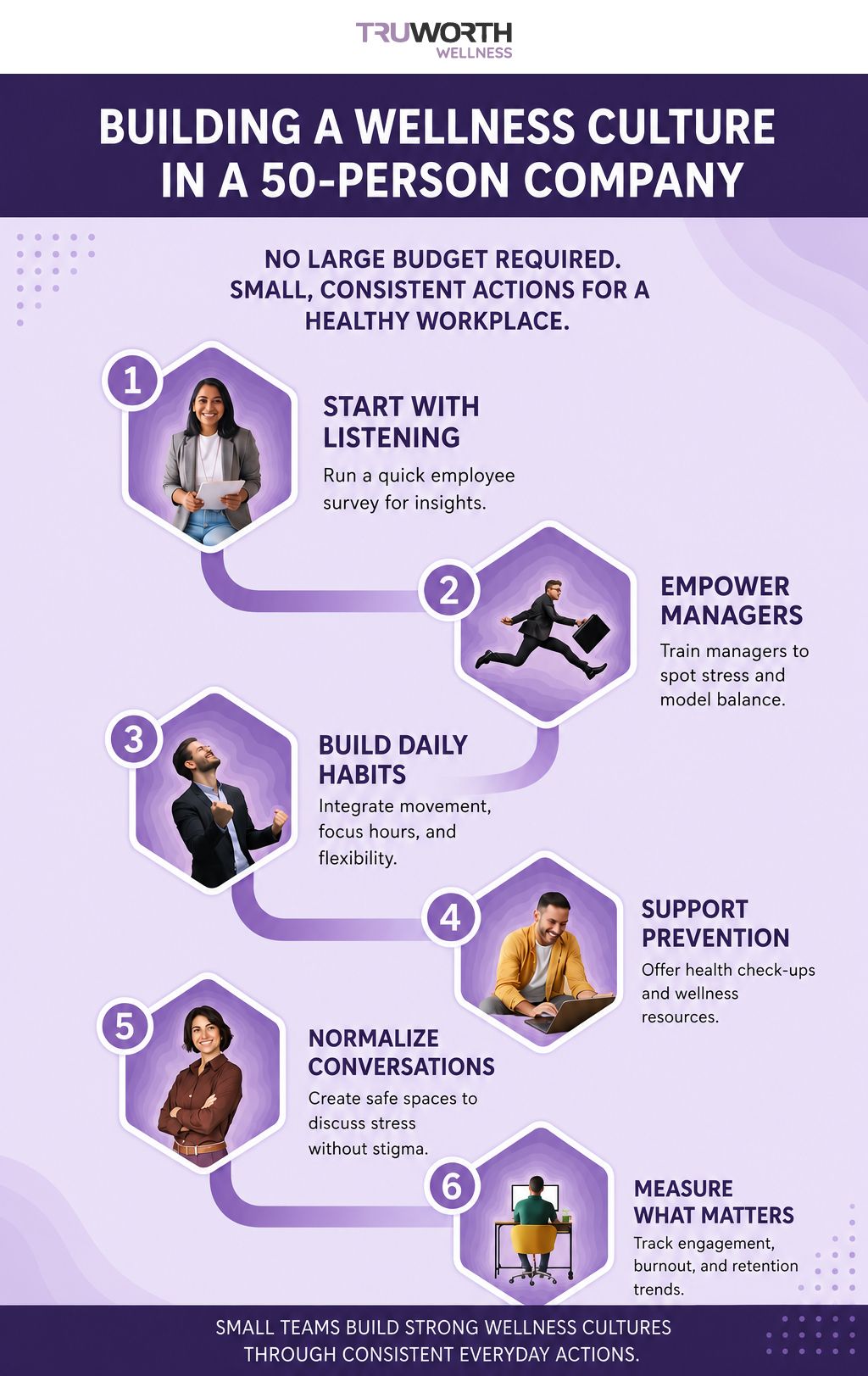
Step 1: Understand What Employees Actually Need
The biggest mistake companies make is assuming they already know.
A workforce made up primarily of young professionals may prioritize fitness and flexibility.
- Working parents may need childcare support or flexible schedules.
- Sales teams may struggle with travel fatigue.
- Customer support teams may face emotional exhaustion.
Before launching any wellness initiative, ask employees.
A simple anonymous survey can uncover:
- Top health concerns
- Sources of workplace stress
- Desired wellness benefits
- Preferred learning formats
- Barriers to maintaining healthy habits
Listening first leads to better participation later.
Step 2: Make Managers Wellness Champions
Employees experience company culture largely through their managers.
Even the best wellness program fails if leaders:
- Send emails late at night
- Reward overwork
- Discourage leave
- Ignore signs of burnout
Pre-Burnout Detection: How To Spot Decline Before It Hits HR Records?
Managers should learn how to:
- Recognize early signs of stress
- Encourage healthy workloads
- Hold supportive conversations
- Promote psychological safety
- Model healthy behaviors themselves
Employees follow what leaders demonstrate, not what company posters say.
How Psychological Assistance Brings Together Employees And Employers?
Step 3: Focus on Small Habits Instead of Big Campaigns
Culture develops through consistency.
Instead of launching a major initiative every quarter, introduce simple practices employees can sustain.
Examples include:
- Five-minute movement breaks between meetings
- Walking meetings
- Healthy snack options
- Monthly wellness challenges
- No-meeting focus hours
- Mental health awareness sessions
- Flexible start and finish times where possible
Small habits repeated consistently create lasting behavioral change.
Step 4: Make Preventive Healthcare Accessible
Many employees seek medical attention only after symptoms become serious.
Preventive healthcare helps identify risks earlier, reducing long-term health complications and improving productivity.
Companies can support prevention by offering:
- Annual health check-ups
- Doctor consultations
- Nutrition counselling
- Mental health support
- Vaccination drives
- Lifestyle risk assessments
Making healthcare convenient removes one of the biggest barriers to preventive care.
Step 5: Encourage Open Conversations About Wellbeing
Employees are more likely to seek help when wellbeing is discussed openly.
Leaders can normalize these conversations by:
- Checking in regularly
- Sharing personal experiences appropriately
- Discussing workload challenges
- Recognizing stress without stigma
- Encouraging employees to use available support
Psychological safety is one of the strongest foundations of workplace wellness.
Step 6: Celebrate Healthy Behaviors
Recognition reinforces positive habits.
Instead of rewarding only business performance, celebrate behaviors that contribute to a healthier workplace.
Examples include:
- Team participation in wellness challenges
- Consistent physical activity
- Volunteer initiatives
- Peer support
- Healthy lifestyle improvements
- Work-life balance role models
Recognition demonstrates that wellbeing is valued, not merely discussed.
Step 7: Measure Progress Beyond Participation
Attendance alone does not indicate success.
Instead, track outcomes that reflect meaningful change.
Useful metrics include:
- Employee engagement
- Absenteeism
- Sick leave trends
- Healthcare utilization
- Employee satisfaction
- Voluntary attrition
- Burnout indicators
- Manager wellbeing scores
These insights help organizations refine wellness strategies over time.
Common Mistakes Small Companies Should Avoid
Even with the best intentions, some initiatives fall short.
Avoid:
- Copying wellness programs from large corporations
- Offering too many disconnected activities
- Treating wellness as an HR responsibility alone
- Ignoring manager involvement
- Measuring success only by attendance
- Launching initiatives without employee input
- Expecting immediate results
Wellness culture develops gradually through consistent leadership and employee trust.
Why Small Companies Can Build Better Wellness Cultures?
A 50-person company has advantages that larger organizations often struggle to achieve.
- Communication is faster.
- Leadership is more visible.
- Employees know one another personally.
- Policies can evolve quickly.
- Feedback reaches decision-makers directly.
These strengths make it easier to create an environment where wellbeing becomes part of daily work rather than a separate initiative.
The goal is not to replicate the wellness programs of Fortune 500 companies. It is to build a workplace where people feel supported, valued, and able to perform at their best.
Conclusion
Creating a wellness culture does not require a large budget. It requires intention, consistency, and leadership commitment.
For a 50-person company, every employee matters, and every healthy habit has a ripple effect across the organization. By listening to employees, empowering managers, promoting preventive healthcare, and embedding wellbeing into everyday work, small businesses can build workplaces where both people and performance thrive.
How Truworth Wellness Can Help?
Building a wellness culture is easier with the right partner. Truworth Wellness helps organizations of every size create practical, measurable wellbeing programs tailored to their workforce. From preventive health check-ups and mental wellness support to digital health platforms, fitness challenges, nutrition counselling, and engagement initiatives, Truworth Wellness enables small businesses to foster healthier employees, stronger teams, and a more resilient workplace, without the complexity or cost often associated with corporate wellness.
Frequently Asked Questions
1. Can a 50-person company build an effective wellness culture without a big budget?
Yes. Small companies can build strong wellness cultures by focusing on consistent habits, visible leadership support, employee feedback, and simple initiatives such as flexible work practices, preventive check-ups, movement breaks, and open wellbeing conversations.
2. What is the difference between wellness activities and a wellness culture?
Wellness activities are individual events or benefits, such as webinars or health camps. A wellness culture is built into everyday work through manager behaviour, workload expectations, communication norms, psychological safety, and employee trust.
3. Where should a small business start?
The best starting point is listening to employees. A short anonymous survey can help identify stress points, preferred benefits, health concerns, and barriers to participation before investing in any wellness initiative.
4. How can managers support employee wellbeing?
Managers can support wellbeing by respecting work boundaries, recognizing signs of stress, encouraging healthy workloads, normalizing leave, creating safe conversations, and modelling the behaviours they want employees to adopt.
5. How should companies measure wellness success?
Participation is only one indicator. Companies should also track engagement, absenteeism, sick leave trends, employee satisfaction, healthcare usage, turnover, burnout indicators, and manager wellbeing scores to understand long-term impact.