Structural Wellness For Reducing Calendar fatigue And Protecting Employee Productivity
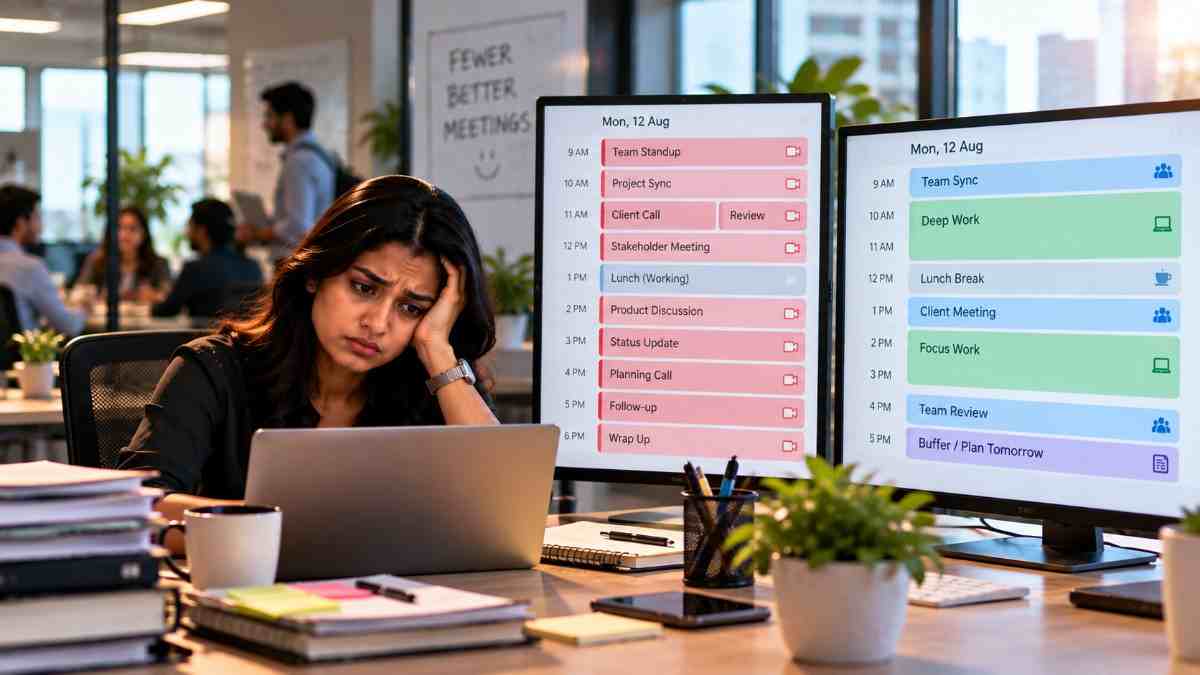
Back-to-back calls, crowded calendars and constant notifications can make a full workday feel productive while leaving important work unfinished. Employees then recover lost focus after hours, extending the workday and weakening personal boundaries.
This pattern turns calendar design into a workplace burnout issue; not merely a scheduling inconvenience.
Effective workplace stress management in India must therefore address how work is structured.
Employers need calendar rules, leadership behaviours and wellbeing support that protect employee productivity while reducing employee burnout.
When Calendar Overload Becomes a Workplace Burnout Risk?
Meetings are essential for decisions, collaboration and connection. The problem begins when every question becomes a meeting, every meeting includes too many people and calendars leave no space to think.
Employees repeatedly shift between topics, people and communication channels. Even when a call ends on time, the mind needs a transition before it can fully engage with the next task. Without that pause, cognitive burnout at work can build quietly across the week.
Common warning signs include:
- Employees completing focused work early in the morning or late at night
- Meetings scheduled through lunch or across normal break periods
- Large attendee lists with limited active participation
- Decisions repeatedly deferred to another call
- Messages and notifications continuing throughout meetings
- Rising frustration, withdrawal or presenteeism
When these habits become normal, employee burnout is treated as an individual resilience problem even though the calendar is creating it. Structural prevention begins by redesigning the working day.
Must Check: Employee Burnout Is Costing Companies More Than Ever
Why Too Many Meetings Cause Burnout?
The phrase too many meetings burnout describes more than physical tiredness. Every meeting carries preparation, social attention, decision-making and follow-up demands.
Rapid switching between a client review, an operational escalation and a team check-in creates cognitive residue: part of the employee’s attention remains attached to the previous conversation.
This is why employee productivity may fall even when calendars appear completely occupied.
In hybrid and distributed teams, the risk can be greater. Digital access makes it easy to schedule colleagues without seeing the full human cost of their day.
A thoughtful approach to workplace stress management in India must account for different time zones, commuting patterns, caregiving responsibilities and cultural expectations around availability.
Meeting Hygiene Best Practices That Change the System?
Good meeting hygiene best practices create shared rules that make collaboration more purposeful. They should apply across teams and leadership levels rather than relying on individual employees to decline invitations from senior colleagues.
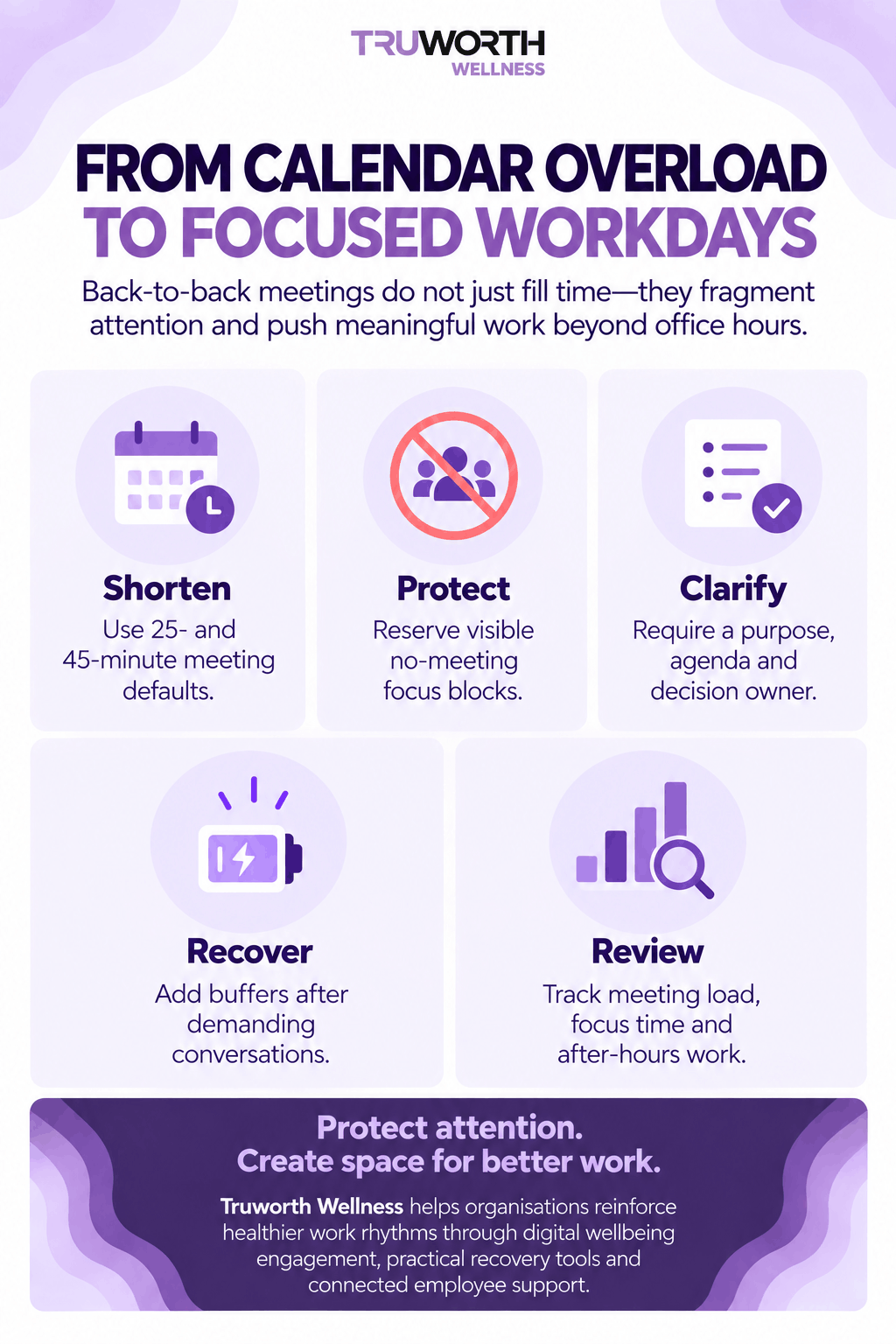
1) Default to 25- and 45-Minute Meetings
Shorter defaults create meeting recovery time between conversations. Five or fifteen minutes may allow employees to capture decisions, stretch, drink water or reset before the next discussion.
The aim is not to compress the same agenda into less time; it is to narrow the purpose and invite only the people needed.
This simple rule supports reducing meeting overload while signalling that transition time is legitimate work time. It can also protect employee productivity by preventing one delayed call from disrupting the entire day.
2) Protect No-Meeting Focus Blocks
Organisations can reserve selected hours or half-days for concentrated work. These blocks should be visible, recurring and respected by managers.
Focus time is most useful when teams agree what qualifies as urgent and when an interruption is justified.
Protected blocks are among the most practical structural fixes for workplace burnout because they return control to employees without eliminating necessary collaboration. They also reduce the late-night catch-up work associated with calendar overload.
3) Require a Purpose Before Accepting a Meeting
Every invitation should identify the objective, expected decision, required attendees and any preparation.
If the purpose is to share information, an asynchronous update may be more appropriate. If the purpose is to decide, the decision owner and relevant context should be clear.
This discipline supports reducing meeting overload by stopping vague invitations from becoming recurring calendar commitments. It also makes meetings easier to decline or delegate without appearing uncooperative.
4) Build Recovery Into High-Intensity Days
Not all meetings carry the same cognitive load.
Performance conversations, customer escalations, incident reviews and emotionally difficult discussions require more recovery than routine updates.
Leaders should avoid stacking high-intensity sessions and should provide realistic meeting recovery time afterward.
This approach strengthens employee stress management because it recognises cognitive and emotional effort as part of workload planning. It also helps prevent short-term strain from developing into employee burnout.
How to Reduce Back-to-Back Meetings?
Knowing how to reduce back-to-back meetings requires more than asking employees to manage their calendars better. Leaders and HR teams can redesign the default environment:
- Audit recurring meetings and remove those without a current purpose.
- Set 25- and 45-minute organisation-wide calendar defaults.
- Establish protected focus blocks and meeting-free periods.
- Limit attendance to decision-makers and essential contributors.
- Use written updates for status sharing and routine information.
- Add buffers after high-pressure or emotionally demanding calls.
- Review meeting load by role, team and seniority—not only company averages.
These changes turn meeting hygiene best practices into operating norms. They also distribute responsibility fairly: employees can manage their attention, while leaders remove the systems that repeatedly create workplace burnout.
Why Is EAP Support For High Conflict Customer Roles Important?
Can Corporate Wellness Programs Support Structural Change?
Traditional wellbeing initiatives often teach meditation, time management or digital detox habits. These tools can support employee stress management, but they are limited when employees return to calendars with no recovery space. Corporate wellness programs are more credible when individual support is paired with policy change.
A stronger model connects calendar hygiene with:
- Digital detox or notification-boundary challenges
- Focus and energy check-ins
- Manager education on workload and meeting design
- Confidential counselling for persistent stress
- Sleep, movement and recovery guidance
- Aggregated insights that reveal pressure points without monitoring individuals
This combination makes corporate wellness programs part of prevention rather than a response after strain has escalated.
How Truworth Wellness Can Reinforce Healthier Work Rhythms?
Truworth Wellness can help organisations connect structural calendar changes with sustained wellbeing engagement.
- Instead of positioning stress as an employee-only responsibility, the programme can combine leadership guidance, digital wellbeing activities and accessible support through one coordinated experience.
- Within corporate wellness programs, organisations can use targeted challenges to encourage screen breaks, notification boundaries, focused work and intentional recovery.
- Wellbeing content can explain the connection between meeting habits, sleep, energy and cognitive burnout at work, while confidential support gives employees a path to seek help when strain continues.
- Truworth Wellness can also help employers communicate new norms, engage different workforce groups and review privacy-conscious participation trends.
This supports workplace stress management in India without turning focus tools into intrusive productivity surveillance. The objective is to make healthier work patterns easier to practise and sustain.
Leadership Behaviour Determines Whether Calendar Hygiene Works
Policies lose credibility when senior leaders ignore them. A manager who schedules through focus blocks, expects immediate replies or praises late-night availability reinforces meeting fatigue workplace culture regardless of the written policy.
Leaders can model healthier behaviour by shortening their own meetings, sharing agendas, ending calls when the objective is complete and avoiding unnecessary after-hours messages. They should also ask whether a meeting is the best channel before requesting time from a group.
Leadership modelling is one of the most important structural fixes for workplace burnout because employees take cues from what is rewarded. When thoughtful calendar use becomes a management expectation, employee productivity and wellbeing no longer need to compete.
Measuring Meeting Load and Employee Productivity Responsibly
Organisations need measurement to know whether changes are working, but the goal should be system improvement—not surveillance.
Useful indicators include:
- Average meeting hours
- Percentage of back-to-back calls
- Protected focus time
- After-hours calendar activity and recurring meetings removed
These operational measures can be reviewed alongside pulse-check data on focus, energy, employee stress management and workplace burnout.
Employers may also examine sick leave, overtime patterns and voluntary attrition, while recognising that no single metric proves causation.
For corporate wellness programs, meaningful measures include participation, repeat engagement, use of relevant support and changes in employee-reported habits.
A Practical 90-Day Calendar Hygiene Plan
Days 1–30 Assess
Map meeting patterns, collect anonymous feedback and identify roles experiencing the heaviest calendar pressure. Review recurring meetings, after-hours work and focus-time availability. Use the findings to establish a clear baseline for employee productivity and wellbeing.
Days 31–60 Redesign
Introduce shorter defaults, protected focus blocks, agenda requirements and escalation rules. Train managers on reducing meeting overload and communicating availability boundaries. Align relevant corporate wellness programs with digital detox, recovery and stress support.
Days 61–90 Reinforce
Review adoption, remove remaining low-value meetings and gather employee feedback. Adjust rules for different roles rather than imposing one rigid schedule. Continue reinforcing meeting recovery time, healthy notification habits and access to support.
This phased approach makes workplace stress management in India practical and measurable. It also helps prevent a calendar initiative from becoming another short-lived campaign.
When this plan is supported by clear ownership, workplace stress management in India moves from awareness to everyday operations. Employees gain more predictable work rhythms, while HR can address employee burnout before it becomes normalised.
From Busy Calendars to Sustainable Performance
Meeting hygiene is not about eliminating collaboration. It is about protecting the attention that meaningful collaboration and execution require. Organisations that address meeting fatigue workplace conditions can create more room for deep work, thoughtful decisions and genuine recovery.
By combining structural policy changes with Truworth Wellness-led engagement and support, employers can reduce cognitive burnout at work, strengthen boundaries and protect employee productivity. The clearest sign of progress is not an emptier calendar; it is a working day employees can complete without routinely borrowing time from their evenings.
This integrated approach also helps teams recognise meeting fatigue workplace patterns earlier. Instead of waiting for visible exhaustion, leaders can treat reducing meeting overload and preventing employee burnout as ongoing management responsibilities. For employers building stronger workplace stress management in India, calendar design becomes part of the prevention strategy.
Build healthier work rhythms with Truworth Wellness; where structural wellbeing and employee support work together.
Frequently Asked Questions
What is meeting hygiene?
Meeting hygiene is the set of shared practices used to make meetings necessary, focused and respectful of employee time. It includes clear agendas, smaller attendee lists, shorter defaults, protected focus blocks and adequate meeting recovery time.
How do too many meetings contribute to employee burnout?
Excessive meetings fragment attention, increase context switching and push concentrated work into personal time. Over time, this pattern can contribute to employee burnout, lower energy and reduced work-life boundaries.
If the pattern continues, employee burnout can appear through disengagement, irritability, declining concentration or increased absence. Early calendar changes can reduce one avoidable source of pressure.
Can corporate wellness programs reduce workplace burnout?
Corporate wellness programs can support awareness, recovery habits, counselling and manager capability. Their impact is stronger when organisations also correct workload, meeting design and leadership behaviours that contribute to workplace burnout.
This combined model is especially relevant to workplace stress management in India, where teams may work across locations, time zones and different operational schedules.
How much focus time should employees receive?
There is no universal number for every role. Employers should identify the uninterrupted time required for different types of work, protect it consistently and monitor whether employees still rely on after-hours catch-up.
How should employers measure calendar fatigue?
Use privacy-conscious indicators such as meeting hours, consecutive meetings, after-hours activity, protected focus time and employee pulse surveys. Measurements should improve systems, not evaluate an individual’s worth or monitor confidential health behaviour.
How can Truworth Wellness support employee stress management?
Truworth Wellness can connect digital wellbeing engagement, practical recovery guidance and confidential support with an organisation’s structural changes. This gives employee stress management a consistent place within broader wellbeing strategy and helps prevent cognitive burnout at work.