Fixing The Night-Shift Metabolic Crisis: A Blueprint For Indian BPOS And Customer Support Hubs

India’s Business Process Outsourcing (BPO) and Information Technology Enabled Services (ITeS) sectors are the engines powering the global 24/7 economy. However, the nocturnal schedules keeping global supply chains, customer service, and IT infrastructure running come at a heavy human cost. Young Indian professionals aged 22–35 working night shifts face an alarming surge in metabolic syndrome, insulin resistance, hypertension, and chronic fatigue.
Traditional 9-to-5 wellness programs consistently fail this demographic. This ultimate guide provides Indian HR leaders, benefits managers, and enterprise executives with a science-backed, culturally aligned blueprint to resolve the night-shift metabolic crisis. Through targeted chrono-nutrition, smart workplace environment modifications, quarterly preventive health monitoring, and technology-driven interventions from Truworth Wellness, organizations can safeguard their most critical asset: their workforce.
📌 Table of Contents / Article Index
|
Section # |
Topic / Headline |
Key Takeaway / Focus |
|
1 |
The 24/7 Cost of India's BPO Economy |
Contextualizing night-shift health challenges in Indian
IT/ITeS hubs. |
|
2 |
The Hidden Epidemic: Circadian Disruption in India's 24/7
BPO Sector |
The bio-physiological impact of nocturnal shifts on
glucose and lipids. |
|
2.1 |
Metabolic Syndrome, HbA1c Spikes, and Cardiovascular Risks |
ICMR data, prediabetes trajectory, and early-onset cardiac
risk. |
|
3 |
Why Traditional Corporate Wellness Programs Fail
Night-Shift Workforce? |
Structural flaws of standard 9-to-5 corporate wellness in
India. |
|
3.1 |
Midnight Canteen Pitfalls: Sugar Spikes, Caffeine
Reliance, Sedentary Routines |
Cafeteria dynamics, 2 AM chai-samosa traps, and
desk stagnation. |
|
4 |
The Strategic Blueprint: 5 Interventions to Restore
Night-Shift Health |
Actionable, 5-pillar framework for BPO HRs and floor
operations. |
|
4.1 |
Chrono-Nutrition and Smart Meal Timing for Indian
Night-Shift Employees |
Meal window optimization, low-GI foods, and dietary
protocols. |
|
4.2 |
Targeted Preventive Screening: Continuous HbA1c and Lipid
Tracking |
Shift-aligned diagnostic protocols and quarterly biomarker
monitoring. |
|
5 |
How Truworth Wellness Empowers Indian Enterprises to
Protect Night-Shift Talent? |
AI-powered health portals, 24/7 teleconsultations, and
specialized BPO solutions. |
|
6 |
Frequently Asked Questions (FAQ) |
Key leadership queries answered |
1. The 24/7 Cost of India's BPO Economy
From the sprawling tech parks of Outer Ring Road in Bengaluru and Cyber City in Gurugram to the IT corridors of Hyderabad, Pune, and Chennai, millions of young Indians work while the rest of the country sleeps. The BPO and customer support hubs of India employ over 5 million professionals, with a massive percentage operating on rotating or permanent night shifts to align with North American and European business hours.
While this sector has driven unprecedented economic mobility for young adults aged 22–35, it has simultaneously triggered a quiet health emergency.
[Circadian Mismatch] ➔[Hormonal Dysregulation] ➔ [Metabolic Syndrome] ➔[Chronic Disease]
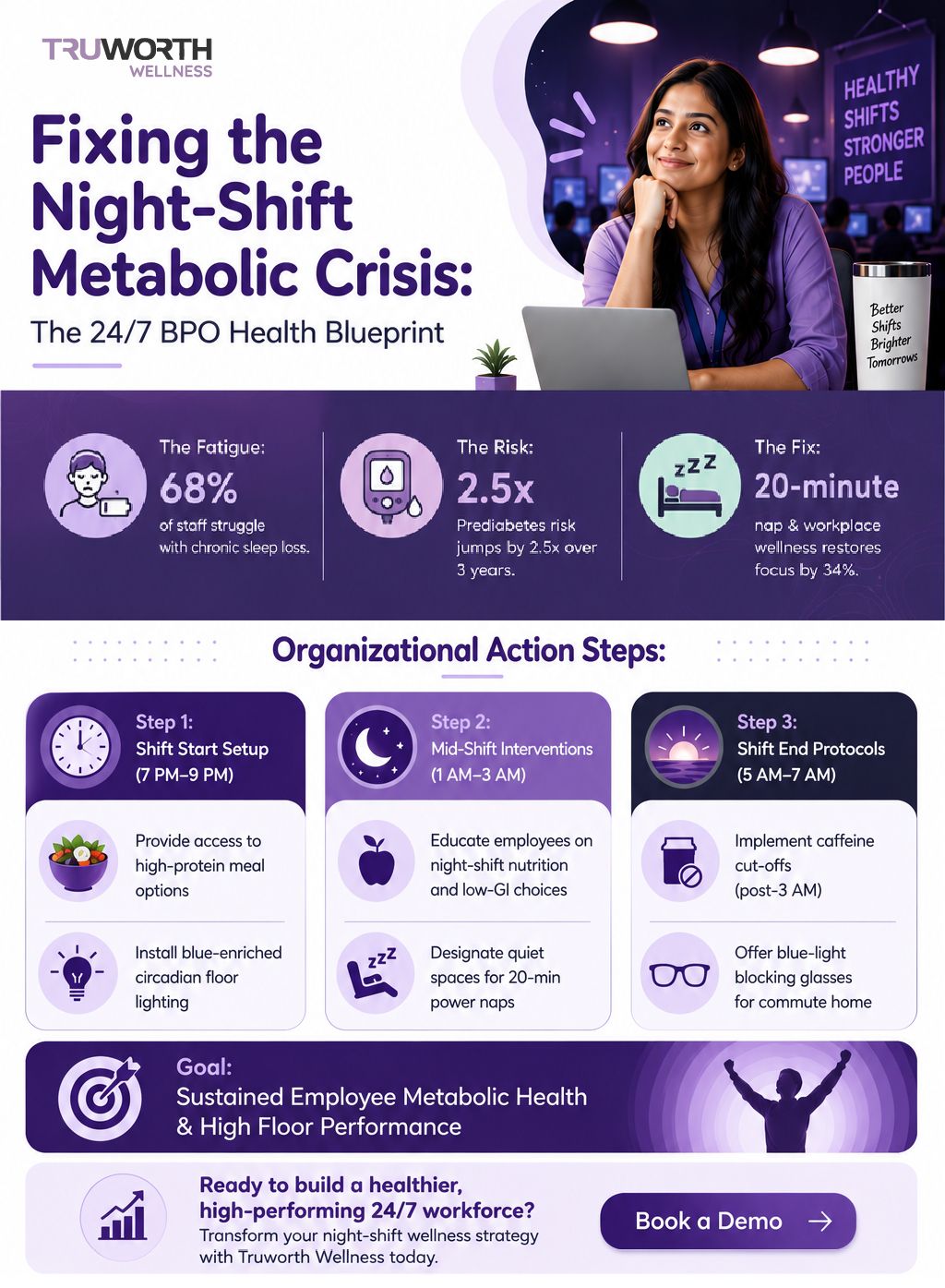
Human biology is fundamentally diurnal. Living against the natural light-dark cycle leads to Shift Work Sleep Disorder (SWSD)—a condition characterized by chronic insomnia, non-restorative sleep, and severe daytime somnolence. According to workplace health studies across metro hubs:
- Sleep Disturbances: Over 68% of night-shift BPO employees report severe sleep issues.
- Early Dysregulation: Near 54% demonstrate early indicators of metabolic dysregulation within 24 months of joining nocturnal shifts.
For corporate HR teams, this biological tax manifests in elevated absenteeism, floor burnout, sudden drop-offs in Quality Scores (CSAT/NPS), high voluntary attrition (often exceeding 30-40% annually), and ballooning enterprise health insurance claim ratios driven by lifestyle diseases.
2. The Hidden Epidemic: Circadian Disruption in India's 24/7 BPO Sector
To understand the metabolic crisis BPO employeesface, we must examine the human central biological clock: the Suprachiasmatic Nucleus (SCN) located in the hypothalamus. The SCN coordinates peripheral biological clocks located in the liver, pancreas, adipose tissue, and skeletal muscle based on natural light cues.
Daylight Exposure ➔ SCN Activation ➔Melatonin Suppression + Cortisol Surge (Wakefulness)
Darkness ➔ SCN Relaxation ➔Melatonin Release + Cortisol Drop (Rest & Repair)
When an employee works under artificial fluorescent lighting at 2 AM and sleeps during bright daylight hours, this synchronization breaks down:
- Melatonin Suppression: Nighttime light exposure suppresses melatonin—a hormone that is not merely a sleep regulator, but a potent antioxidant and anti-inflammatory agent.
- Cortisol Inversion: Serum cortisol (the primary stress hormone) spikes at unnatural hours, driving chronic low-grade systemic inflammation.
- Leptin and Ghrelin Imbalance: Circadian disruption reduces leptin (the satiety hormone) and elevates ghrelin (the hunger hormone), triggering intense cravings for energy-dense, refined carbohydrates.
Key Takeaway for HRs: Night-shift fatigue is not a discipline problem; it is a bio-chemical cascade. Expecting night-shift employees to maintain optimal health without environmental and nutritional intervention is scientifically unviable.
2.1 Metabolic Syndrome, HbA1c Spikes, and Cardiovascular Risks in Night Shift Workers
Data from the Indian Council of Medical Research (ICMR) highlights that urban Indians are genetically predisposed to South Asian Phenotype 2 Diabetes—characterized by high abdominal adiposity, visceral fat accumulation, and insulin resistance at lower Body Mass Index (BMI) thresholds.
When night-shift schedules are superimposed on this genetic susceptibility, the onset of lifestyle diseases accelerates dramatically.
Visceral Obesity + Insulin Resistance + Hypertension ➔METABOLIC SYNDROME ➔ Early Cardiovascular Disease
Key Physiological Risk Pathways:
- Impaired Postprandial Glucose Clearance: Eating a meal at 1:00 AM results in significantly higher blood glucose spikes and delayed insulin clearance compared to consuming the exact same meal at 1:00 PM. This persistent nighttime glycemic burden accelerates the progression from normal glucose tolerance to prediabetes (HbA1c 5.7% - 6.4%).
- Elevated Atherogenic Lipids: Disrupted circadian rhythms alter hepatic lipid metabolism, driving up small dense Low-Density Lipoproteins (sdLDL) and triglycerides while depleting High-Density Lipoproteins (HDL).
- Endothelial Dysfunction & Hypertension: The lack of a nocturnal blood pressure "dip"—a normal physiological drop during sleep—places continuous strain on vascular walls, leading to early-onset essential hypertension in workers as young as 25.
3. Why Traditional Corporate Wellness Programs Fail Night-Shift Workforce in India?
Most corporate wellness India frameworks are designed around a standard 9-to-5 working model. Consequently, night-shift operations are routinely overlooked or provided with misaligned wellness initiatives:
|
Traditional 9-to-5 Wellness Programs |
Night-Shift Operational Reality |
|
Live daytime webinars & workshops |
Employees are sleeping or off-duty |
|
Cafeterias serving balanced meals |
Cafeterias closed or reduced service |
|
Annual health camps at 10:00 AM |
Requires breaking daytime sleep |
|
Standard "Eat 3 meals a day" advice |
Incompatible with nocturnal shifts |
Key Takeaway for HRs: If your corporate health strategy does not offer active, tailored midnight infrastructure, your 24/7 operational risk remains entirely unmitigated.
3.1 Midnight Canteen Pitfalls: Sugar Spikes, Caffeine Reliance, and Sedentary Routines
A primary accelerator of the metabolic crisis in Indian BPOs is the nocturnal cafeteria environment:
2 AM High-GI Snack / Chai ➔Rapid Blood Glucose Spike ➔ Massive Insulin Response ➔3:30 AM Reactive Hypoglycemia (Crash) ➔ Sugar/Caffeine Craving
- The 2 AM Cafeteria Landscape: At midnight, most fresh food counters in tech parks close down. Employees rely on vending machines, quick-service counters offering fried items (samosas, pakodas, kachoris), instant noodles, and sugary carbonated drinks.
- The Tea/Coffee Cycle: To combat mid-shift somnolence, employees consume 4 to 6 cups of highly sweetened cutting chai or commercial coffee per shift. This delivers excess liquid calories while hyper-stimulating the adrenal glands.
- Ergonomic Stagnation: Call center agents, process associates, and IT support desks require continuous workstation presence. Employees sit immobilized for 8 to 9 hours straight under intense lighting, leading to poor venous return, lower back strain, and reduced baseline metabolic rate.
4. The Strategic Blueprint: 5 Interventions to Restore Night-Shift Health
To effectively resolve night shift health BPO Indiachallenges, enterprise HR leaders must deploy a structural, ground-level intervention model:
- Chrono-Nutrition: Restricted feeding windows and low-GI food options.
- Circadian Lighting & Fatigue Protocols: Dynamic light systems and power nap policies.
- Shift-Aligned Preventive Diagnostics: Quarterly targeted screening camps.
- Micro-Movement Exercises: Floor-wide prompts and active break hubs.
- Integrated 24/7 Digital Support: Round-the-clock telehealth ecosystems.
4.1 Chrono-Nutrition and Smart Meal Timing for Indian Night-Shift Employees
Chrono-nutrition focuses on aligning food intake with biological clocks rather than social schedules.
1. The "Anchor Meal" Strategy:
- Pre-Shift Meal (7:00 PM – 8:00 PM): Consumed at home before the shift starts. Should contain complex carbohydrates (unpolished rice, jowar/bajra rotis), lean proteins (dal, paneer, chicken, eggs), and healthy fats to ensure sustained glucose release.
- Mid-Shift Light Meal (1:00 AM – 2:00 AM): Avoid heavy, carb-laden meals mid-shift when insulin sensitivity is lowest. Replace heavy thalis or fried foods with light, high-protein options like sprout salads, roasted makhana, curd with chia seeds, or protein-rich wraps.
- Post-Shift Wind-Down Snack (6:00 AM – 7:00 AM): A small, low-glycemic snack before going to sleep (e.g., warm almond milk with a pinch of nutmeg, or a handful of soaked walnuts and pumpkin seeds) to prevent waking up due to hunger without triggering midnight-level digestion.
2. Caffeine Hygiene:
- Enforce a strict Caffeine Cut-off Window: No caffeine consumption during the last 4 hours of the shift (e.g., no tea/coffee after 3:00 AM for a shift ending at 7:00 AM) to allow adenosine buildup and ensure deep, restorative sleep during daylight hours.
4.2 Targeted Preventive Screening: Continuous HbA1c and Lipid Tracking
Standard annual health checkups often miss the rapid onset of metabolic changes in young shift workers. BPO HR operations require targeted, frequent diagnostic schedules.
|
Diagnostic Parameter |
Screening Frequency |
Clinical Focus Area |
|
Glycated Hemoglobin (HbA1c) |
Bi-Annually / Quarterly |
Unmasks early prediabetes |
|
Lipid Sub-fractions |
Bi-Annually |
Detects sdLDL & Triglycerides |
|
Fasting Insulin / HOMA-IR |
Annually |
Measures metabolic stress |
|
Ambulatory Blood Pressure |
Bi-Annually |
Identifies non-dipping BP |
4.3 Lighting Hygiene, Nap Pods, and Fatigue Protocols
- Dynamic Circadian Lighting: Install high-intensity blue-enriched LED lighting (460-480 nm wavelength) in active work zones during the first half of the shift to suppress melatonin and boost alertness naturally. Transition to warmer tones during the final two hours to prepare the body for post-shift sleep.
- Power Nap Pods: Implement structured 20-minute power naps between 2:00 AM and 3:30 AM. Studies show that a 20-minute nap significantly improves cognitive processing speed and reduces micro-sleep episodes on floor duty without causing sleep inertia.
- Blackout Hygiene Kits: Provide night-shift employees with light-blocking eye masks, earplugs, and guidance on using blackout curtains at home to optimize daytime sleep quality.
4.4 Micro-Movement Breaks and Ergonomic Interventions
Continuous sitting for 8+ hours exacerbates metabolic sluggishness. Incorporating structured physical movement into operations helps mitigate this risk:
[Hourly 2-Min Micro-Walks] ➔[Activates Skeletal Muscle GLUT4 Transporters] ➔[Improves Glucose Uptake Without Insulin Spikes]
- Floor-Wide Movement Alarms: Program automated workstation prompts every 60 minutes encouraging employees to execute 120-second active stretches (calf raises, seated torso twists, shoulder rolls).
- Active Break Zones: Convert unused floor spaces into quick-activity zones equipped with standing desks, resistance bands, and foam rollers.
5. How Truworth Wellness Empowers Indian Enterprises to Protect Night-Shift Talent?
As India’s leading corporate health and employee wellbeing partner, Truworth Wellness delivers specialized health programs designed specifically for 24/7 BPO and customer support environments.
1. AI-Powered Truworth Wellness Portal & App
- Shift-Aware Personalization: The Truworth portal adapts to night-shift schedules, adjusting workout reminders, hydration alerts, and meal tracking to reflect nocturnal hours.
- Engaging Gamification: Custom step challenges and wellness quests tailored for team-based competition across operational shifts.
2. Tailored Diagnostic Infrastructure
- Shift-Friendly Health Screenings: Truworth Wellness organizes phlebotomy and diagnostic camps directly at enterprise facilities during night-shift operations (e.g., 2:00 AM to 7:00 AM), ensuring employees do not have to disrupt their off-duty sleep hours to complete health checks.
3. Specialized Teleconsultations & Lifestyle Coaching
- 24/7 Access to Clinical Experts: Instant access to registered dietitians, general physicians, and clinical psychologists who understand the psychological and physiological demands of night-shift work.
- Mental Wellbeing Support: Dedicated confidential counseling to manage shift-work sleep disorder, anxiety, and occupational stress.
6. Frequently Asked Questions (FAQ)
Q1: Why are night-shift BPO workers at a higher risk for prediabetes and Type 2 diabetes?
Night-shift work disrupts the body's natural circadian rhythm, suppressing melatonin secretion and altering cortisol patterns. This circadian misalignment impairs insulin sensitivity and glucose tolerance, particularly during nighttime hours. Combined with nocturnal high-carbohydrate snacking, sedentary floor environments, and disrupted sleep, blood sugar levels remain elevated, leading to insulin resistance and accelerated onset of prediabetes.
Q2: How can enterprise HR teams encourage healthier eating habits during night shifts?
HR teams can drive healthier eating by restructuring cafeteria options during night shifts. Key strategies include partnering with vendors to offer low-GI, high-protein options (such as sprout salads, paneer wraps, and roasted snacks) at midnight, replacing sugary teas and instant noodles with healthier alternatives, introducing free fruit baskets on the floor, and establishing clear caffeine cut-off policies prior to shift completion.
Q3: What simple interventions can BPOs implement immediately to combat floor fatigue?
Immediate, high-impact interventions include:
- Scheduling mandatory 2-minute micro-movement/stretching breaks every hour.
- Installing blue-enriched lighting in work zones to maintain alertness naturally.
- Providing designated, quiet nap spaces for 20-minute power naps between 1:00 AM and 3:00 AM.
- Distributing blackout sleep kits (eyemasks, earplugs) to help employees achieve high-quality sleep during daylight hours.
Q4: How does Truworth Wellness customize its wellness solutions for 24/7 BPO operations?
Truworth Wellness provides enterprise health solutions tailored to nocturnal shifts, including:
- Onsite diagnostic health camps conducted during night-shift operational hours (e.g., midnight to early morning).
- 24/7 digital health tracking via the Truworth portal, adjusted for shift-work schedules.
- Round-the-clock access to teleconsultations with dietitians, physicians, and mental health counselors experienced in shift-work health management.
Transform Your Night-Shift Workforce Health with Truworth Wellness
Enterprise Health Solutions Built for 24/7 Operations
Is your organization ready to reduce health insurance claims, lower attrition, and protect your night-shift employees from metabolic risks? Truworth Wellness provides end-to-end, science-backed corporate wellness solutions customized for Indian BPOs, tech parks, and enterprise customer support centers.
- Custom Night-Shift Preventive Health Checkups
- AI-Powered Health Portals & Habit Tracking
- 24/7 Teleconsultations with Dietitians & Doctors
- Onsite Nutrition & Ergonomic Workshops
🌐 Explore Solutions Today @ www.truworthwellness.com
Conclusion
The metabolic crisis affecting India's night-shift BPO workforce is a solvable challenge. By replacing passive 9-to-5 health benefits with targeted chrono-nutrition, circadian lighting management, proactive health monitoring, and personalized digital interventions, enterprise leaders can build a healthier, more resilient 24/7 workforce. Partnering with Truworth Wellness enables enterprise organizations to transform operational risk into a competitive advantage; ensuring that India's economic growth engines run on sustainable human energy.