PCOS Is In Your Office And Your Wellness Program Has Never Once Mentioned It?

One in five Indian women of working age lives with PCOS. It affects her energy, her focus, her confidence and her long-term health. Your wellness program has probably never acknowledged it exists.
Picture your office floor right now.
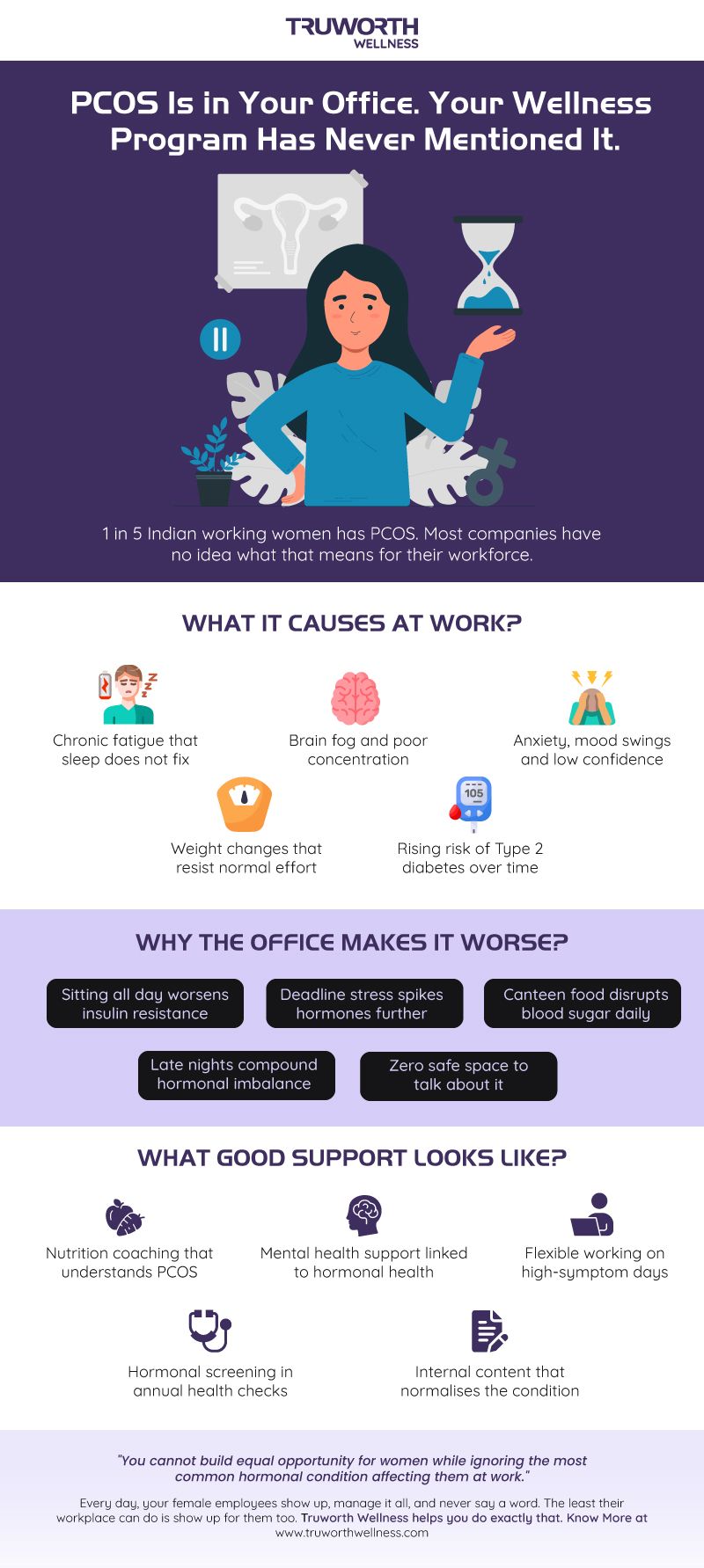
Look at the women around you. Colleagues, teammates, direct reports, managers. Statistically, one in every five of them is living with a condition that affects her hormones, her metabolism, her mood, her sleep, her skin, her weight and her ability to conceive. A condition that has no cure, requires daily management, and is made significantly worse by exactly the kind of environment she spends eight to ten hours a day working in.
That Condition is Polycystic Ovary Syndrome. PCOS.
Now think about the last time your company's wellness program mentioned it. The last time a health nudge, a webinar, a content module, a nutrition guide, or a coaching session was designed with her in mind.
If the answer is never, you are not unusual. You are the norm. And that is precisely the problem.
What PCOS Actually Is?
PCOS is one of the most common hormonal conditions affecting women of reproductive age. In India, prevalence estimates range from 10 to 22 percent depending on the population studied. For practical purposes, assume that somewhere between one in five and one in ten women in your workforce has it.
At its core, PCOS is a condition of hormonal imbalance. The body produces higher than normal levels of androgens, the hormones typically associated with male characteristics, and this disrupts the normal functioning of the ovaries. But the effects go far beyond reproductive health.
PCOS is associated with:
- Insulin resistance, which affects how the body processes blood sugar and significantly raises the risk of Type 2 diabetes
- Chronic fatigue, not ordinary tiredness but a deep, persistent exhaustion that does not resolve with a good night of sleep
- Mood disorders, including significantly elevated rates of anxiety and depression compared to women without the condition
- Cognitive symptoms including brain fog, difficulty concentrating and memory lapses
- Weight gain and difficulty losing weight, particularly around the abdomen, driven by hormonal and metabolic factors rather than willpower
- Sleep disruption, including higher rates of sleep apnea and poor sleep quality
- Skin and hair changes including acne, excess facial hair and hair thinning, which carry their own significant psychological burden in a professional environment
This is not a niche condition with a small set of symptoms. This is a complex, systemic condition that affects nearly every dimension of a woman's daily functioning. And it is happening in your office, every single day, entirely unacknowledged by most corporate wellness programs.
 Truworth Wellness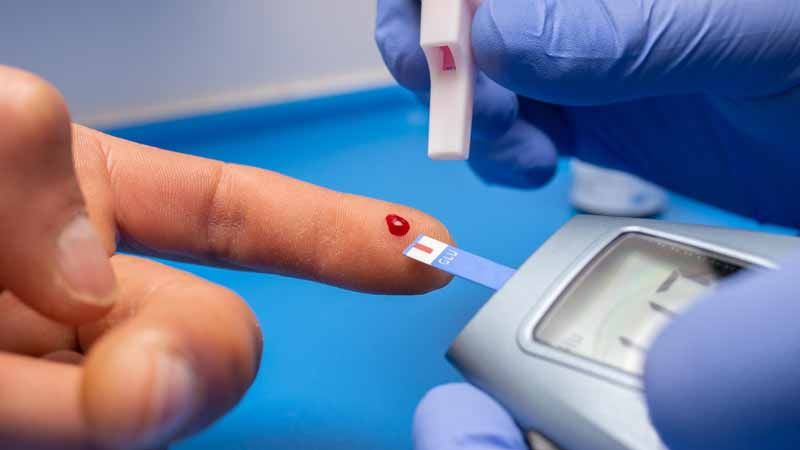
Why the Workplace Makes It Worse?
Here is the part that should make every HR leader sit up.
The corporate work environment, as it is currently designed for most Indian employees, is almost perfectly structured to worsen PCOS symptoms. Not through any malicious intent. Simply through the accumulated effect of design choices that were never made with this condition in mind.
- Sedentary work worsens insulin resistance. PCOS is fundamentally linked to insulin resistance in the majority of cases. Sitting for long hours without movement directly increases insulin resistance. For a woman with PCOS, a desk job without structured movement breaks is not neutral. It is actively harmful.
- Stress elevates androgens. Chronic workplace stress raises cortisol levels. Elevated cortisol disrupts the hormonal balance further in women with PCOS, raising androgen levels and worsening symptoms. Deadline pressure, always-on culture, unclear job expectations and lack of autonomy are not just productivity problems. For women with PCOS, they are clinical aggravators.
- Office food environments are metabolically hostile. The high-carbohydrate, low-protein, low-fibre meals that dominate most office canteens and delivery options are exactly the dietary pattern most likely to spike blood sugar and worsen insulin resistance. For a woman with PCOS managing her diet carefully, the office food environment can undo hours of intentional effort every single lunchtime.
- Sleep deprivation hits harder. Women with PCOS already experience worse sleep quality than average. A work culture that normalises late nights, early morning calls and weekend availability creates a chronic sleep deficit that compounds the hormonal disruption already present.
- The psychological environment carries its own burden. Many women with PCOS manage visible symptoms like weight, skin and hair changes in a professional environment that rewards a particular kind of appearance and energy. The silent effort of managing these symptoms while performing, presenting, leading and delivering is invisible to everyone around them and exhausting to carry alone.
Also Read: What Working Women Go Through During Their Period—And Why It Matters At Work?
The Silence Has a Cost
Here is what typically happens when a woman with PCOS enters a corporate environment with no wellness support for her condition.
In her twenties, she is managing symptoms largely on her own. She may have a diagnosis. She may not. Many women go years without one because their symptoms are dismissed as stress, poor diet, or lifestyle choices by doctors, family members and sometimes themselves. She finds her energy inconsistent, her concentration unreliable on certain days, her weight frustratingly resistant to the same efforts that work for her colleagues. She attributes it to personal failings.
She does not mention it at work because it feels too personal, too medical, too complicated to explain, and because she is not entirely sure her manager would understand or that her career would be unaffected by the knowledge.
She uses a significant amount of daily cognitive and emotional bandwidth managing her condition on top of her actual job. This is called allostatic load. It is invisible to everyone around her and it is real.
By her early thirties, if the condition has not been properly managed, the metabolic consequences begin to compound. The insulin resistance that was manageable becomes more entrenched. The risk of Type 2 diabetes, cardiovascular disease and other metabolic complications rises. The fatigue becomes harder to push through. The mood instability becomes more pronounced.
None of this was inevitable. It was the predictable outcome of a condition that was left unaddressed in an environment that made it worse, for years.
Also Read: Indian Women More Stressed At Work Than Men?
The talent implications alone should make this a boardroom conversation. Women with unmanaged PCOS are more likely to take unplanned leave, experience burnout earlier, and quietly reduce their ambition and visibility at work — not because they lack ability or drive, but because they are managing a systemic health condition with zero organisational support.
What Corporate Wellness Gets Wrong About Women's Health?
Most corporate wellness programmes approach women's health as a subset of general health with occasional additions. A session on breast cancer awareness in October. A webinar on work-life balance aimed implicitly at working mothers. Period tracking mentioned briefly in a health app that was designed primarily around step counts and sleep scores.
This is not women's health design. It is general wellness design with pink edges.
Genuine women's health in a corporate context requires acknowledging that female biology creates specific health dynamics across the working lifespan. Hormonal cycles affect energy, cognition, pain tolerance and emotional regulation across every single month. Conditions like PCOS, endometriosis, thyroid disorders and perimenopause affect a significant proportion of the female workforce and are almost entirely absent from wellness programme design.
The absence is not intentional discrimination. It is the outcome of wellness programs being designed without asking the right questions. What are the most prevalent health conditions in our female workforce? What does the research say about workplace factors that worsen those conditions? What would a programme actually designed for those employees look like?
Most organisations have never had that conversation. It is time to have it.
What Designing for PCOS in the Workplace Actually Looks Like?
The good news is that PCOS is highly responsive to lifestyle intervention. The same changes that improve metabolic health generally: Movement, nutrition, sleep, stress management; have a particularly powerful effect on PCOS symptoms specifically. This means the workplace is actually an enormous leverage point if it chooses to be.
Here is what meaningful support looks like:
- Awareness come first. Women with PCOS should not have to explain their condition from scratch every time they need a flexible hour for a gynaecologist appointment or a difficult day around their cycle. Internal wellness content that normalises PCOS as a common, manageable condition reduces the psychological burden of invisibility and opens the door to employees actually using available support.
- Nutrition support needs to be condition-aware. Generic healthy eating advice is not useful for women with PCOS. They need guidance on low-glycaemic eating, protein-forward meals, blood sugar stability and anti-inflammatory food choices. A nutrition coach with specific knowledge of PCOS management is a meaningfully different resource from a general wellness dietitian.
- Movement design should be PCOS-informed. High-intensity exercise actually worsens symptoms for some women with PCOS by spiking cortisol. The most beneficial movement for this condition tends to be moderate, consistent and low-stress — walking, strength training, yoga. Wellness programs that push only high-intensity fitness challenges may be counterproductive for a significant portion of their female participants.
- Mental health support needs to acknowledge the hormonal dimension. Anxiety and depression in women with PCOS have a partial hormonal basis. A counsellor or EAP provider who understands this is more effective than one treating the psychological symptoms in isolation from the physical condition. Integrated support that connects mental and physical health is not a luxury. For women with PCOS it is a clinical necessity.
- Flexible working provisions make a measurable difference. For women managing significant symptom days — the fatigue spikes, the pain, the brain fog that can accompany hormonal fluctuations — the ability to work flexibly rather than push through in a physically demanding office environment is not a perk. It is a functional accommodation that preserves both health and productivity.
- Screening and early detection should be standard. A significant number of women with PCOS do not have a diagnosis. Workplace health checks that include hormonal and metabolic screening can surface undiagnosed cases and connect women to the clinical support they have often been managing without for years.
The Business Case Is Not Complicated
Companies invest substantially in attracting, developing and retaining female talent. Leadership diversity initiatives, returnship programmes, pay equity audits — all of these represent real organisational investment in women's careers.
And then the wellness program ignores the most common hormonal condition affecting working-age women entirely.
The logic does not hold. You cannot build genuine inclusion and equal opportunity for women without addressing the health conditions that disproportionately affect their energy, their consistency, their confidence and their long-term wellbeing at work.
PCOS is not a niche concern. It is a mainstream one. The women managing it in your organisation are not asking for special treatment. They are asking for basic acknowledgement that their health reality exists and that the organisation they spend most of their waking hours in will not actively make it worse.
That is a reasonable ask. And it has a straightforward answer.
A Question Worth Sitting With
Your wellness programme probably covers step counts, hydration reminders, stress webinars and annual health checks.
Does it cover the condition affecting one in five of your female employees?
If not, that is not a gap in your wellness programme. That is a gap in how seriously your organisation takes the health of a significant part of its workforce.
The conversation starts with acknowledging the condition exists. Everything useful follows from there.
Truworth Wellness works with organisations across India to build health programs that are designed for who their employees actually are — including the conditions that corporate wellness has historically ignored. If you want to understand what genuinely inclusive women's health support looks like inside a corporate wellness framework, start the conversation here.