Why Tier 2 City Employees Have A Completely Different Wellness Problem — And Nobody Is Designing for It?
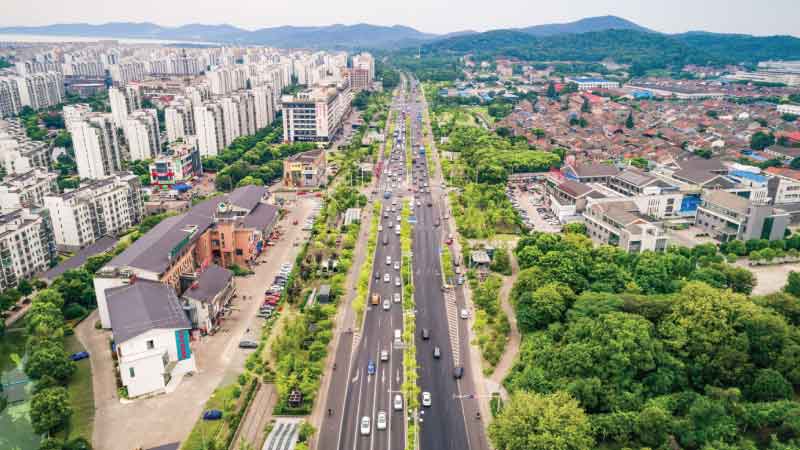
India's corporate footprint is growing fast. The wellness programs? Still stuck in the metro mindset.
India's corporate map is changing. Companies are setting up offices in Jaipur, Indore, Coimbatore, Vadodara, Lucknow and dozens of other cities. New teams are being hired. Targets are being set. And the same wellness program that runs in the head office is being copy-pasted to every new location.
Same app. Same step challenge. Same EAP helpline number.
And in most of these new offices, almost nobody is using it.
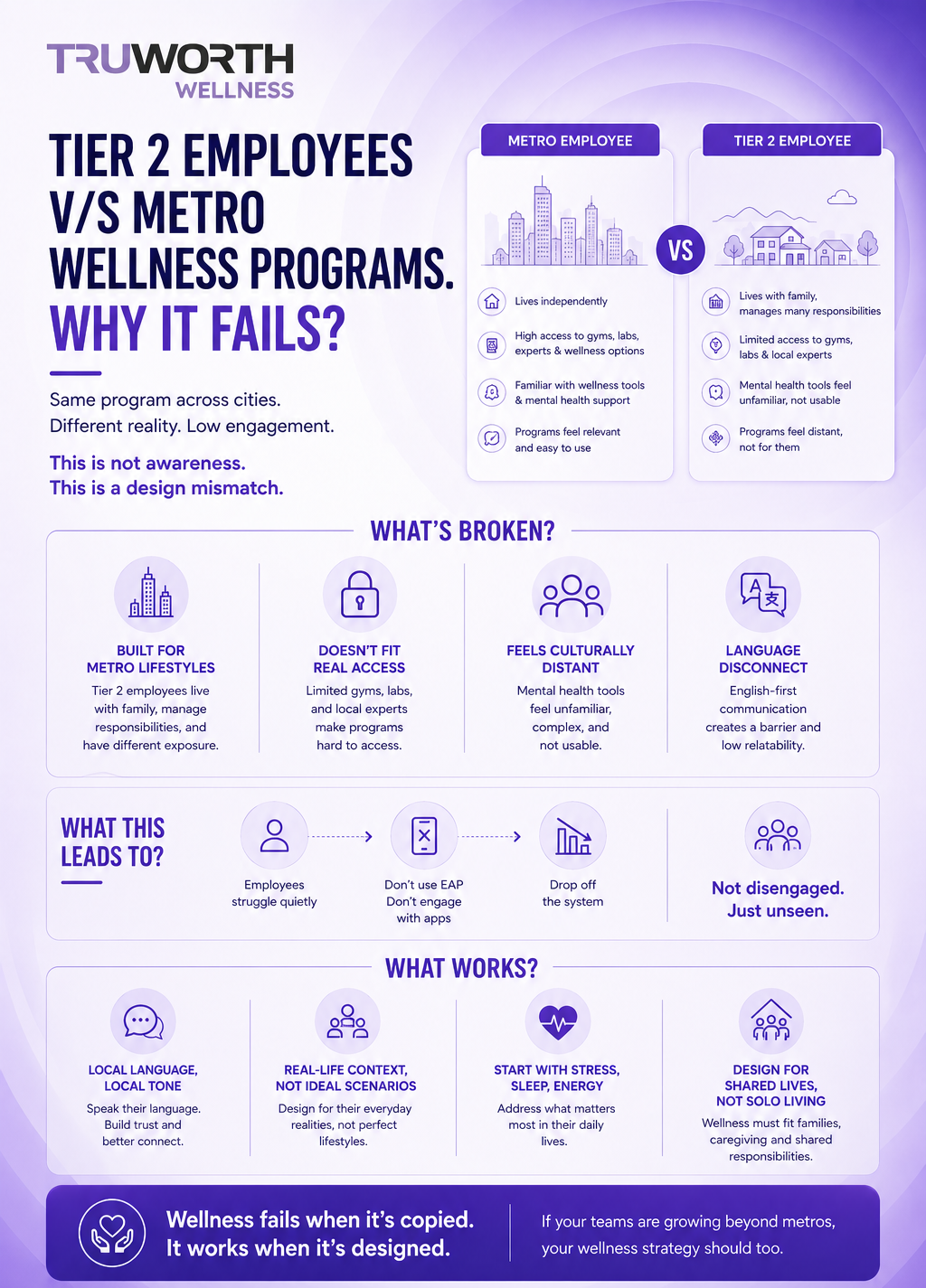
This is not an awareness problem. It is a design problem.
The Program Was Never Built for These Employees
Corporate wellness in India was designed with a very specific person in mind. Young, urban, living independently, already comfortable with apps and teleconsultations, probably familiar with therapy or at least open to it.
That person exists. But they are not the majority of India's growing corporate workforce.
Employees in Tier 2 cities often look very different:
- Many are the first in their family to work in a corporate environment
- Most live with family, not alone or with a partner
- A significant portion send a portion of their salary home every month
- Many come from communities where mental health is either unspoken or misunderstood
- Most have never used a wellness app, seen a nutritionist, or called a counsellor
When a wellness program designed for one type of employee gets handed to a completely different one, it does not just underperform. It becomes invisible.
Three Gaps That Nobody Talks About44
1. The Infrastructure Gap
In metro cities, a wellness platform works because a whole ecosystem already exists around it. Gyms, diagnostic labs, therapists with evening slots, specialist consultations available in an hour.
In many Tier 2 cities, that ecosystem is thin. A teleconsultation with a nutritionist means speaking to someone from a different city, giving advice built around a lifestyle and food culture that looks nothing like the employee's actual one. Lab partners may not have local presence. Gym tie-ups may not account for real barriers like safety, distance, or timing.
The platform is only as useful as the infrastructure it sits on.
2. The Cultural Gap
This one is harder to put in a slide deck, but it matters the most.
In many smaller cities, mental health is not a neutral topic. Saying "help is available" does not feel like an invitation. It feels like an accusation. The employee does not call. The EAP line sits unused. Leadership assumes nobody needs it.
They do. They are just not going to use a tool that feels foreign to everything they have been taught about strength, privacy, and family.
Financial wellness content that talks about mutual funds and SIPs assumes a baseline of financial stability and literacy that many Tier 2 employees simply do not have yet. Step challenges assume someone has free evenings and a gym nearby. Nutrition modules assume access to ingredients and a kitchen you cook in alone.
These assumptions are invisible when you build from a metro lens. They become very visible when the data comes back flat.
3. The Language Gap
A wellness platform that only works in English is not a wellness platform for most of Tier 2 India.
This goes beyond translation. It is about tone, idiom, cultural reference and relatability. A nudge that lands warmly for someone in Bengaluru can feel cold or irrelevant to someone in Bhopal — not because the person is less receptive, but because the content was never written for them.
Why Your Wellness Partner Should Be A Culture Builder? (Not Just A Health Partner)
What Actually Happens When an Employee Needs Help?
Picture an employee in their mid-twenties, working at a mid-size company in a Tier 2 city. They have been anxious for months. Sleep is disrupted. Concentration is off.
The EAP number is there. They do not call it.
They are not sure who picks up. They do not know if it is confidential. They have no frame of reference for what a counselling session even looks like. And in their home, in their family, calling a mental health line is not something that has ever been done or discussed.
So they manage. They get quieter. Their output dips. Someone notices but puts it down to a difficult quarter.
They are not counted as a wellness failure because they never engaged with the program. They are simply invisible to it.
This is not one employee. This is a pattern.
What Designing for Tier 2 Employees Actually Looks Like?
The fix is not complicated. But it does require intention.
- Language first. Content, nudges and coaching should be available in Hindi and regional languages, in a tone that feels local and warm, not imported.
- Context-aware content. Nutrition advice should reflect what people actually eat. Financial wellness should reflect how people actually manage money, including family obligations and first-generation earner pressures.
- Lower the entry point for mental health. Replace therapy-first framing with stress, sleep and energy conversations. Normalise help-seeking through peer formats and manager training before asking someone to call a helpline.
- Design around real constraints. Shared living spaces, long commutes, family responsibilities and safety concerns are not edge cases. They are the baseline for millions of employees. Wellness design should start there.
The Bigger Picture
Employees in Tier 2 cities are often among the most committed, stable and motivated in an organisation. The job means something significant to them and their families. Attrition is lower. Loyalty runs deeper.
They are not hard to engage. They are just being offered engagement in a form that does not fit their lives.
The companies that close this gap are not just being equitable. They are building a healthier, more stable workforce in the locations where they are growing the fastest. That is not a nice-to-have. That is a real business advantage.
India's corporate wellness industry has spent a decade perfecting its product for a handful of metros. The next decade belongs to the companies willing to design for everyone else.
Does your wellness program reflect the diversity of your workforce, or just the city where your head office is?
If your teams have grown beyond the metros and your wellness strategy has not kept up, Truworth Wellness can help you close that gap.
- Localized program design
- Access beyond metros
- Multi-language EAP
- Culturally relevant care
- Simple, easy participation
- Data-led personalization
- Outcome-focused approach