How Much Sleep Does A Corporate Professional Need As They Age?

Sleep is one of the first things corporate professionals sacrifice when life gets busy. Deadlines, late-night emails, back-to-back meetings, family responsibilities, and constant mental stimulation make it easy to cut down on sleep without even realising it. Many people normalise sleeping less, assuming they can “manage” with five or six hours. But the truth is that your sleep needs do not shrink as you age. In fact, your body requires deeper and better quality sleep to support the increasing demands of your professional and personal life.
As you grow older, your brain handles more pressure, more decisions, and more emotional load. Your body processes more stress than it did in your twenties. This makes sleep a core part of functioning well, thinking clearly, managing emotions, and staying healthy.
Let us explore how sleep needs evolve as you move through different age decades and why understanding this shift is essential for your long-term well-being.
Also Read: Corporate Sleep Hygiene: What Working Professionals Should Be Doing Differently?
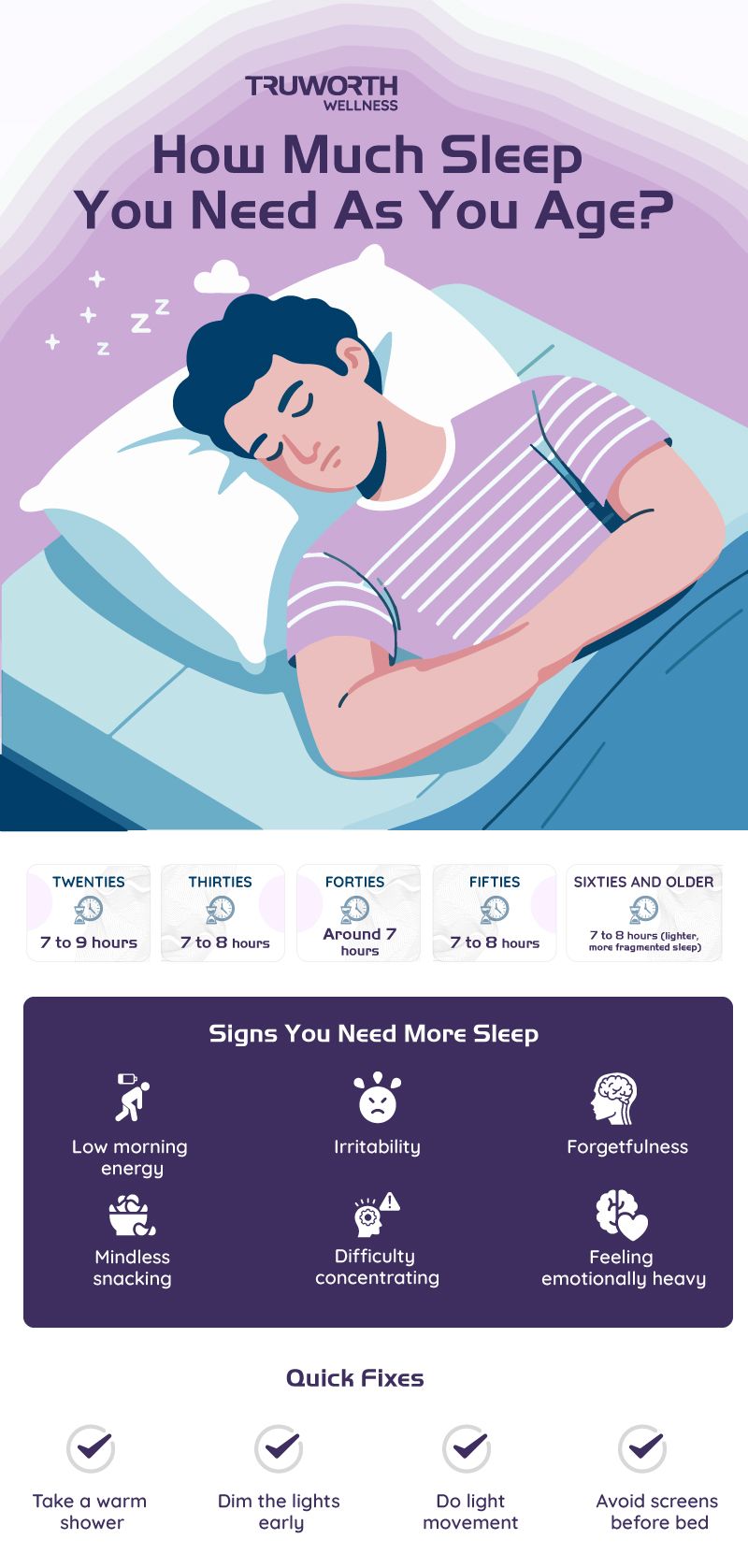
Sleep Needs in Your Twenties
Your twenties are usually filled with exploration, growth, and high energy. Many people start their careers during this time, and the excitement of new opportunities often leads to irregular routines.
Recommended sleep: Seven to nine hours every night.
At this age, sleep plays a strong role in memory formation, creativity, emotional regulation, and sharper thinking. The brain is still developing and needs enough rest to build strong neural connections. When sleep becomes irregular, the first signs show up as difficulty focusing, low patience, increased cravings, or emotional sensitivity.
Late-night socialising, work pressure, and screen usage often interfere with natural sleep cycles. Even though the body recovers quickly, the lack of a consistent routine creates energy fluctuations that affect performance. Creating even simple bedtime habits in your twenties sets a strong foundation for healthier sleep in the decades ahead.
Also Read: How Do I Handle Office Pressure?
Sleep Needs in Your Thirties
Your thirties bring a blend of growing responsibilities and higher expectations. Career growth, family commitments, and financial pressure all rise together.
Recommended sleep: seven to eight hours.
People in this age group often experience a constant mental load. Even after work hours, the brain keeps planning, analysing, and worrying. This leads to delayed sleep, lighter rest, or waking up at night with unfinished thoughts. You may still manage daily tasks, but the tiredness builds up internally.
This is also the phase where consistent routines become more important than ever. A structured wind-down at night, reduced caffeine intake, and digital boundaries help you sleep more deeply. Ignoring sleep in your thirties often sets the stage for chronic fatigue in your forties.
Sleep Needs in Your Forties
This is the decade where many professionals notice real changes in sleep quality.
Recommended sleep: around seven hours, sometimes slightly more.
Responsibilities at work often peak during this time. Leadership roles, decision-making pressure, and team management can create mental fatigue. Hormonal changes in both men and women also influence sleep. Many people begin to experience early morning wakeups or restless nights.
Your metabolism slows down, and your body takes longer to recover from stress. Missing sleep even for a few days can affect mood, digestion, weight, and energy. This is the age when your body gives clearer signals when sleep is not enough. Simple habits like reading before bed, dim lighting, or light stretching help calm the nervous system and improve restfulness.
Without proper sleep, professionals in their forties often feel overwhelmed, emotionally drained, or mentally scattered. A better sleep routine can noticeably improve clarity and stability.
Sleep Needs in Your Fifties
Professionals in this stage often require seven to eight hours of sleep for optimal functioning. However, sleep challenges become more common.
Changes in hormones, joint stiffness, acidity, and stress can interrupt rest.
Women may experience sleep disturbances during perimenopause and menopause, including night sweats or sudden wakeups. Men may face increased nighttime urination or discomfort that disrupts continuous sleep. Deep restorative sleep naturally reduces as the body ages, making it harder to feel fully refreshed.
Good sleep during this phase supports heart health, cognitive sharpness, and emotional stability. Relaxation practices like meditation, warm showers, herbal teas, and minimal screen exposure at night can support deeper rest. Many people also benefit from keeping the bedroom slightly cooler and darker.
This is the age where caring for your sleep becomes an act of caring for your future health.
Sleep Needs in Your Sixties and Beyond
Older adults still need about seven to eight hours of sleep, but the pattern of sleep changes.
Sleep becomes lighter, more fragmented, and more sensitive to routine shifts.
Early morning waking becomes common, and the natural body clock shifts earlier. Even though lighter sleep is normal, persistent exhaustion is not. A stable daily routine, morning sunlight exposure, and gentle evening rituals help maintain a healthier sleep cycle.
Short naps during the day, about twenty to thirty minutes, are helpful without interfering with nighttime sleep. Physical activities like walking or light yoga support deeper and longer rest at night.
Sleep in this stage is closely tied to memory, emotional well-being, balance, and overall mental sharpness.
Why Sleep Hygiene Matters More As You Age?
As you grow older, your need for high-quality sleep actually increases. Your brain performs more complex tasks. Your body deals with more stress. Your emotional range broadens with life experiences.
Good sleep promotes:
- Clear thinking
- Higher productivity
- Better emotional control
- Stronger immunity
- Balanced appetite
- Healthier heart function
- Sharper memory
Most corporate professionals underestimate how deeply sleep affects their performance, communication, leadership behaviour, and resilience. When sleep improves, everything from teamwork to problem-solving becomes smoother.
Even small actions like avoiding heavy dinners, dimming lights early, or practising deep breathing can create meaningful changes in sleep quality.
Simple Steps That Improve Sleep At Any Age
• Go to bed at a consistent time each night
• Keep your room cool, dark, and clutter free
• Avoid screens thirty minutes before sleeping
• Eat a lighter dinner and stay hydrated through the day
• Limit caffeine after afternoon hours
• Try calming activities like gentle stretching or soft music
• Step out of bed briefly if you cannot fall asleep and return only when sleepy
These small steps add up and create better sleep naturally.