The Hidden Sleep Disorder Sabotaging Top Performers

Imagine this: It's 2 a.m. You're not dreaming about your next big work win. Instead, you get out of bed with eyes open but brain fast asleep. You might grab your keys or check the fridge, with no idea what you're doing. Morning comes, and you remember nothing. Just some bruises or mess around the house. This is sleepwalking, also called somnambulism. It messes up your deep sleep.
You act like you're awake, but you're not. Most think it's just for kids and no big deal. But for busy office workers and bosses chasing goals, it's a hidden problem. It makes you super tired, causes mistakes at work, and hurts your sharp thinking. If you're stressed from jobs with long hours, it's time to pay attention before it affects your career.
Sleepwalking breaks your deep, early-night sleep. You walk or do other things while still asleep and unaware. For people with tight work schedules, travel, and stress, rest time becomes risky. It leads to more tiredness, errors, and bad moods that carry over to the office.
Also Read: How Much Sleep Does A Corporate Professional Need As They Age?
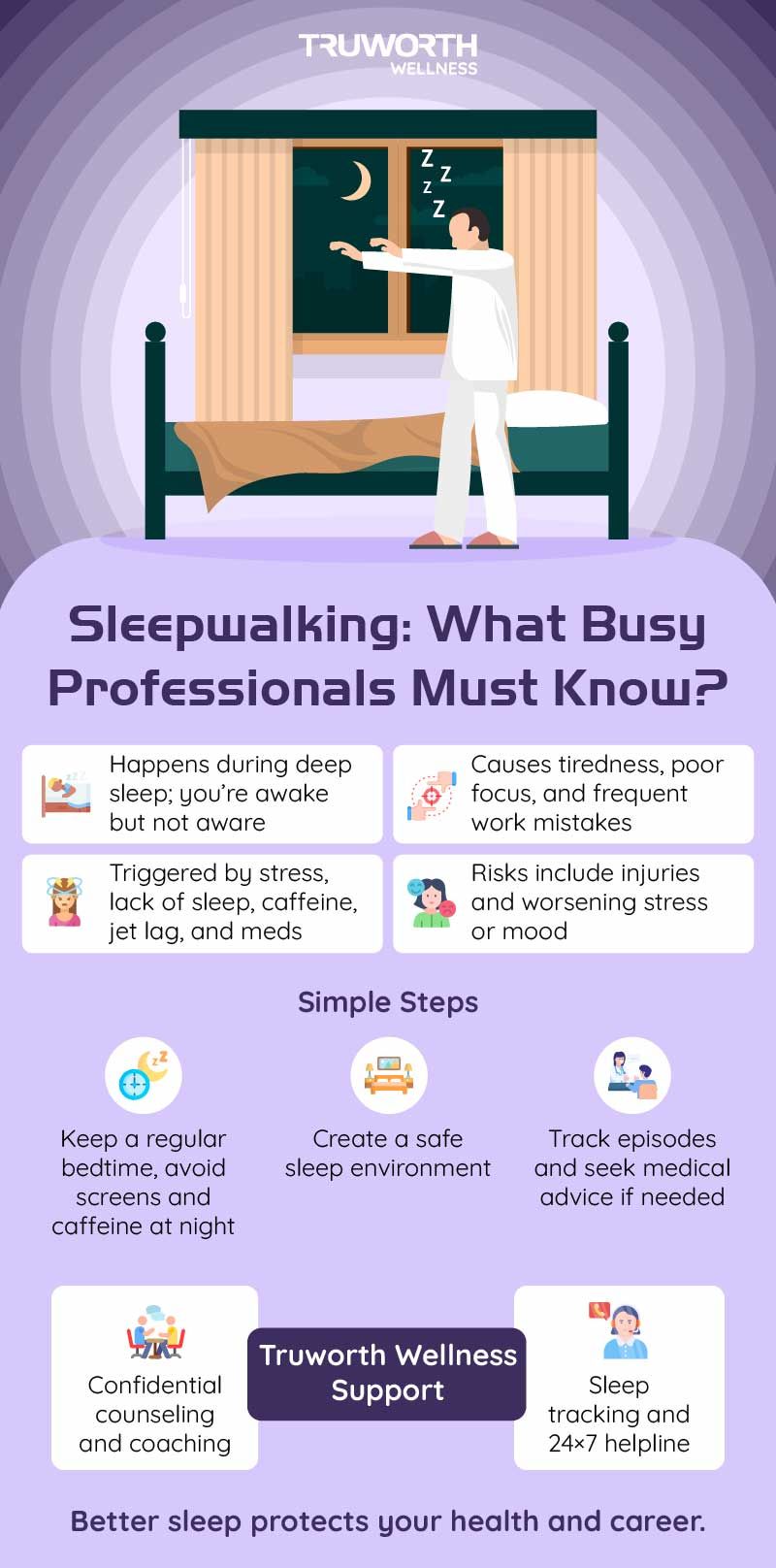
What Sleepwalking Really Looks Like?
It often starts a few hours after you fall asleep. Episodes last seconds to 30 minutes. Parts of your brain that control moving wake up. But the thinking part stays asleep. You look blank-eyed, move slowly, and get confused if woken up softly. Jobs with odd hours, like late calls or flights, make it worse by messing up your sleep rhythm.
Sleepwalking does not just happen. Certain things trigger it, especially in busy jobs. Here are the main ones:
- Not enough sleep: Staying up late for work emails or reports cuts deep into rest time.
- Stress and worry: Thinking about deadlines, targets, or big meetings keeps your mind racing.
- Too much caffeine: Coffee or energy drinks late in the day blocks good sleep.
- Travel and jet lag: Changing time zones confuses your body clock.
- Medicines: Some pills for sleep, allergies, or pain can spark episodes.
- Other sleep issues: Like stopping breathing at night (sleep apnea), common when tired.
- Family history: If parents had it, you might too.
- Alcohol or fever: Night drinks or sickness can set it off.
These add up fast in high-pressure work. Fixing them helps stop the problem.
How Does It Hurt Focus and Work?
Office jobs need fast, clear thinking. But sleepwalkers feel foggy and tired all day. Bad sleep means more mistakes, like wrong numbers in reports or weak talks with clients.
Main day problems:
- Forget things and react slowly – hard to check data or meetings
- Feels like being burned out – can't focus long, more errors in detailed work like budgets
- Gets worse over time – mistakes cause stress, which breaks sleep more
It hurts teams, too. Tired people get grumpy or miss what others say, losing trust. In sales, low energy can lose deals or block promotions.
Bigger Health and Mood Problems
Every night risks bumps or falls, which get blamed on being clumsy. It also causes ongoing tiredness, hard time sleeping, and higher chance of worry or sadness – already big issues for bosses in tough times.
Feelings and family effects:
- Shame if others see it, so you pull away from people
- Scary rough moves in sleep upset family
- Trips lead to mix-ups in hotels, like wrong doors, stealing work focus
Day tiredness builds to full exhaustion, like not sleeping enough in hard jobs. Long workdays and phone screens block sleep signals. Pay based on results pushes skipping rest.
Work Risks and Examples
Think of a manager practicing a big deal talk after walking around his hotel room all night without knowing. Morning fog makes him say wrong numbers. Investors walk away. Common stories:
- Traders fall asleep during market hours, bad buys
- HR misses key facts in checks
Other dangers:
- Hard to get promoted when bad days look lazy
- Crashes from sleep-driving hurt insurance or driving rights
- Different time zones make it worse for calls
Women bosses with home duties and body changes face it more
Easy Fixes for Busy People
Keep it simple for better sleep:
- Go to bed same time nightly
- Dark room, no phones or TV before bed
- Relax with a calm app or book (better than short naps)
Stay safe:
- Lock doors, move stuff out of way, use quiet bed alarms
- Write down when it happens to find patterns, like after travel, and talk to a doctor
- Learn ways to cut worry about sleep; avoid drinks or bad meds
- Workplaces can help with flexible hours, sleep tips, and leaders who rest to change busy culture.
Also Read: Impact of Sleep Deprivation on Employee Productivity
Sleepwalking Support for Employees: How Truworth Wellness Can Help?
Sleepwalking can feel confusing, embarrassing, and even unsafe—especially for working professionals trying to balance long days and stressful routines. The good news? You don’t have to manage it alone. Truworth Wellness offers structured, confidential support to help employees understand and reduce sleepwalking episodes with the right guidance and care.
- Truworth Wellness supports employees dealing with sleepwalking through its confidential, expert-led Employee Assistance Program (EAP). Employees never have to feel ashamed—every conversation is private, stigma-free, and designed to offer a safe space.
- Professional counsellors help identify triggers such as stress, irregular routines, or poor sleep hygiene.
- Personalised strategies, behaviour-change coaching, and guided relaxation tools help stabilise sleep cycles and reduce episodes.
- Digital trackers and wellbeing resources enable employees to monitor habits and make healthier adjustments.
- Organisations benefit from early identification, improved safety, and proactive support for employee well-being.
- A 24×7 Truworth EAP helpline ensures immediate help whenever employees need guidance.