The December Dip: Why Even High Performers Feel Anxious At Year-End?

December looks glamorous from the outside: Fairy lights, Secret Santa invites, year-end leaves, and the general feeling that the world is slowing down.
But inside? It is often the opposite.
For many working professionals, especially high performers, December brings a strange mix of exhaustion, pressure, and emotional clutter. You are closing projects, running performance reviews, planning for next year, and still expected to look cheerful in holiday selfies. It is a lot, and it is okay to say it.
Let us break down why this December Dip happens, why even the strongest employees experience it, and how both individuals and workplaces can navigate it with care.
Also Read: The Hidden Sleep Disorder Sabotaging Top Performers
The Hidden Psychology of Year-End Anxiety
December triggers something our minds naturally do: reflect, compare, and conclude.
As the year wraps up, the brain starts reviewing everything:
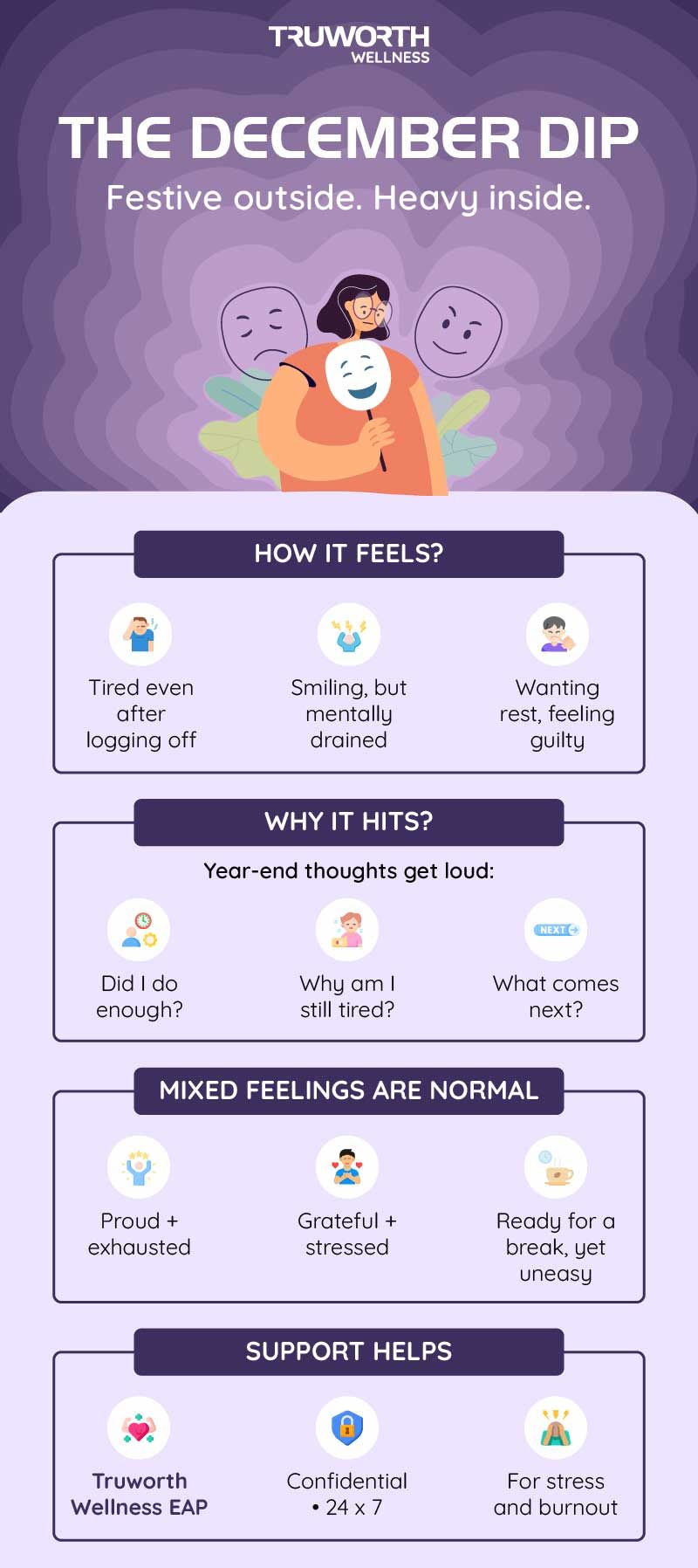
- Did I achieve enough?
- Could I have done better?
- Why am I still tired even after ticking so many boxes?
- What will next year demand from me?
This internal emotional audit can feel heavier than any performance evaluation. Even high performers, who appear sorted and confident all year, experience self-doubt during this time. High achievers are often their own toughest critics.
Add the social pressure of ending the year strong and starting the new year with goals, and the emotional load becomes even bigger.
Also Read: Tips To Regularly Improve At Work In The New Year
Workplace Factors That Intensify the December Dip
The corporate ecosystem unintentionally makes December overwhelming.
- Project Closures and Backlogs: Everything needs to wrap up quickly, sometimes unrealistically. The rush creates urgency, long hours, and decision fatigue.
- Appraisal Stress: Even if you performed well, the anticipation of ratings, feedback, and conversations can create anxiety.
- Budget Freezes and Team Changes: Year-end restructuring or resource decisions silently impact emotional stability.
- The Unspoken Pressure to Stay Festive: Even when you are exhausted, you are expected to:
- Participate in celebrations
- Stay cheerful
- Attend team outings
- Show up as your best self
- This emotional dissonance is draining.
Mixed Feelings Are Completely Normal
December is rarely just one emotion. It is a blend of gratitude, exhaustion, stress, nostalgia, and hope, all happening at the same time.
You can be:
- Happy, yet mentally tired
- Proud, yet still overwhelmed
- Grateful, yet uneasy about the future
- Excited for the break, yet guilty for not feeling festive enough
This coexistence of opposite emotions is emotional ambivalence, and it is far more common than people admit.
Micro-Wellness Habits to Ease Year-End Stress
The December Dip does not need big lifestyle changes. It needs small, intentional resets.
Do A Mini Emotional Audit
Take 3 minutes daily to reflect:
- What Energized Me Today?
- What Drained Me?
- What Small Win Can I Acknowledge?
- It builds emotional clarity.
The 3-3-3 Grounding Technique
Name 3 things you see,
3 things you hear,
3 things you can touch.
This offers an instant stress reset during heavy days.
Protect Your Digital Boundaries
Turn off push notifications after work hours.
Endless year-end messages amplify anxiety.
Pace Your Social Energy
You do not have to attend every celebration.
Choose what genuinely nourishes you.
Create Slow Minutes
Just 60 seconds of breathing between meetings can reduce emotional chaos.
Also Read: Deep Breathing Exercises You Can Easily Do In The Office
Three Simple Breathing Practices Between Meetings
- Box Breath: Inhale 4, Hold 4, Exhale 4, Hold 4. Repeat 3 rounds.
- Five-Count Belly Breath: Inhale for 5, Exhale for 5. Do 6 rounds.
- Mindful Exhale: Inhale naturally and extend the exhale slightly longer to calm the nervous system.
What Companies Can Do to Support Employees?
A supportive workplace makes a huge difference during December.
- Reduce Meeting Load: Swap long review meetings with shorter, focused catch-ups.
- Normalise “It Is Okay to Slow Down” Messaging: Employees should not feel guilty for taking a breather.
- Train Managers on Sensitive Check-Ins: Ask “How are you feeling?”; Not just “Where are we on the target?”
- Build a Culture of Appreciation: Simple recognitions at the end of the year improve emotional resilience.
- Encourage Use of Wellness and Mental Health Resources: Let people know support exists, and it is completely okay to use it.
When the December Dip Needs Extra Support: The Role of EAP
High performers often hesitate to ask for help, believing they should manage it themselves.
But emotional overload, sleep issues, or persistent worry are signs you might need a conversation with a professional.
If your organisation has an Employee Assistance Program (EAP) with Truworth Wellness, here is what you need to know:
- Sessions Are 100 Percent Confidential
- You Can Talk About Stress, Relationships, Burnout, Year-End Anxiety, Guilt, Or Overwhelm
- Support Is Available 24/7, Including Nights, Holidays, And Weekends
- Even A Single Session Can Help You Untangle Emotional Knots
- You Do Not Need To Wait For A Crisis, EAP Is For Daily Wellbeing Too
Remember, seeking support does not make you weak. It makes you aware.
Practical Year-End Planner: 5 Simple Steps
- List 3 Real Wins, not just big KPIs. Include small interpersonal wins like helping a colleague or finishing a tricky call. This shifts focus from what is missing to what is built.
- Schedule One Quiet Hour in the next two weeks for reflection and planning. Protect it like a meeting.
- Pick One Realistic Goal for January, something motivating but achievable. Early wins create momentum.
- Delegate One Task you usually keep. Let someone grow and lighten your load.
- Book One Wellness Check-In, such as an EAP session, mentor chat, or manager catch-up, purely emotional and not project-focused.
Quick Checklist for Managers to Share With Teams
- Remind Teams It Is Okay To Prioritize Wellbeing Over Over-Delivering.
- Keep One Or Two No-Meeting Windows Per Week, If Possible.
- Run A 5-Minute Check-In At Team Standups: One Win And One Challenge.
- Publicly Acknowledge Contributions, Even Small Ones, Before Year-End Closes.
Closing the Year With Kindness, Not Pressure
The truth is:
You do not need to sprint to the finish line.
You do not need a big transformation before December 31st.
You do not need to feel happy 24/7.
You just need to be human, acknowledge your emotions, and allow yourself to slow down without guilt.
The December Dip is temporary, but your well-being is not.
Treat yourself with the same empathy you offer others.
And if things feel heavy, talk to someone.
Help is always closer than you think.
If the December Dip feels heavy, remember support is available. Encourage employees to use Truworth Wellness EAP, confidential, professional, and ready when you need it. Consider sharing this blog in your internal newsletter with a short note from HR: “You are not alone, support is here.”