Why Most Indian Corporate Environments Are An Acid Reflux Factory?

Antacids are the second most purchased over-the-counter medication in India. Most people buying them have never spoken to a doctor about why they need them so often.
Antacids are the second most purchased over-the-counter medication in India.
Let that sit for a moment.
Not a prescription medication for a diagnosed condition. An over-the-counter tablet that most people buy reflexively, the way they buy paracetamol, without a medical consultation, without a diagnosis and without any real understanding of why their stomach keeps producing enough acid to require regular chemical neutralisation.
For a significant proportion of Indian corporate employees, the antacid after lunch is as routine as the coffee before it. The burning sensation after a canteen meal is so familiar it barely registers as a symptom anymore. The slight discomfort that rises into the chest after eating at the desk has been reclassified, somewhere along the way, from a medical signal into a lifestyle inconvenience.
It is not a lifestyle inconvenience. It is a clinical condition. And when it is left unmanaged, which it almost always is in corporate environments, it progresses into something significantly more serious than a post-lunch burn.
What Acid Reflux Actually Is?
The stomach produces acid to digest food. This is normal, necessary and well-managed by a ring of muscle at the bottom of the oesophagus called the lower oesophageal sphincter, or LOS. The LOS opens to let food into the stomach and closes to keep the acid inside.
Acid reflux happens when the LOS does not close properly, or relaxes when it should not, allowing stomach acid to travel back up into the oesophagus. The oesophagus does not have the protective lining the stomach has. Acid contact with the oesophageal lining causes the burning sensation most people recognise as heartburn.
When this happens occasionally after a large or spicy meal, it is a temporary, manageable event.
When it happens regularly, after most meals, first thing in the morning, when lying down, when bending over, when under stress, it has crossed into a condition called Gastroesophageal Reflux Disease, or GERD. GERD is not occasional indigestion. It is chronic acid exposure to a tissue that was not designed to tolerate it.
The distinction matters because the management of occasional reflux and chronic GERD is different, the risks are different, and the consequences of leaving them both unaddressed are very different.
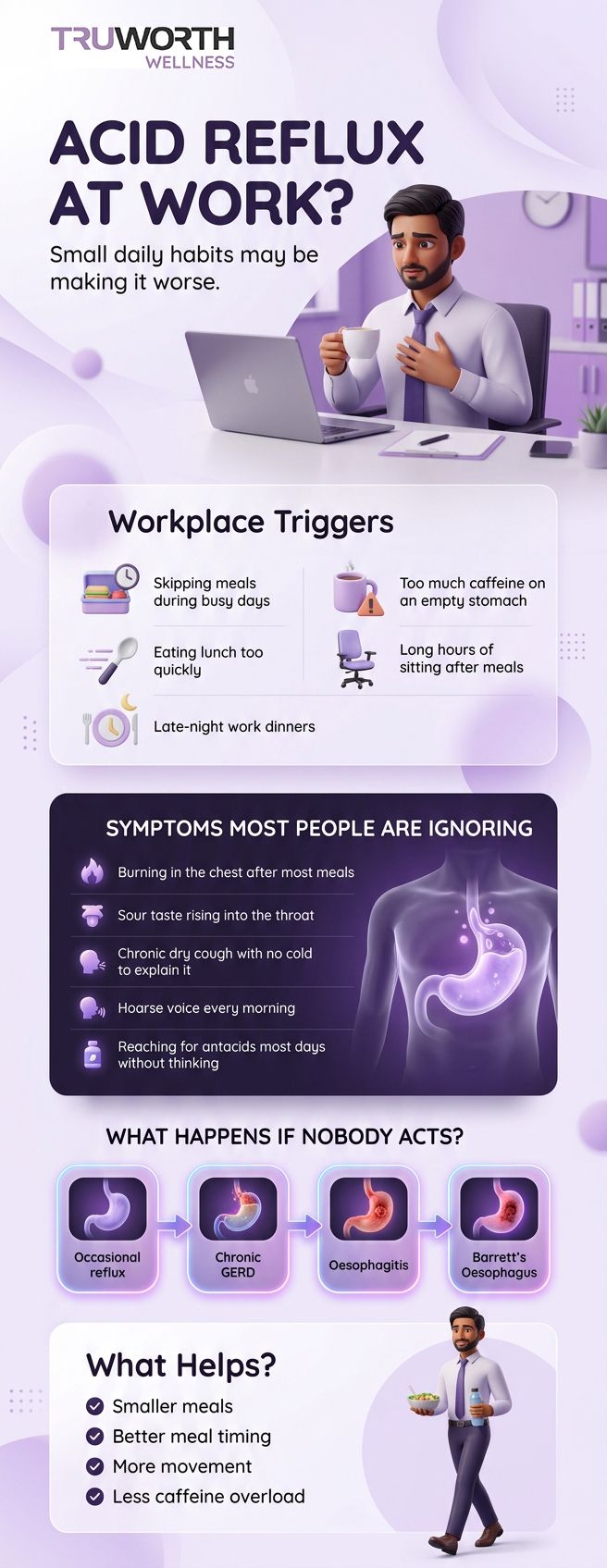
Why the Corporate Environment Is an Acid Reflux Factory?
Acid reflux does not develop in a vacuum. It develops in conditions that weaken the LOS, increase stomach acid production, or put physical pressure on the stomach. The Indian corporate work environment creates most of these conditions simultaneously.
1) Irregular and rushed meal patterns
The digestive system works best with regular, unhurried meals eaten sitting down, with enough time for the digestive process to begin properly before the next demand is placed on it.
The corporate meal reality looks different:
- Breakfast skipped because of an early meeting or commute
- Lunch eaten in ten to fifteen minutes at a desk between calls
- A large dinner eaten late in the evening because the day did not allow anything earlier
- Long gaps between meals followed by large volumes eaten quickly
- Snacking on biscuits, namkeen and processed foods during meetings
Each of these patterns disrupts normal digestive rhythm. Large meals eaten quickly fill the stomach beyond its comfortable capacity and increase upward pressure on the LOS. Long gaps between meals allow acid to build without food to buffer it. Late dinners eaten close to bedtime leave the stomach still working when the person lies down, removing the gravitational advantage that helps keep acid in the stomach.
2) Coffee consumption in volume and pattern
Coffee is one of the strongest known triggers for acid reflux. It relaxes the LOS, stimulates excess acid production and is a direct irritant to an already inflamed oesophageal lining.
The average Indian corporate employee drinks two to four cups of coffee a day, often on an empty stomach in the morning, often mid-afternoon when energy dips, and frequently as a substitute for meals. This pattern is among the most effective possible at both triggering and worsening acid reflux.
3) Chronic psychological stress
The gut-brain axis is well established. Psychological stress directly affects gut function through the enteric nervous system, the autonomic nervous system and hormonal pathways. Chronic stress increases stomach acid production, alters gut motility and reduces the threshold at which the LOS relaxes inappropriately.
An employee managing sustained deadline pressure, difficult workplace relationships and the always-on communication culture of modern corporate environments is running elevated cortisol that directly stimulates acid production. The acid reflux after a stressful meeting is not a coincidence. It is a physiological response.
4) Prolonged sitting after meals
Sitting, particularly in a slumped forward posture at a desk, increases abdominal pressure and compresses the stomach. When this happens immediately after eating, the mechanical pressure on a full stomach pushes acid upward against the LOS. The desk lunch followed immediately by two hours of sitting in front of a screen is a reliable acid reflux trigger for anyone with even mild LOS weakness.
5) High carbohydrate, high fat office food
The typical Indian office canteen or delivery meal is high in refined carbohydrates, moderate to high in fat, and often heavily spiced. Fatty foods slow gastric emptying, meaning the stomach stays full and acidic for longer than it would after a lighter meal. Refined carbohydrates ferment in the gut and produce gas that increases pressure. Spicy foods directly irritate already sensitive oesophageal tissue.
The Symptoms People Are Normalising
This is the section that matters most for corporate health awareness.
The most dangerous aspect of acid reflux in the corporate context is not that people do not know they have it. It is that they do know, at some level, and have decided it is normal. The following experiences are widely shared in Indian offices and widely considered unremarkable. They are not unremarkable. They are clinical signals.
- The post-lunch burn that shows up most days: A burning sensation in the chest or upper abdomen after eating is the classic reflux symptom. When it happens occasionally after a particularly heavy meal, it is situational. When it happens after most lunches, it is GERD.
- The sourness that rises into the throat: Regurgitation of acid into the throat, sometimes reaching the mouth with a sour or bitter taste, is a direct symptom of acid reflux that has moved beyond mild LOS weakness. Many employees experience this regularly and describe it as indigestion or acidity without connecting it to an oesophageal issue.
- The chronic cough that nobody can explain: Acid reaching the throat and larynx causes a chronic, dry, irritating cough that does not respond to cold and cough medication because it is not caused by a respiratory infection. It is caused by acid irritation of the laryngeal tissue. This symptom is extremely common in employees with undiagnosed GERD and is almost never connected to its actual cause.
- The hoarse voice in the morning: Acid that refluxes during sleep irritates the vocal cords. Morning hoarseness that resolves through the day but returns the next morning is a classic sign of nocturnal reflux. Many employees assume they are simply tired or have a mild throat infection. It recurs because the cause is structural, not infectious.
- The feeling that food is stuck in the chest: A sensation of food not clearing the oesophagus properly after swallowing, sometimes described as food sticking in the chest, is called dysphagia and is a symptom of oesophageal irritation or narrowing from chronic acid exposure. This symptom warrants prompt medical assessment. It is frequently ignored for months.
- The chronic need for antacids: Taking an antacid occasionally for an unusual meal is appropriate management of a transient symptom. Keeping antacids at the desk and taking them most days is not normal. It is the body asking, repeatedly and insistently, for a proper clinical response.
What Happens When It Goes Unmanaged
This is not meant to alarm. It is meant to accurately represent the stakes of treating a chronic condition as a manageable inconvenience.
Acid reflux that is managed with over-the-counter antacids without addressing the underlying cause follows a predictable progression in a proportion of cases.
Oesophagitis. The first stage of chronic acid damage is inflammation of the oesophageal lining. This is oesophagitis. It causes pain on swallowing, chest discomfort and worsening reflux symptoms. It is reversible with appropriate treatment.
Erosive GERD. Ongoing acid exposure causes erosion of the oesophageal lining. The protective mucosal layer thins and small ulcerations develop. This stage requires medical intervention rather than just lifestyle management.
Barrett's Oesophagus. In response to chronic acid damage, the oesophageal cells sometimes undergo a change called metaplasia, where they are replaced by cells more similar to the intestinal lining. This condition, called Barrett's oesophagus, is itself not cancer but is a precancerous change that requires regular monitoring. Approximately ten to fifteen percent of people with chronic GERD develop Barrett's oesophagus.
Oesophageal Cancer. A small but significant proportion of Barrett's oesophagus cases progress to oesophageal adenocarcinoma. Oesophageal cancer has a poor prognosis when caught late because it rarely produces symptoms until advanced. The chain from unmanaged GERD to cancer is long and not inevitable, but it is real and it is preventable at every stage.
The point is not that everyone with acid reflux will develop cancer. The point is that the chain of progression is well documented, entirely preventable through early management, and is currently being enabled in thousands of Indian corporate employees who are treating a chronic clinical condition with daily antacids and no medical consultation.
What Actually Helps
Management of acid reflux and GERD is well established. The interventions that work are a combination of lifestyle changes, dietary adjustments and where needed clinical treatment.
Meal timing and structure.
- Eat three regular meals at consistent times rather than skipping and compensating
- Allow at least two to three hours between the last meal and lying down
- Eat slowly and without screen distraction to avoid overeating
- Reduce portion sizes at dinner specifically
- Do not eat at the desk immediately before sustained sitting
Dietary changes specific to reflux.
Foods and drinks that consistently worsen reflux:
- Coffee and strong tea, particularly on an empty stomach
- Carbonated beverages including sparkling water
- Citrus fruits and tomato-based foods
- Fatty and fried foods
- Chocolate and mint, both of which relax the LOS
- Alcohol
- Very spicy food on an already irritated oesophagus
Foods that support better gut acid management:
- High fibre foods that support healthy gut motility
- Lean protein that does not slow gastric emptying excessively
- Alkaline foods including most vegetables
- Small amounts of plain yoghurt which can buffer acid
- Water, consumed regularly through the day rather than in large amounts at meals
Positional changes.
- Elevating the head of the bed by fifteen to twenty centimetres if nocturnal reflux is a symptom
- Avoiding lying down for at least two hours after eating
- Not wearing tight waistbands or belts that increase abdominal pressure
- Walking gently after meals rather than sitting immediately
Stress management.
Because chronic stress is a direct driver of excess acid production and LOS dysfunction, stress reduction is not a soft add-on to acid reflux management. It is a clinical intervention. Employees who reduce sustained stress levels through whatever means works for them, whether exercise, counselling, EAP support, or simply better boundary-setting at work, frequently find their reflux symptoms meaningfully improve alongside their other stress-related health markers.
Medical assessment and treatment.
For employees with symptoms that occur more than twice a week, that disrupt sleep, or that include any of the more concerning symptoms described above, lifestyle changes alone are not sufficient as a first response. A medical consultation is needed to assess the severity of the condition, rule out complications and determine whether medication or further investigation is appropriate.
Proton pump inhibitors and H2 blockers are effective medical treatments for GERD when prescribed appropriately. They are not the same as antacids and should not be used interchangeably with them. They require medical supervision, appropriate duration of use and planned review rather than indefinite over-the-counter self-medication.
How Truworth Wellness Can Help?
Managing acid reflux properly requires more than willpower and dietary awareness. It requires access to the right support at the right time. Truworth Wellness provides several specific pathways for employees dealing with this condition.
CarePass OPD: See a Doctor Without the Barriers
The most important step for any employee with recurring reflux symptoms is a proper medical consultation. Through Truworth's CarePass OPD benefit, employees can access GP consultations and specialist referrals, both in-clinic and via teleconsultation, with no upfront cost and no reimbursement paperwork.
An employee who has been managing reflux with daily antacids for six months can be properly assessed in a single fifteen-minute teleconsultation. If investigation is needed, diagnostic tests are covered through the CarePass network. The barrier between symptom and medical response is removed.
Nutrition Coaching That Understands the Indian Dietary Context
Generic dietary advice for acid reflux does not account for the specific foods, meal patterns and cultural eating contexts of Indian corporate employees. Truworth's nutrition coaches work with employees to build practical, culturally relevant eating strategies that reduce reflux triggers without requiring a complete dietary overhaul.
This includes specific guidance on:
- Managing coffee consumption in a way that reduces acid exposure without eliminating it entirely
- Identifying personal trigger foods within the context of Indian meals
- Building meal timing habits that are compatible with a corporate schedule
- Managing the late dinner problem that affects most working professionals
Condition Management for Chronic GERD
For employees with diagnosed GERD or a pattern of chronic reflux, Truworth's condition management platform provides structured ongoing support. This means regular monitoring, personalised guidance, progress tracking and coordination with clinical care where needed. Managing GERD as an ongoing condition rather than an occasional inconvenience changes outcomes significantly over time.
EAP Support for the Stress Dimension
Because chronic stress is a direct clinical driver of acid reflux, addressing stress is part of managing the condition. Truworth's EAP provides confidential access to counsellors who can support employees dealing with the sustained workplace stress that is worsening their gut health. This is not a soft recommendation. It is a clinical one.
The Bottom Line
Acid reflux is not a dietary quirk to be managed with a post-lunch antacid. It is a clinical condition driven by specific, largely addressable causes that the corporate environment creates and amplifies daily.
The employee who has been burning through antacid strips for two years without a medical consultation is not managing their health. They are postponing a conversation their oesophagus is trying to have.
The conversation is worth having now. Before the condition progresses. Before the daily antacid becomes a daily necessity. Before the occasional burn becomes the reason a more serious investigation was needed and was not done earlier.
The stomach is not asking for antacids. It is asking for attention.
Give it the right kind.
Truworth Wellness provides the tools and support employees need to address acid reflux and gut health properly, from CarePass OPD consultations and specialist access to personalised nutrition coaching, condition management and EAP-supported stress reduction. Because gut health is not a dietary lifestyle topic. It is a clinical one. Talk to us about building a wellness program that takes the full health picture of your workforce seriously.