Employee Wellness Programs For Manufacturing Night Shift Workers
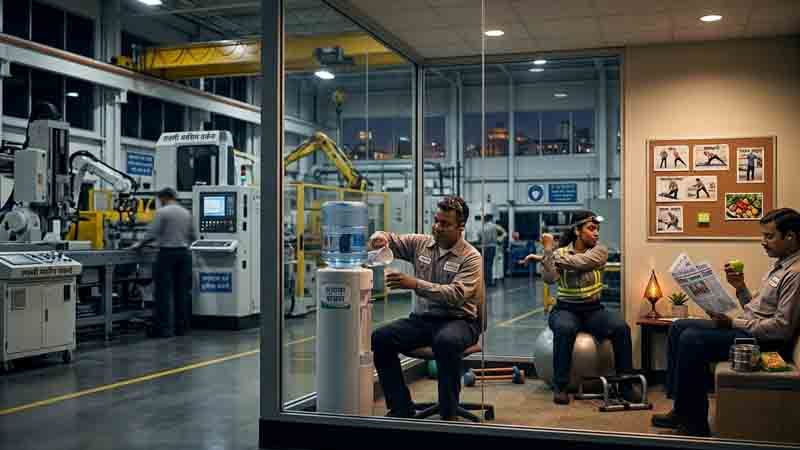
Fixing fatigue on the factory floor through safer shifts and accessible care
Night work keeps factories productive, but it asks employees to stay alert when the body is naturally prepared for sleep. Disrupted rest, poorly timed meals, repetitive work and limited access to healthcare can turn ordinary tiredness into an operational risk. Effective employee wellness programs for night shift workers must therefore go beyond generic health campaigns and address the realities of the shift itself.
For Indian employers, this means connecting fatigue prevention, accessible healthcare and emotional support. An EAP for manufacturing industry in India can provide confidential counselling and crisis support, while employee wellness programs for manufacturing industry in India can bring screenings, consultations, sleep education and nutrition guidance closer to employees working outside standard clinic hours.
Table of Contents
- The short answer
- Why night shifts create a distinct health risk?
- How fatigue affects safety and performance?
- What an effective night-shift wellness programme should include?
- How managers can improve shift design?
- How Truworth Wellness can support factory workforces?
- A practical 90-day implementation plan?
- Frequently asked questions
Short Answer
How can manufacturers reduce night-shift fatigue? Start by treating fatigue as a work-design and health issue, not a personal weakness. Review shift length, rotation, overtime, break access, commute risk and staffing pressure. Then give employees practical sleep support, well-timed nutrition options, health screening, confidential counselling and medical access during the hours they actually work.
Well-designed employee wellness programs for night shift workers combine these operational changes with convenient care.
Why Night Shifts Create a Distinct Health Risk?
Night-shift fatigue is not simply the result of poor discipline. Human alertness follows a circadian rhythm shaped by light and darkness. Working through the night and sleeping during the day can shorten or fragment recovery, especially when noise, heat, family responsibilities or commuting interrupt daytime sleep.
Night shift workers health issues require more than reminders to “sleep better.” Employers must examine whether schedules and recovery windows make adequate rest realistic.
1) Sleep Disruption Can Accumulate Across Shifts
Employees may begin a shift already carrying sleep debt. Consecutive nights, fast rotation between day and night duty, unexpected overtime and long travel can compound it. Signs may include slower reactions, irritability, microsleeps, poor concentration and difficulty remembering routine steps.
Useful employee wellness programs for night shift workers teach employees to recognise these signs early and give supervisors a non-punitive escalation process. For factory worker wellness programs in India, education should be available in relevant languages and delivered at shift handovers, not only through daytime webinars.
2) Meal Timing and Food Access Affect Energy
Heavy meals at 2 a.m., prolonged fasting or reliance on sugary snacks can worsen discomfort and energy fluctuations. Canteens may also offer fewer nutritious choices at night than during the day.
Nutrition support should therefore reflect shift timing. Employee wellness programs for manufacturing industry in India can combine practical meal guidance with healthier night-canteen options, hydration access and support for employees managing diabetes, acidity or blood-pressure concerns.
3) Preventive Care Is Often Designed Around Day Workers
A night-shift employee may finish work when an onsite clinic is closing or be expected to attend a screening during normal sleeping hours. Even a good benefit becomes difficult to use when access ignores the employee’s schedule.
This is where corporate wellness for manufacturing companies in India must become operationally inclusive. Rotating onsite screening windows, virtual consultations and referral support can reduce the distance between identifying a concern and receiving care.
Together, these night shift workers health issues show why access, scheduling and work design must be addressed as one connected challenge.
 Truworth Wellness
How Fatigue Affects Safety and Performance?
Fatigue can reduce attention, judgement, coordination and reaction speed. In a factory, these effects may matter during machine operation, maintenance, material handling, driving or quality checks. The goal of reducing workplace accidents due to fatigue is not to blame an employee for feeling tired; it is to control foreseeable risks in the system.
NIOSH guidance links shift work and long hours with higher risks of errors, injuries and several health symptoms. Although much of its training material was developed for healthcare settings, the underlying principles—circadian disruption, inadequate recovery and extended wakefulness—are relevant to other safety-sensitive workplaces. Manufacturers should validate risks against their own incident, overtime and near-miss data.
Safety Incidents May Have More Than One Cause
An incident may involve equipment design, training, supervision, production pressure and fatigue at the same time. Reviewing the hour of the shift, consecutive days worked, overtime and recent rotation can reveal patterns that a technical investigation alone may miss.
This makes night shift fatigue and workplace accidents an important EHS and wellbeing issue. Strong employee wellness programs for night shift workers should complement—not replace—engineering controls, safe staffing and occupational-safety processes.
Long Hours Can Create Wider Health Risks
Night work and long hours are different exposures, but they often overlap when staffing gaps or overtime extend a shift. WHO and ILO estimates attributed 745,000 deaths from stroke and ischaemic heart disease in 2016 to working at least 55 hours a week globally. The estimate does not measure night-shift fatigue specifically, yet it reinforces why employers should monitor excessive hours rather than treating overtime as an unlimited solution.
An EAP for manufacturing industry in India cannot correct unsafe rosters, but it can give employees confidential help for stress, sleep disruption, financial pressure or family strain while operational leaders address scheduling causes.
Absence and Turnover Can Follow Persistent Exhaustion
When employees repeatedly sacrifice sleep, appointments and family time, they may disengage, take more unplanned leave or look for work with more predictable hours. Factory worker wellness programs in India can support retention when employees see that fatigue concerns lead to practical action rather than generic advice.
What Employee Wellness Programs for Night Shift Workers Should Include?
The strongest approach connects assessment, individual support and workplace controls. It also ensures that services remain usable at night.
1) Shift Specific Health Assessments
Short, voluntary assessments can explore sleep duration, daytime sleep barriers, alertness, meal timing, stress and access to care. Aggregate findings can help employers understand patterns without exposing individual health information.
Assessments should also distinguish temporary tiredness from recurring night shift workers health issues that may require clinical evaluation or changes to working conditions.
For employee wellness programs for manufacturing industry in India, assessment should lead to a response. If one unit reports severe sleep disruption, the next step may be a roster review, targeted consultation access or supervisor training—not another general webinar.
2) Sleep and Fatigue Support
Employees need realistic guidance on light exposure, caffeine timing, wind-down routines, family communication and creating a daytime sleep environment. Supervisors also need a clear protocol for employees who report that they are too fatigued to perform a safety-critical task.
An EAP for night shift employees can add confidential support when insomnia, anxiety or personal pressures interfere with recovery. Within an EAP for manufacturing industry in India, this support should be easy to access without requiring an employee to explain a private concern to a line manager.
3) Night Appropriate Nutrition Guidance
Guidance should focus on choices employees can make in the available canteen, not idealised meal plans. Employers can improve food availability by offering lighter balanced meals, protein-rich snacks, fruit and safe drinking water throughout the shift.
This practical approach makes factory worker wellness programs in India relevant to the actual work environment and supports employees managing common metabolic risks.
4) Onsite Screening Across Shifts
Blood pressure, glucose-risk, BMI and other appropriate checks can identify employees who may benefit from further evaluation. Screening should be voluntary, clinically governed and available across more than one shift. Results must be explained privately with clear referral options.
Accessible screenings are a core part of employee wellness programs for manufacturing industry in India, particularly where workers may face travel, time or appointment barriers outside the workplace.
5) Virtual Medical and Mental Health Access
Virtual consultations can help employees seek advice after a shift, during an approved break or from home without waiting for daytime clinic hours. Emergency symptoms still require local emergency care, so escalation guidance must be explicit.
An EAP for manufacturing industry in India can complement medical access with confidential counselling. Together, these services strengthen corporate wellness for BPO and manufacturing sectors, where non-standard hours often create similar access challenges.
Shift Design Matters More Than Motivation Alone
Health education is useful, but employees cannot recover if schedules consistently prevent it. Employers should treat roster design as part of wellbeing and safety governance.
1) Build Adequate Recovery Between Shifts
NIOSH emergency-response guidance recommends at least 10 consecutive hours of protected off-duty time to allow seven to eight hours of sleep, and suggests rest days after repeated consecutive shifts. The exact schedule must reflect local law, collective agreements and operational risk, but the principle is clear: recovery needs protected time, not only good intentions.
This is central to reducing workplace accidents due to fatigue. A wellness programme cannot compensate for compressed turnaround times or routine excessive overtime.
2) Improve Rotation and Overtime Controls
Use predictable rosters where possible, monitor consecutive night duties and avoid frequent last-minute changes. Overtime approval should consider recent hours and safety-critical tasks, not only production demand.
These controls make employee wellness programs for night shift workers more credible because they show that the organisation is willing to change the conditions contributing to fatigue.
3) Make Fatigue Safe to Report
Employees may hide exhaustion if they expect blame, lost wages or disciplinary action. Supervisors need a defined response: assess immediate task risk, arrange a safe break or reassignment where appropriate, document the operational factors and follow up.
The aim is not to remove accountability. It is to improve early reporting and reducing workplace accidents due to fatigue before a near miss becomes an injury.
4) Align With Indian Safety Responsibilities
India’s Occupational Safety Health and Working Conditions Code 2020 includes provisions on work periods, shifts extending beyond midnight and restrictions related to work in another similar establishment during the preceding 12 hours. Employers should take current legal advice on applicable central and state requirements rather than treating a wellness programme as a compliance substitute.
An EAP for manufacturing industry in India and employee wellness programs for manufacturing industry in India should sit alongside occupational-health, EHS and statutory processes.
How Truworth Wellness Supports Night Shift Workforces?
- Truworth Wellness helps organisations coordinate shift-specific assessments, preventive screening, virtual consultations, nutrition support and confidential counselling through an integrated employee experience. This allows corporate wellness for manufacturing companies in India to reach employees beyond standard office hours.
- For employers implementing employee wellness programs for night shift workers, support can be tailored by plant, shift pattern, workforce language and health risk.
- Onsite activity can be scheduled across shifts, while digital access helps employees use care when a daytime appointment is impractical.
- Truworth Wellness can also strengthen an EAP for manufacturing industry in India through accessible counselling pathways, clear confidentiality communication and targeted awareness.
- Aggregate participation and health insights can guide programme improvement without exposing an employee’s private consultation details.
This connected approach helps employee wellness programs for manufacturing industry in India move from isolated activities to sustained support, while operational teams retain responsibility for safe rosters, staffing, equipment and incident controls.
A Practical 90 Day Implementation Plan
Days 1 to 30 Map Risk and Access
Review shift length, overtime, rotation, break availability, commute patterns, incidents and near misses. Run a voluntary pulse check on sleep, alertness, nutrition and healthcare access. Segment findings by shift without identifying individuals.
Days 31 to 60 Launch Priority Support
Introduce shift-timed screenings, sleep and nutrition sessions, virtual consultations and confidential counselling. Train supervisors on fatigue conversations and escalation. Position the EAP for manufacturing industry in India as private support, not a performance-management channel.
Days 61 to 90 Adjust Work Design and Measure
Test roster or break improvements in a high-risk area. Track screening participation, consultation access, fatigue reports, near misses, absence and employee feedback. Effective factory worker wellness programs in India should be refined according to what workers can actually use.
Success should mean more than event attendance. It should include earlier support, safer reporting, improved access across shifts and progress in reducing workplace accidents due to fatigue.
From Endurance to Safer Night Work
Night-shift employees should not have to choose between earning a livelihood and protecting their health. Manufacturers can improve safety and wellbeing by combining better roster practices with timely preventive and emotional support.
When employee wellness programs for night shift workers operate alongside a trusted EAP for manufacturing industry in India, employees gain support for sleep, stress and personal pressures.
When employee wellness programs for manufacturing industry in India also provide onsite and virtual healthcare across shifts, wellbeing becomes part of factory operations rather than a daytime-only benefit.
Help every shift access practical, timely and confidential wellbeing support with Truworth Wellness.
Frequently Asked Questions
What health issues are common among night shift workers?
Common night shift workers health issues include insufficient or disrupted sleep, fatigue, digestive discomfort, stress and difficulty maintaining regular meals or exercise. Individual risks vary, and persistent symptoms should be assessed by a qualified healthcare professional.
How can employers reduce night shift fatigue and workplace accidents?
Employers should examine shift length, rotation, overtime, staffing, breaks and commute risks; provide fatigue education and a safe reporting process; and maintain strong engineering and EHS controls. This systems approach is more effective than asking employees to manage fatigue alone.
What should an EAP for night shift employees provide?
It should offer confidential counselling, simple access outside standard office hours, multilingual communication where needed and clear crisis escalation. It should also explain that counselling complements—not replaces—changes to unsafe work conditions.
Can onsite health screenings be offered during night shifts?
Yes. Employers can rotate screening windows across shifts and provide private result counselling and referral support. Clinical governance, informed consent and data privacy should apply regardless of timing.
How should employers measure programme impact?
Track access across shifts, screening follow-through, counselling awareness, employee-reported fatigue, overtime, absence, near misses and safety trends. Review aggregated patterns and avoid using personal health data for performance decisions.