Body Itching That Keeps Coming Back? The Food Triggers You’re Ignoring

You moisturize. You switch body washes. You even try home remedies.
Yet the itching returns, sometimes mildly, sometimes intensely, often without a clear reason.
What most people miss is this:
Itching is rarely just a skin issue. It is often your body reacting to what is happening internally.
Your food choices, digestion, inflammation levels, and even hydration patterns play a direct role in how your skin behaves. If the internal environment is off balance, your skin becomes more reactive, sensitive, and prone to itching.
This is why temporary relief methods do not work long-term.
Also Read: Hair And Skin Care In The Corporate World
What Actually Causes Body Itching From Within?
Before looking at solutions, it is important to understand the internal triggers. Without this, even the “right foods” will feel like random suggestions.
Low-Grade Inflammation
When your diet includes excess sugar, processed food, or unhealthy fats, the body stays in a constant state of mild inflammation. This does not always show up immediately, but over time, it can manifest as:
- Skin sensitivity
- Redness or irritation
- Persistent itching without visible rash
Poor Gut Health
Your gut and skin are deeply connected. When digestion is weak or imbalanced:
- Nutrient absorption drops
- Toxins are not efficiently eliminated
- The immune system becomes reactive
- This often shows up externally as itching, acne, or unexplained skin discomfort.
Histamine Response And Food Sensitivities
Certain foods can trigger histamine release in the body, leading to itching, even if you are not “allergic” in the clinical sense.
This is why:
- Some people itch after dairy
- Others react to spicy or fermented foods
Dehydration And Internal Dryness
When your body lacks adequate hydration:
- Skin loses elasticity
- Nerve endings become more sensitive
- Itching becomes more noticeable, especially at night
Also Read: Hydration Mistakes You're Probably Making At Work
Heat Imbalance In The Body
Common in Indian climates and dietary patterns, excess “heat” from food can trigger:
- Night-time itching
- Burning or prickly sensations
- Skin irritation without visible cause
The Workplace Angle No One Talks About
If you are a working professional, your routine may be quietly worsening your skin:
- Long hours in air-conditioned environments → dry skin
- Irregular meals → poor digestion
- High stress → triggers inflammation
- Excess caffeine → dehydration
You may think it is “just dryness,” but your daily work habits are contributing to it.
5 Foods That Help Relieve Body Itching (With Real Reasons)
What you eat daily can either calm internal triggers like inflammation and heat or quietly make itching worse, here are foods that actually help and why.
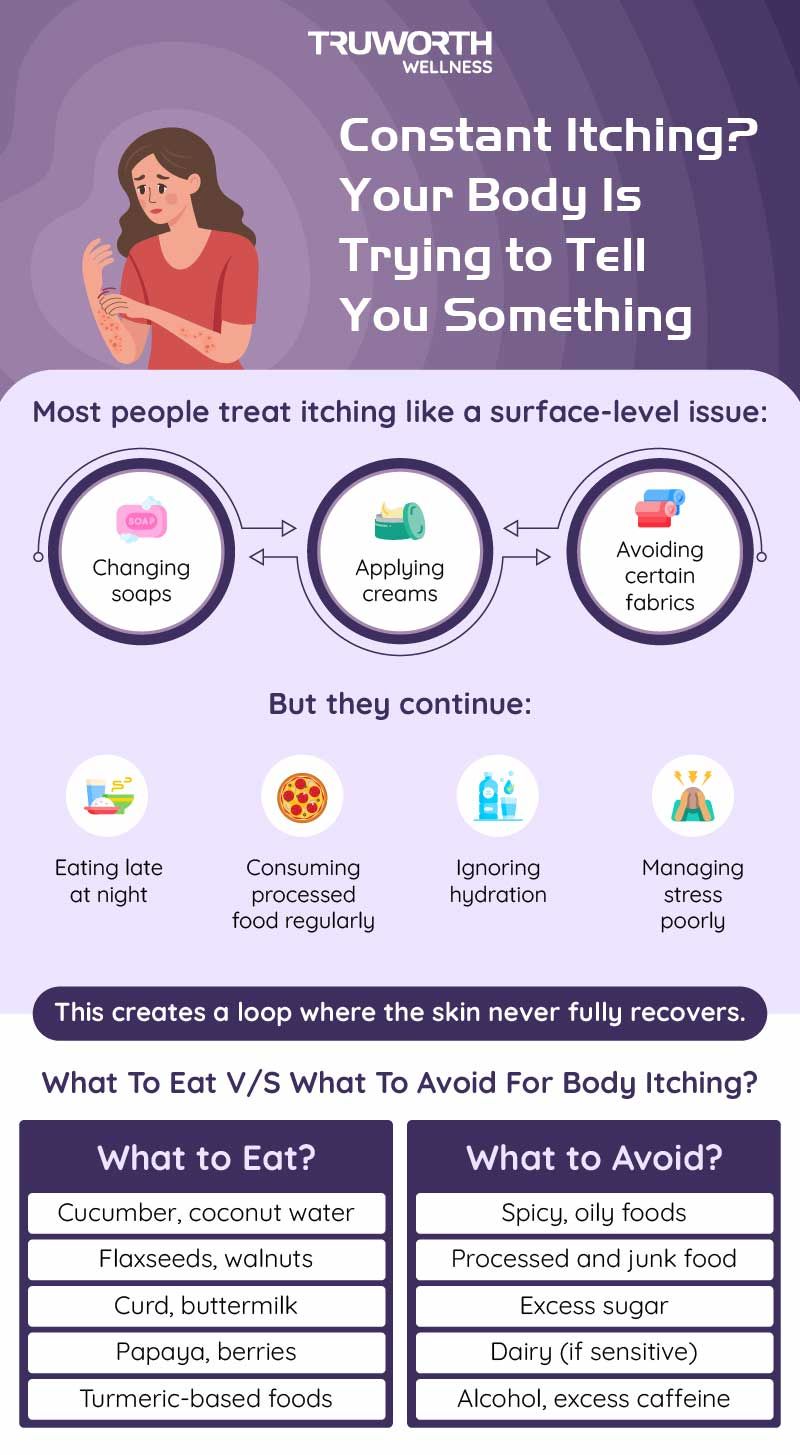
| What to Eat? | What to Avoid? |
|---|---|
| Cucumber, coconut water | Spicy, oily foods |
| Flaxseeds, walnuts | Processed and junk food |
| Curd, buttermilk | Excess sugar |
| Papaya, berries | Dairy (if sensitive) |
| Turmeric-based foods | Alcohol, excess caffeine |
1) Cucumber And Coconut, For Internal Cooling And Hydration
These are not just “light foods.” They actively help regulate internal temperature and hydration.
- Cucumber has high water content and supports toxin removal
- Coconut water replenishes electrolytes lost through sweat and stress
- Helps reduce heat-induced itching
Why It Works?
When internal heat reduces, nerve sensitivity in the skin also decreases.
Also Read: Ways To Add Electrolytes In Your Work Day
2) Flaxseeds And Walnuts, To Reduce Inflammation At The Root
These foods are rich in omega-3 fatty acids, which play a key role in calming internal inflammation.
- Strengthen the skin barrier
- Reduce dryness and micro-irritation
- Support long-term skin resilience
Why It Works?
Less inflammation means fewer internal triggers for itching.
3) Curd And Buttermilk, To Repair The Gut-Skin Connection
Probiotics help restore balance in your digestive system.
- Improve gut bacteria diversity
- Reduce toxin build-up
- Support immune regulation
Why It Works?
A healthier gut reduces the likelihood of inflammatory or allergic skin responses.
4) Papaya And Berries, For Antioxidant Support
These fruits help your body deal with oxidative stress, which often worsens skin sensitivity.
- Aid in cell repair
- Support detox pathways
- Reduce inflammatory load
Why It Works?
Better cellular health reflects as calmer, less reactive skin.
5) Turmeric, For Consistent Internal Healing
Turmeric is not a quick fix, but it works deeply over time.
- Contains natural anti-inflammatory compounds
- Supports liver function and detoxification
- Helps reduce recurring flare-ups
Why It Works?
It targets the underlying inflammatory pathways rather than just symptoms.
Foods That Quietly Make Itching Worse
- Spicy and oily foods: These increase internal heat and often trigger itching episodes, especially at night.
- Ultra-processed foods: Loaded with preservatives and unhealthy fats, these disrupt both gut health and inflammation balance.
- Excess sugar: Sugar accelerates inflammation and weakens your body’s ability to repair skin.
- Dairy (if you are sensitive): For some individuals, dairy triggers mild inflammatory or histamine responses, leading to itching.
- Alcohol and excessive caffeine: Both contribute to dehydration and disrupt sleep, making itching feel more intense and persistent.
Also Read: The Perfect Guide To Cut Sugar Slowly - Without Losing Your Mind
The Lifestyle Link Most People Ignore
Food is not the only factor. Your daily routine, especially in a corporate setup, can amplify itching:
- Long hours in air-conditioned spaces dry out skin
- Skipping meals affects digestion
- Stress increases inflammatory responses
- Late-night eating disrupts gut balance
This is why itching often feels worse at night or after long workdays.
When It Is More Than Just Dry Skin?
Pay attention if your itching:
- Keeps coming back despite using products
- Gets worse at night
- Is accompanied by bloating or acidity
- Has no visible rash but feels intense
These are signs that the issue is internal, not just surface-level.
How Truworth Wellness Helps You Fix the Root Cause?
At Truworth Wellness, the approach goes beyond symptom control.
Instead of guessing, you can:
- Identify personal food triggers
- Understand your gut health status
- Get structured nutrition guidance
- Align lifestyle habits with your body’s needs
Because real wellness is not about reacting to symptoms, it is about understanding and preventing them.
Your skin is responding to what is happening inside your body.
Change the inputs, and the symptoms start changing too.
Bottom Line
Body itching is not random. It is often your body’s way of indicating:
- Internal imbalance
- Inflammation
- Digestive disruption
- Or lifestyle stress
When you shift to:
- Hydrating foods
- Anti-inflammatory choices
- Better gut support
You are not just managing itching, you are reducing its root cause.